



Description
Nimodipine 30 mg – 100 Tablets to Support Cerebral Circulation and Prevent Vasospasm After Subarachnoid Haemorrhage
Quick Answer
Nimodipine 30 mg is a lipophilic L-type calcium channel blocker that crosses the blood-brain barrier and acts selectively on cerebral arteries. Its licensed use is the prevention of ischaemic neurological deficits following aneurysmal subarachnoid haemorrhage. The usual adult dose is two tablets (60 mg) every four hours, totalling 360 mg daily for 21 consecutive days, ideally started within four days of the bleed. Take it on an empty stomach, avoid grapefruit juice entirely, and never administer it by any injectable route. This is a prescription-only medicine that must be used under medical supervision.
Key Facts About Nimodipine 30 mg
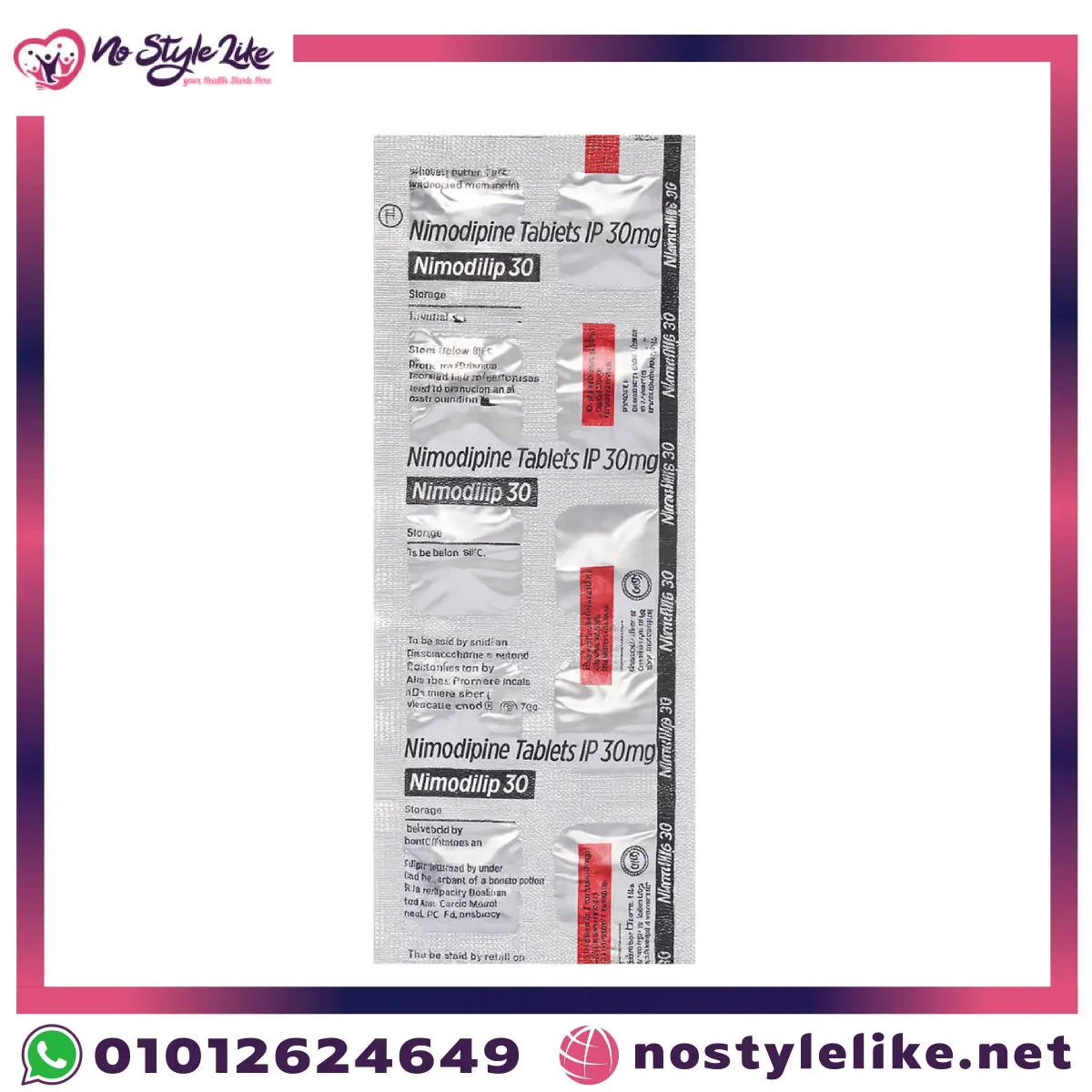
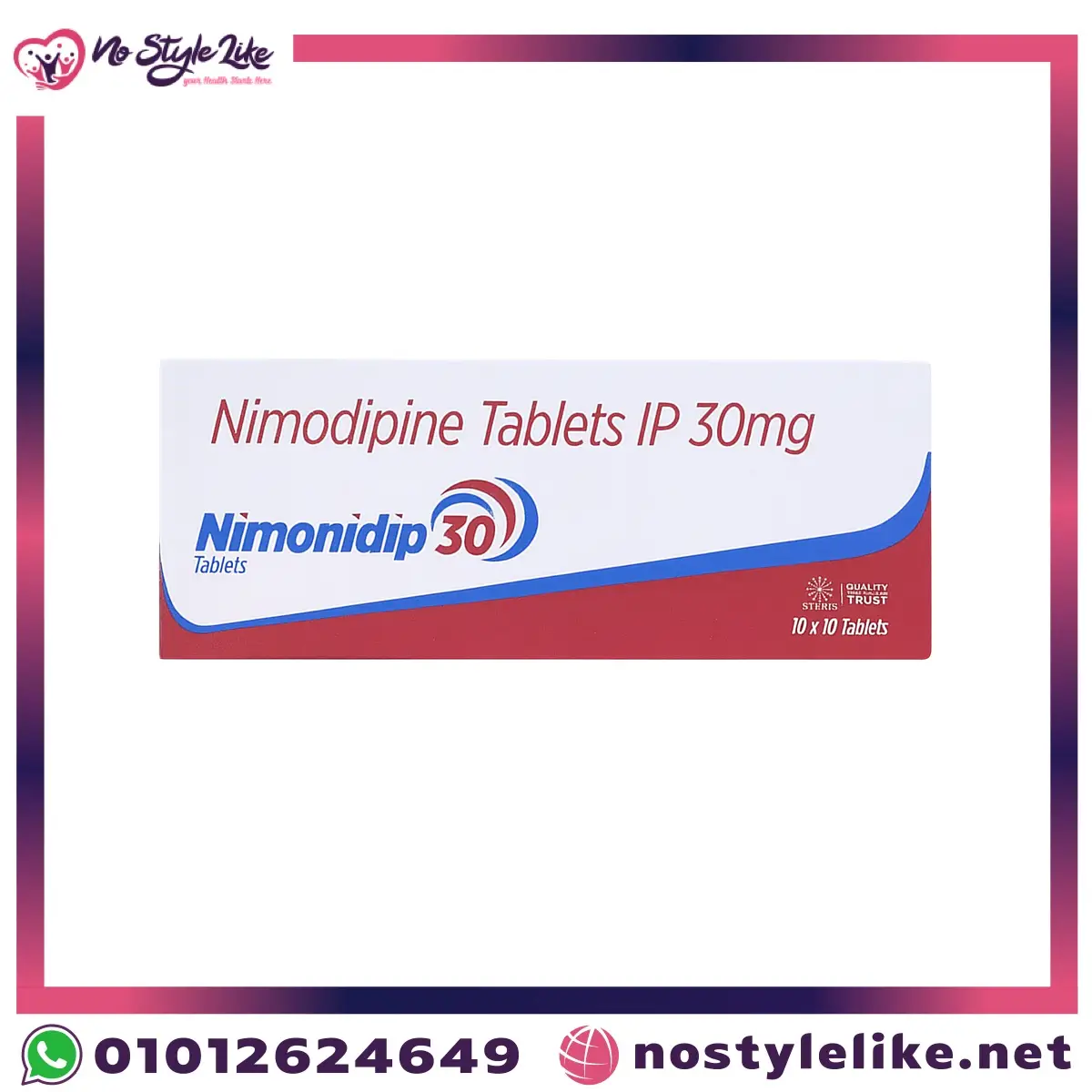
Each Nimodipine 30 mg tablet from Nimonidip delivers 30 milligrams of nimodipine, a molecule engineered to reach the small arteries inside the brain rather than the peripheral circulation. The pack contains 100 tablets, covering a substantial part of the standard 21-day protocol. No Style Like supplies this product in its original aluminium-plastic blister packaging, which protects the active ingredient from light and moisture.
Table of Contents
- Introduction: what makes nimodipine different
- What is Nimodipine 30 mg?
- How does nimodipine work?
- Main benefits of Nimodipine 30 mg
- Real-world use cases
- Who is it suitable for?
- Who should avoid it?
- Correct use and dosage
- Best time to take nimodipine
- Quick questions patients ask
- Expected timeline of improvement
- Common mistakes to avoid
- Myths and facts
- Drug interactions
- Contraindications and warnings
- Tests and monitoring
- What to take alongside it
- Does it affect other medicines?
- When to see a doctor urgently
- NSL expert tip
- Frequently asked questions
- Summary
Introduction: What Makes Nimodipine Different
Many medicines belong to the calcium channel blocker family, yet very few of them actually reach the arteries inside the brain. That is the defining feature of Nimodipine 30 mg: its highly lipophilic structure lets it cross the blood-brain barrier and concentrate in cerebral vessels far more than in peripheral ones. Regulators therefore approved it for one specific neurological purpose rather than as a general antihypertensive.
After an aneurysm ruptures and causes a subarachnoid haemorrhage, the patient enters a dangerous window that usually runs from day four to day fourteen. During this period cerebral arteries constrict, blood flow to otherwise healthy tissue falls, and delayed disability may follow. Nimodipine addresses precisely this risk: it reduces the probability of delayed ischaemic neurological deficit and improves functional outcomes.
What Is Nimodipine 30 mg?
Nimodipine 30 mg is a film-coated tablet containing 30 milligrams of nimodipine, a dihydropyridine calcium channel blocker. It is marketed internationally under names such as Nimotop and supplied here as Nimonidip 30 in a 100-tablet pack.
Its approved indication is the prevention of ischaemic neurological deficits following aneurysmal subarachnoid haemorrhage. It is not licensed as a general memory enhancer or a daily brain tonic. Any use outside that indication remains an individual clinical decision made by a treating physician, never something to start after reading a product page.
The tablets contain Tartrazine, the dye responsible for their yellow colour. This matters for the small group of people with known sensitivity to this colourant or to aspirin, who may experience allergic-type reactions.
How Does Nimodipine Work?
Smooth muscle in an arterial wall contracts only when calcium ions enter the cell through voltage-gated L-type calcium channels. Nimodipine binds these channels and blocks that influx, so the muscle cell loses its capacity for intense contraction and the vessel wall relaxes.
Three practical consequences follow:
- Relaxation of cerebral arteries and reduced severity of vasospasm after a bleed.
- Improved perfusion in the vulnerable tissue surrounding the haemorrhage.
- Possible neuroprotection by limiting calcium overload inside neurons during hypoxia, one of the pathways that leads to cell death.
Nimodipine is absorbed quickly from the gut but undergoes extensive first-pass metabolism in the liver through the CYP3A4 enzyme. Any drug or food that inhibits or induces that enzyme therefore changes blood levels significantly, which is the reason the interaction section below deserves close attention.
Main Benefits of Nimodipine 30 mg
- Lower risk of delayed ischaemic neurological deficit after subarachnoid haemorrhage, the best-evidenced and officially approved benefit.
- Better functional outcomes in the medium term, meaning improved odds of independence in movement and daily activities during recovery.
- Cerebral selectivity that keeps systemic blood pressure effects comparatively modest, although hypotension remains a recognised side effect.
- Simple oral administration within a clearly defined protocol, which makes it easy to continue treatment after hospital discharge.
- Economical 100-tablet pack that covers a large share of the treatment course without repeated purchasing.
Real-World Use Cases
Case one: a 48-year-old man arrived at the emergency department with a sudden headache he described as the worst of his life. Imaging confirmed a subarachnoid haemorrhage. The team started nimodipine within the first 48 hours at two tablets every four hours, checking blood pressure before each dose, and continued the full 21-day protocol so that the critical day four to day fourteen window was fully covered.
Case two: a 60-year-old woman was discharged a week after her bleed with nimodipine to complete at home. The pharmacist played a decisive role: she explained the need to keep the four-hour intervals even overnight, to take the tablets on an empty stomach, and to avoid grapefruit juice completely throughout treatment.
Case three: a patient with hepatic cirrhosis required a dose adjustment, so the physician reduced the dose to one tablet (30 mg) every four hours with closer blood pressure monitoring, because impaired liver function markedly increases the bioavailability of nimodipine.
Who Is Nimodipine 30 mg Suitable For?
- Adults diagnosed with aneurysmal subarachnoid haemorrhage, as part of a plan set by a neurologist or neurosurgeon.
- Patients continuing the 21-day course at home after hospital discharge.
- Cases where the treating specialist has judged there is a clinical benefit after full assessment.
Anyone simply looking to sharpen memory or concentration is in the wrong place. A pharmacist consultation and a look at dedicated brain-health supplements would be far more appropriate.
Who Should Avoid It?
- Anyone with known hypersensitivity to nimodipine or to any tablet excipient, including Tartrazine.
- Patients within one month of a myocardial infarction or with unstable angina.
- Anyone currently taking rifampicin, phenobarbital, phenytoin or carbamazepine, since these reduce efficacy to the point of futility.
- People with low blood pressure, particularly a systolic reading below 100 mmHg.
- Patients with severe hepatic failure, unless the physician decides otherwise and adjusts the dose.
- Pregnant or breastfeeding women, unless benefit clearly outweighs risk; breastfeeding is not recommended during treatment.
- Children, as safety and efficacy have not been established in this age group.
Correct Use and Dosage
| Situation | Dose | Duration |
|---|---|---|
| Adult prophylaxis after subarachnoid haemorrhage | Two tablets (60 mg) every 4 hours = 360 mg daily | 21 consecutive days |
| Hepatic cirrhosis or impairment | One tablet (30 mg) every 4 hours, physician decision | As assessed |
| Timing of initiation | As early as possible | Within 4 days (96 hours) of the bleed |
Practical rules for correct use:
- Swallow the tablet whole with a glass of water; do not crush or chew it.
- Take it on an empty stomach: at least one hour before food or two hours after.
- Keep the four-hour interval precisely, because steady blood levels are central to the benefit.
- Never stop treatment early on your own before the prescribed course ends.
- Never administer the tablet contents intravenously or by any parenteral route; deaths, cardiac arrest and cardiovascular collapse have been reported.
- Store below 30 degrees Celsius, protected from light and moisture, out of reach of children.
Best Time to Take Nimodipine
Nimodipine is not tied to a particular hour of the day so much as to regular intervals. Dosing every four hours means six doses across 24 hours, including overnight doses. A practical approach is to fix a starting point such as 6 a.m., which produces this schedule: 6 a.m., 10 a.m., 2 p.m., 6 p.m., 10 p.m. and 2 a.m.
Because the medicine must be taken on an empty stomach, plan meals around the doses rather than the reverse: eat one hour after a dose, or take a dose two hours after a meal. Setting an alarm for each dose noticeably reduces missed doses, especially the overnight one.
Quick Questions Patients Ask
- I missed a dose, what now? Take it as soon as you remember unless the next dose is close; never double up.
- Is it addictive? No, it has no dependence potential.
- Can I drive? Avoid driving whenever you feel dizzy or your blood pressure drops.
- Can I drink coffee? Coffee is fine; grapefruit is not.
- Does one pack cover the full course? A 21-day course at the standard dose needs 252 tablets, roughly three packs.
Expected Timeline of Improvement
It helps to remember that nimodipine is primarily a preventive medicine. Patients do not feel an immediate effect the way they would with a painkiller; the real benefit shows up as a complication that never happened.
- First hours: the vascular effect begins, sometimes with facial flushing or a mild headache.
- Days 4 to 14: the highest-risk window for vasospasm, and the reason the whole protocol exists.
- Up to day 21: complete the full course even if the patient feels well, since stopping early removes the protection.
- After the course: the physician continues to monitor neurological and functional recovery, which may take weeks to months depending on the original bleed.
Common Mistakes to Avoid
- Taking it with a meal, which reduces absorption and weakens the effect.
- Drinking grapefruit juice, which raises drug levels and the risk of hypotension, with an effect that lasts more than four days after the last glass.
- Skipping the overnight dose on the assumption that sleep makes up for it.
- Stopping early once symptoms improve, before the 21 days are complete.
- Using it as a memory booster without a diagnosis, which is unjustified and potentially harmful.
- Combining it with other antihypertensives without telling the physician, leading to sharp blood pressure drops.
- Ignoring blood pressure checks before doses in the early days.
Myths and Facts About Nimodipine 30 mg
| Myth | Fact |
|---|---|
| Nimodipine is a general brain stimulant anyone can use | Its approved use is narrowly defined as prophylaxis after subarachnoid haemorrhage, not cognitive enhancement. |
| It is just an ordinary blood pressure tablet | Its cerebral selectivity sets it apart, and it is not indicated for chronic hypertension. |
| It can be injected to work faster | A literally fatal error; parenteral administration of tablet contents has caused deaths and cardiac arrest. |
| You can stop once the headache goes | The 21-day duration is tied to the vasospasm risk window, not to symptoms. |
| It is safe with any antiepileptic drug | Phenytoin, phenobarbital and carbamazepine sharply reduce its effect and the combination is contraindicated. |
Drug Interactions
Because nimodipine is metabolised by hepatic CYP3A4, its interactions fall into two main groups.
First, agents that raise its levels and increase hypotension risk:
- Macrolide antibiotics such as erythromycin and clarithromycin.
- Azole antifungals such as ketoconazole and itraconazole.
- HIV protease inhibitors.
- Valproic acid and cimetidine.
- Grapefruit juice, with an effect persisting more than four days.
Second, agents that lower its levels and destroy its efficacy:
- Rifampicin, used in tuberculosis treatment.
- Antiepileptics: phenytoin, phenobarbital and carbamazepine.
- St John’s wort.
A third group involves additive effects: all antihypertensives, diuretics and rate-controlling cardiac drugs can amplify the blood pressure drop when combined. Give your physician and pharmacist a complete list of your medicines before starting.
Contraindications and Warnings
Critical warning: nimodipine must never be given by any injectable route. Parenteral administration has been associated with serious, life-threatening events including death, cardiac arrest, hypotension, cardiovascular collapse and bradycardia.
- Use with great caution when systolic blood pressure is below 100 mmHg.
- Close monitoring is required with cerebral oedema or raised intracranial pressure.
- Hepatic impairment increases bioavailability and calls for a dose reduction.
- Severe renal impairment warrants monitoring of kidney function during treatment.
- Avoid driving or operating machinery while dizzy.
- People sensitive to Tartrazine may develop skin or respiratory reactions.
Common side effects: hypotension, headache, nausea, tachycardia, vasodilatation and flushing, dizziness, diarrhoea and pedal oedema. A rare but important complication is acute colonic pseudo-obstruction (Ogilvie syndrome), which needs urgent assessment.
Tests and Monitoring
- Blood pressure and pulse before each dose in the early days, then at intervals set by the physician.
- Liver function tests (ALT, AST, bilirubin), especially with any hepatic history.
- Renal function (creatinine and estimated glomerular filtration rate).
- Serum electrolytes, with attention to sodium, since hyponatraemia is common after subarachnoid haemorrhage.
- Transcranial Doppler or angiography to track vasospasm during inpatient care.
- Brain CT whenever the neurological status changes.
What to Take Alongside It
Food never replaces medicine, but a supportive eating pattern helps neurological recovery and steadies blood pressure:
- Adequate water throughout the day to maintain blood volume and pressure stability.
- Magnesium sources such as nuts, legumes and leafy greens.
- Omega-3 from oily fish to support vascular and brain health.
- Sufficient protein for recovery and tissue repair.
- Fibre to reduce the constipation that can accompany this drug class.
- Avoid: grapefruit and its juice entirely, alcohol, and excess salt.
Any additional supplement such as magnesium or omega-3 should be cleared with the physician first, because some supplements affect blood pressure or clotting.
Does Nimodipine Affect Other Medicines?
Yes, and the influence runs in both directions. Nimodipine amplifies the blood pressure lowering effect of drugs such as beta blockers, ACE inhibitors and diuretics, which can push readings lower than intended. In the opposite direction, concurrent use has been reported to raise levels of certain medicines, including nortriptyline and some immunosuppressants.
The practical rule is simple: do not add any new medicine, and do not adjust the dose of an existing one, during nimodipine treatment without checking with your physician or pharmacist first. Keep a written list of everything you take, herbal products and supplements included.
When to See a Doctor Urgently
- Severe dizziness, fainting, or a sense that blood pressure has collapsed.
- Return of a sudden severe headache or any change in consciousness.
- Sudden weakness in a limb, slurred speech, or blurred vision.
- Strong palpitations or an obviously irregular heartbeat.
- Marked abdominal distension with absent bowel movement and complete constipation.
- Rash, facial swelling or breathing difficulty, all signs of an allergic reaction.
- Yellowing of the eyes or skin, or dark urine, suggesting liver involvement.
NSL Expert Tip
What most often undermines nimodipine therapy is not the drug itself but how it is taken. Build a paper chart with six boxes per day and tick each dose the moment you take it, and set phone alarms specifically for the 10 p.m. and 2 a.m. doses, the two most frequently missed. Measure your blood pressure before each dose and write the number down; that log saves your physician time and makes any dose adjustment far more accurate. Finally, buy enough tablets to cover the whole course from the start, so treatment never stops in the middle of the risk window.
Frequently Asked Questions About Nimodipine 30 mg
What is Nimodipine 30 mg used for?
It is a cerebroselective calcium channel blocker prescribed mainly to prevent ischaemic neurological deficits after aneurysmal subarachnoid haemorrhage. It is available on prescription only.
What is the daily dose of Nimodipine 30 mg?
The usual adult dose is two tablets, that is 60 mg, every four hours, totalling 360 mg per day for 21 consecutive days, ideally started within four days of the bleed. The dose is reduced in hepatic impairment at the physician’s discretion.
Should nimodipine be taken with or without food?
On an empty stomach, at least one hour before a meal or two hours after, because food reduces absorption. Grapefruit juice must be avoided completely.
How many packs do I need for a full course?
A 21-day course taken six times daily at two tablets per dose requires 252 tablets, roughly three packs of 100, with the final duration confirmed by your physician.
What are the most common side effects of Nimodipine 30 mg?
Low blood pressure, headache, nausea, tachycardia, flushing and dizziness. Most are mild and temporary, but a noticeable blood pressure drop should be reported to the physician.
Can it be used during pregnancy or breastfeeding?
It is used in pregnancy only when the physician judges the benefit to outweigh the risk, and breastfeeding is not recommended during treatment because the drug passes into breast milk.
Is nimodipine suitable for children?
No. Safety and efficacy have not been established in children, and it is given to them only by a specialist in exceptional circumstances.
Does nimodipine treat migraine or poor memory?
Those are not its approved uses. Some physicians may use it off-label in selected cases, but self-medicating for memory or headache is unjustified and risks hypotension.
What should I do if I miss a dose?
Take it as soon as you remember. If the next dose is nearly due, skip the missed one and resume the normal schedule. Never double a dose to make up for a missed one.
How should the medicine be stored?
Below 30 degrees Celsius, away from direct light and moisture, in its original packaging and out of the reach of children.
Summary
Nimodipine 30 mg is a specialised medicine rather than a general supplement. Its core role is protecting the brain from vasospasm-related complications after subarachnoid haemorrhage, and its success rests on three factors: starting within four days, respecting the four-hour interval, and completing the full 21 days. The 100-tablet Nimonidip 30 pack covers a large portion of that course, and it is dispensed on prescription with blood pressure and liver function monitoring.
Browse more brain-health products and imported medicines at No Style Like pharmacy, and contact our team for any question about availability or correct use.
Reviewed by the No Style Like pharmacy content team. The information on this page is for general education only and does not replace the official product leaflet or advice from a licensed physician or pharmacist. Do not start, stop or change any medicine based on this page alone, particularly during pregnancy or breastfeeding, or alongside chronic conditions and other medicines. For further trusted medical information see MedlinePlus – Nimodipine.




Reviews
There are no reviews yet.