


Description
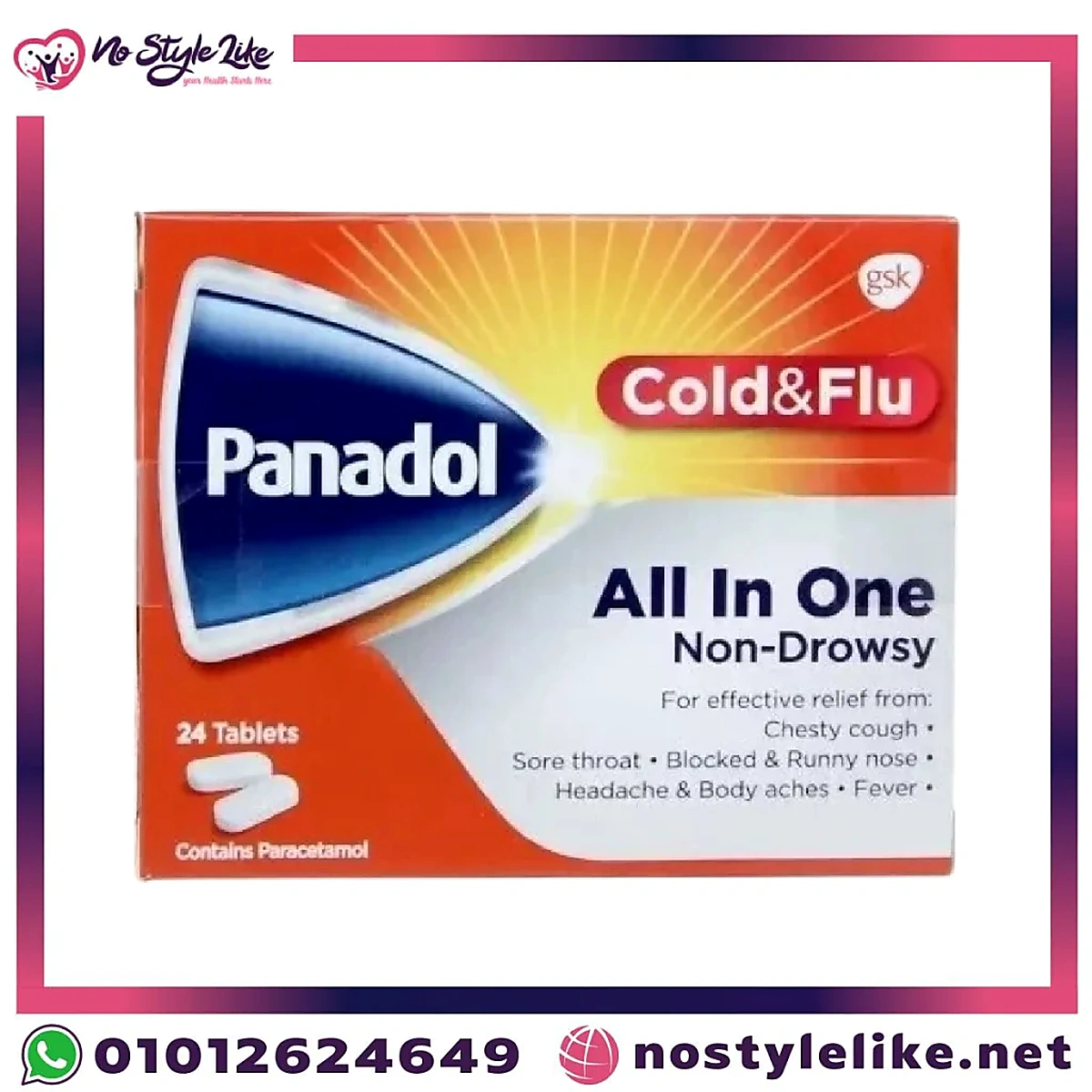
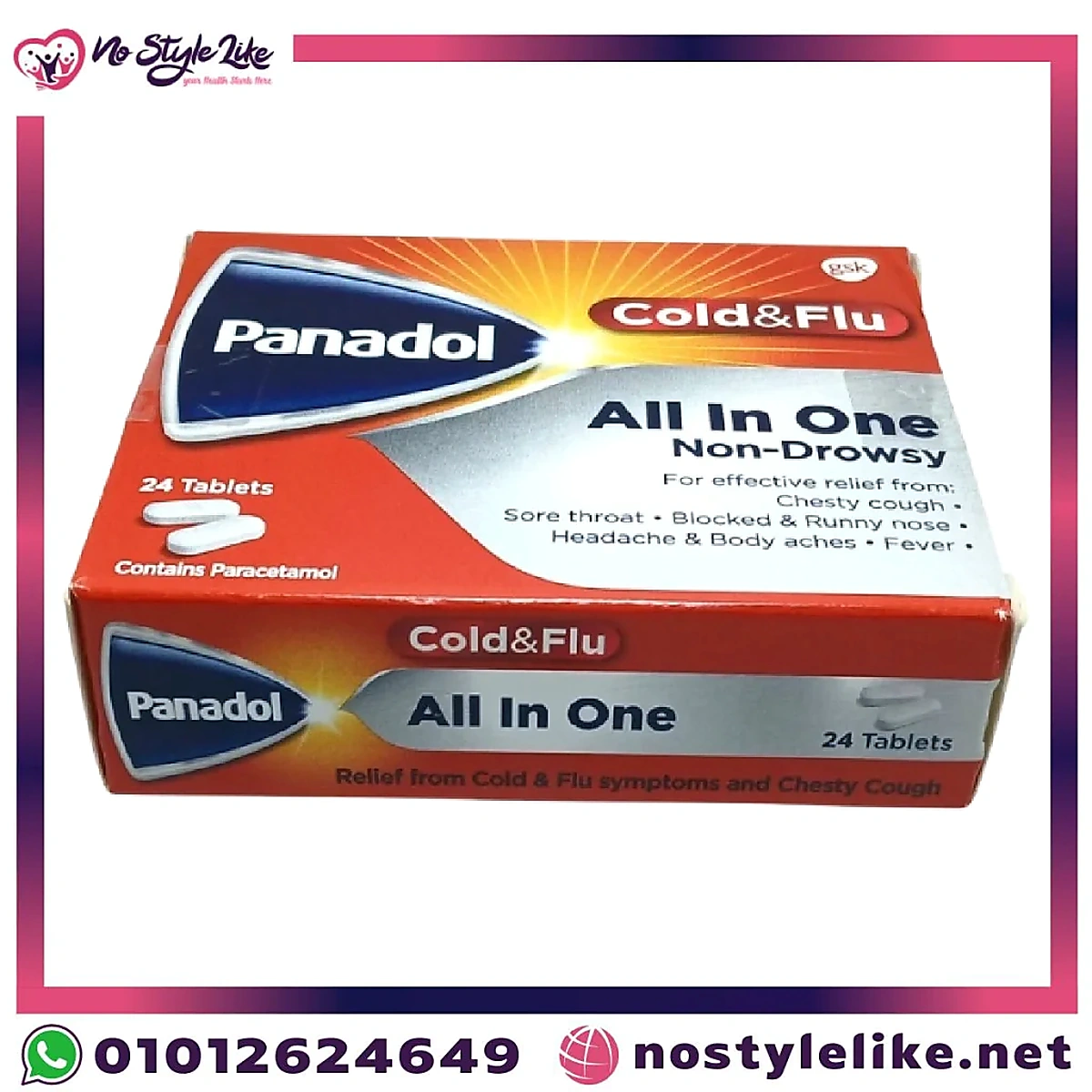
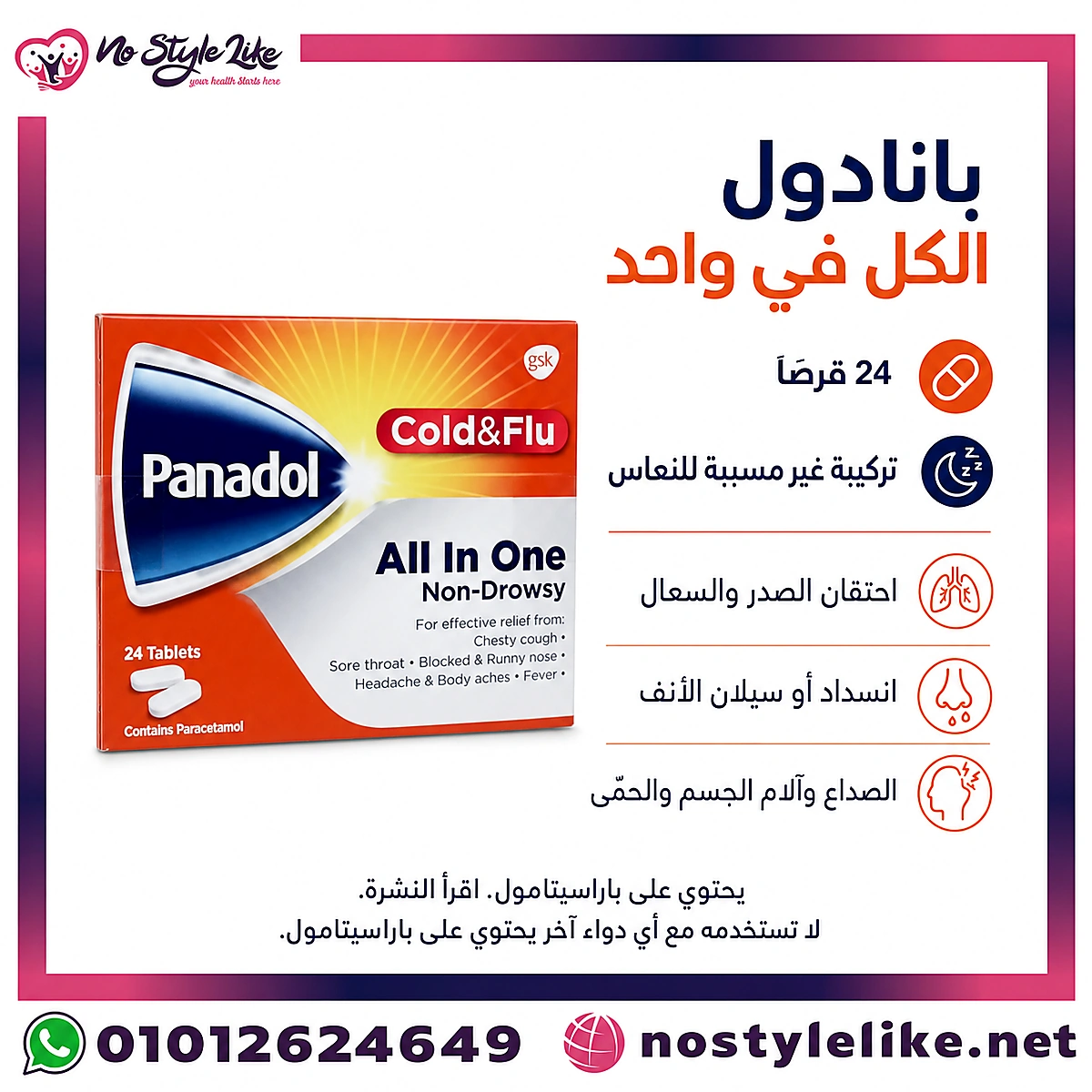
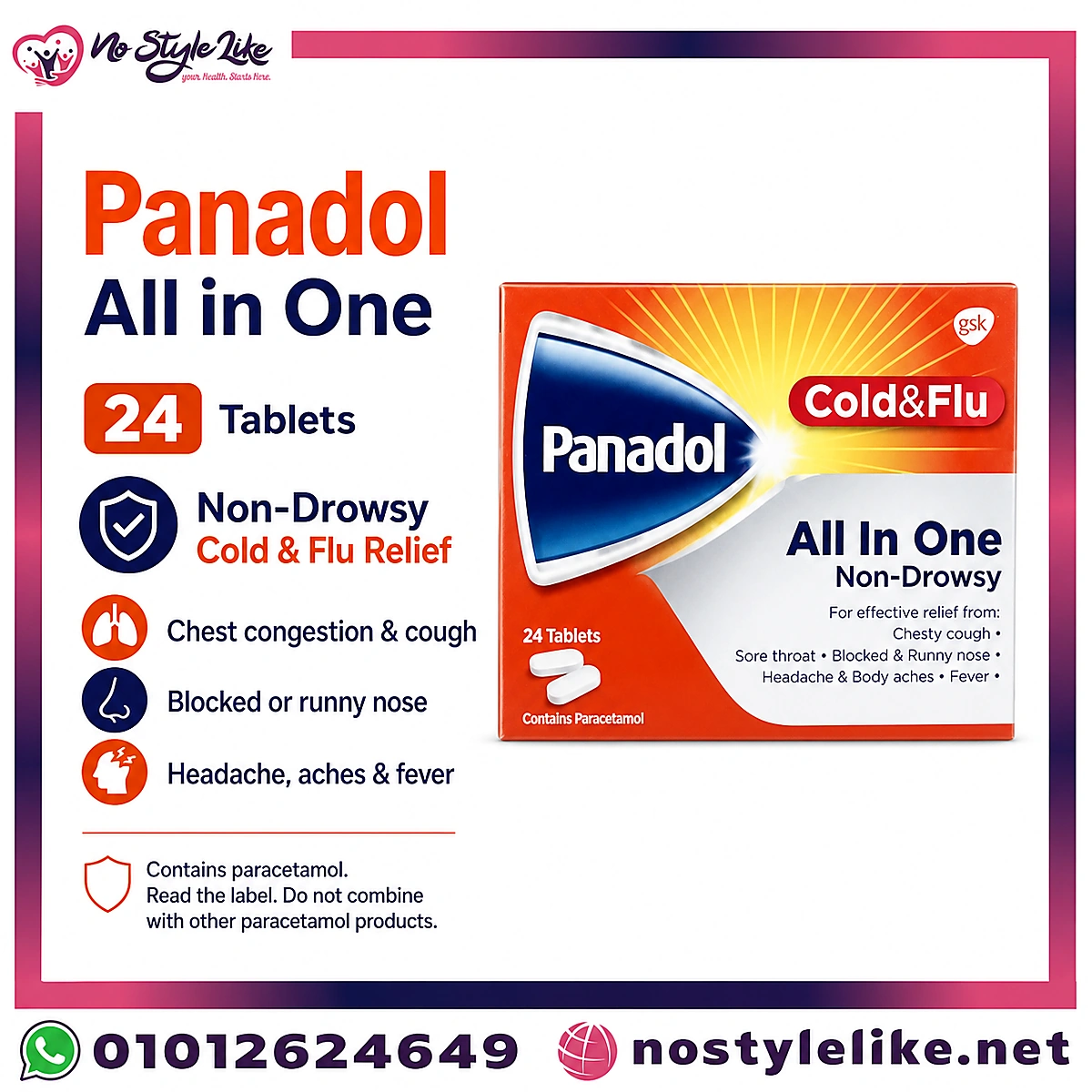
Panadol All in One 24 Tablets: A Complete Cold and Flu Relief Medicine
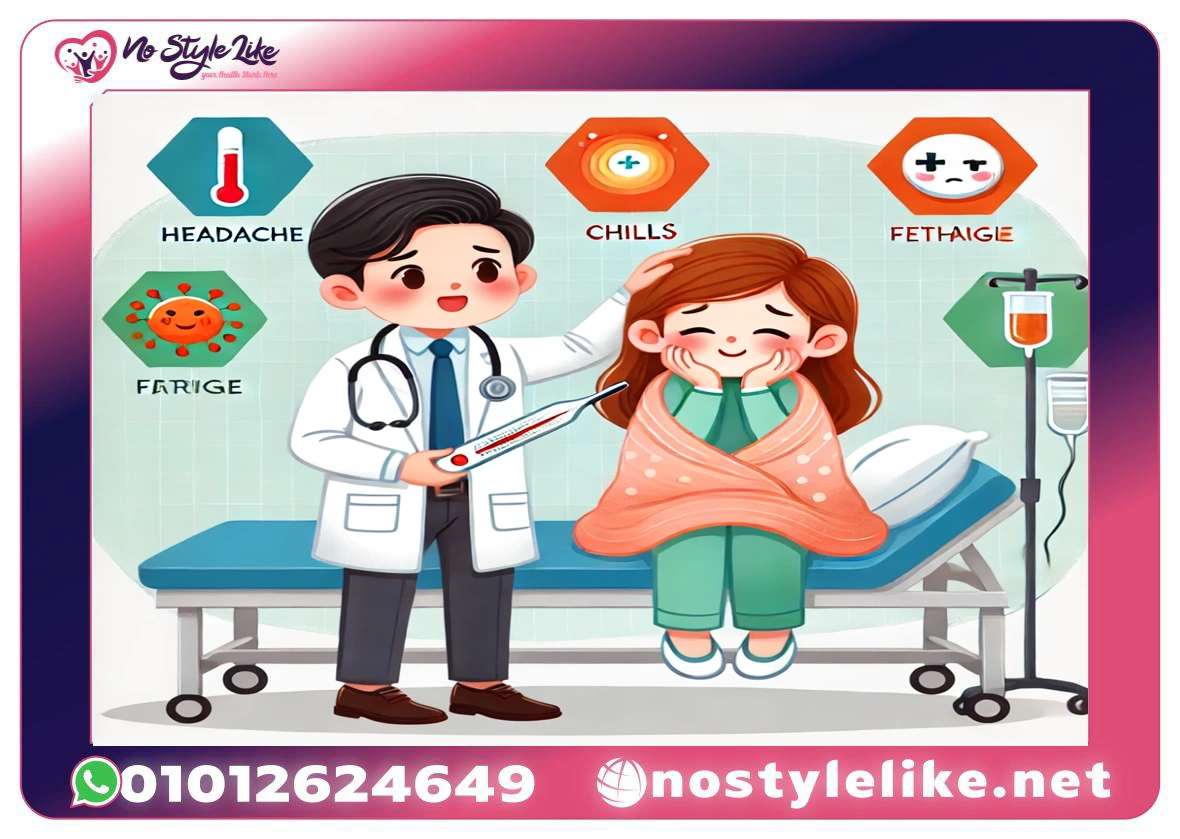
Key Facts About Panadol All in One
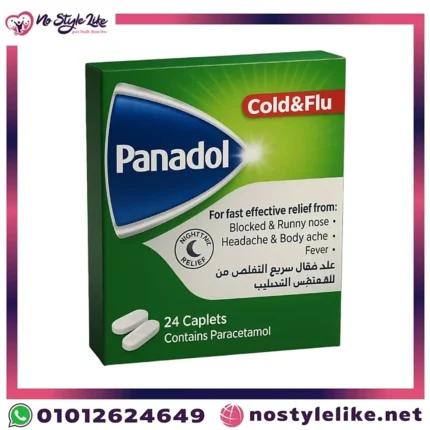
| Name | Panadol All in One 24 Tablets |
| Active ingredients | Paracetamol 250 mg + Guaifenesin 100 mg + Phenylephrine HCl 5 mg |
| Form | Film-coated tablets – pack of 24 |
| Indications | Cold and flu symptoms: pain, fever, nasal congestion, chesty cough with mucus |
| Adult dose | Two tablets every 4–6 hours, maximum 8 tablets daily |
| Age group | Adults and children over 12 years |
| Brand / Origin | Panadol – Ireland |
| Price | EGP 680 |
Short description: Panadol All in One is a combination medicine that treats several cold and flu symptoms in a single tablet, sparing you from taking separate products for pain, congestion and cough. Its triple formula eases headache, body aches and fever, clears a blocked nose, and helps loosen chest mucus.
Table of Contents
- What Is Panadol All in One?
- How It Works and the Role of Each Ingredient
- Main Benefits of Panadol All in One
- Real-Life Use Cases
- Who Is It Suitable For?
- Who Should Avoid It?
- How to Use It and the Correct Dose
- Best Time to Take It and Expected Relief
- Common Mistakes When Using It
- Myths and Facts
- Drug Interactions
- Contraindications and Warnings
- Tests and Monitoring
- What to Take Alongside It
- When to See a Doctor
- Frequently Asked Questions
- Conclusion
What Is Panadol All in One?
Panadol All in One is a medicine from the global Panadol brand, designed for people who face several cold and flu symptoms at the same time. Instead of buying a painkiller, a decongestant and an expectorant separately, one pack of 24 tablets brings these three actions together in a single convenient tablet. The formula suits colds that begin with a headache and body aches, then progress to a blocked nose and a chesty cough with mucus.
The medicine relies on three well-studied active ingredients: paracetamol to relieve pain and lower fever, guaifenesin to thin mucus and make it easier to clear, and phenylephrine to shrink the swollen blood vessels in the nose and open the airway. Each ingredient plays a defined role, and together they address the full picture of a cold.
How It Works and the Role of Each Ingredient
The Panadol All in One formula works along three complementary lines:
- Paracetamol 250 mg: a pain reliever and fever reducer that acts centrally to lower pain signals in the brain and reset the body temperature control centre, easing headache, muscle aches and sore throat while bringing down a fever.
- Guaifenesin 100 mg: an expectorant that increases the fluidity of secretions in the airways, making mucus less sticky and easier to cough up, so chest congestion gradually clears.
- Phenylephrine 5 mg: a decongestant that narrows the widened blood vessels in the lining of the nose, reducing swelling, opening the airway and relieving that blocked-nose feeling.
This teamwork is what makes the medicine an all-in-one: while paracetamol calms pain and fever, guaifenesin handles the mucus, and phenylephrine restores natural breathing through the nose.
Main Benefits of Panadol All in One
- Treats multiple cold and flu symptoms with a single tablet instead of several medicines.
- Relieves headache, body aches and sore throat thanks to paracetamol.
- Opens a blocked nose and eases breathing through phenylephrine.
- Helps clear chest mucus and soothe a chesty cough through guaifenesin.
- Contains no caffeine, so it does not add the stimulation found in some other cold formulas.
- An economical pack of 24 tablets covers a complete short treatment course.
Real-Life Use Cases
Many people reach for Panadol All in One in everyday situations: the employee who wakes up with a headache, a blocked nose and a cough and needs fast relief before work; the student in exam season who catches a cold and wants to ease symptoms without juggling several medicines; or the parent who feels body aches and a mild fever with chest congestion on cold winter days. In these cases, the single tablet delivers broad relief that covers most symptoms at once.
Who Is It Suitable For?
Panadol All in One suits adults and children over 12 who have combined cold or flu symptoms including pain, fever, congestion and a productive cough. It is a practical choice for anyone who prefers one comprehensive medicine rather than a combination of several products.
Who Should Avoid It?
The medicine should be avoided, or used only after medical advice, by people with high blood pressure, heart disease, an overactive thyroid, diabetes, an enlarged prostate, glaucoma, or liver or kidney disease. It must not be taken with monoamine oxidase inhibitors (MAOIs) or within two weeks of stopping them. It is not for children under 12, and is best avoided during pregnancy and breastfeeding unless a doctor advises otherwise.
How to Use It and the Correct Dose
The usual dose for adults and children over 12 is two tablets every 4 to 6 hours as needed, without exceeding 8 tablets in 24 hours. Swallow the tablet whole with a glass of water, preferably after food to reduce any stomach discomfort. Do not take the medicine continuously for more than 5 days without medical advice, and never exceed the recommended dose.
Best Time to Take It and Expected Relief
Paracetamol usually starts to relieve pain and lower fever within 30 to 60 minutes of taking the tablet. Relief of congestion and mucus clearance appears more gradually over the first few hours and improves with regular, spaced doses. Taking a dose at the first sign of symptoms gives the best result, and a dose before bed can help if congestion disturbs your night, provided you respect the interval between doses.
Common Mistakes When Using It
- Taking another paracetamol-containing product at the same time, which can cause an overdose that harms the liver.
- Exceeding 8 tablets a day in the belief that it speeds recovery.
- Continuing the medicine for more than 5 days without seeing a doctor.
- Using it despite high blood pressure or heart problems without advice, because of the phenylephrine content.
- Not drinking enough water, which reduces how well guaifenesin clears mucus.
Myths and Facts
| Myth | Fact |
| An antibiotic is needed for every cold. | Most colds are viral, and antibiotics do not help them; treatment focuses on easing symptoms. |
| Doubling the dose cures you faster. | Exceeding the dose does not speed recovery and raises the risk of harm, especially to the liver. |
| A combination medicine suits everyone. | The phenylephrine content makes it unsuitable for people with high blood pressure or heart disease without advice. |
Drug Interactions
Panadol All in One interacts with several medicines, most importantly monoamine oxidase inhibitors (MAOIs), which must not be combined with it. Phenylephrine also interacts with blood pressure medicines, beta blockers and tricyclic antidepressants, while regular paracetamol use can affect anticoagulants such as warfarin. Always tell your pharmacist or doctor about every medicine you take before starting.
Contraindications and Warnings
Do not exceed the recommended dose, and do not take it with any other product containing paracetamol. Take care if you have high blood pressure, heart disease, an overactive thyroid, diabetes, glaucoma, an enlarged prostate, or liver or kidney disease. Avoid alcohol during treatment to reduce the load on the liver. If symptoms persist or worsen within a few days, stop use and see a doctor. Keep the medicine out of the reach of children.
Tests and Monitoring
Short-term use needs no routine tests in healthy people. However, if you have chronic liver or kidney disease, or use paracetamol-containing painkillers regularly, your doctor may advise monitoring liver function. It is also sensible for people with hypertension to check their blood pressure before using any medicine that contains a decongestant such as phenylephrine.
What to Take Alongside It
Recovery from a cold is supported by a diet rich in warm fluids such as soups and herbal drinks, vitamin C from citrus fruits, and zinc from nuts and legumes. Drinking plenty of water is especially important with this medicine because it boosts the action of guaifenesin in loosening mucus. Rest and adequate sleep also help the immune system fight the virus faster.
When to See a Doctor
See a doctor if fever lasts more than three days, if symptoms exceed 5 days without improvement, or if you develop breathing difficulty, chest pain, or unusually coloured or bloody mucus. Seek medical advice promptly if signs of an allergy appear, such as a rash or facial swelling, or if you are pregnant, breastfeeding or have a chronic illness.
NSL Expert Tip
The No Style Like pharmacy team recommends starting with the usual dose at the first sign of symptoms, strictly keeping to no more than 8 tablets a day, and reviewing your current medicines if you have blood pressure or heart conditions. Remember that the medicine eases symptoms rather than killing the virus, so rest and fluids are essential partners in recovery.
Frequently Asked Questions
Does Panadol All in One contain caffeine?
No. The Middle East formula relies on paracetamol, guaifenesin and phenylephrine only, with no caffeine.
How many tablets can I take a day?
Two tablets every 4 to 6 hours, up to a maximum of 8 tablets in 24 hours.
Is it suitable for children?
It is only for adults and children over 12 years and must not be given to those younger.
Does it cause drowsiness?
It contains no sedating antihistamine, though some people may notice minor changes in alertness.
Can someone with high blood pressure take it?
A doctor should be consulted first, because the phenylephrine content can raise blood pressure.
Conclusion
Panadol All in One is a practical, comprehensive option for treating multiple cold and flu symptoms with a single tablet that combines a pain reliever and fever reducer, an expectorant, and a decongestant. Sticking to the correct dose and observing the warnings, especially for people with blood pressure or heart conditions, ensures the greatest benefit with the least risk. You can order the product now from No Style Like pharmacy.
This information was reviewed by the No Style Like content team. It is for general awareness and does not replace advice from your doctor or pharmacist. For further trusted information, you can visit the UK National Health Service (NHS).


Reviews
There are no reviews yet.