


Description
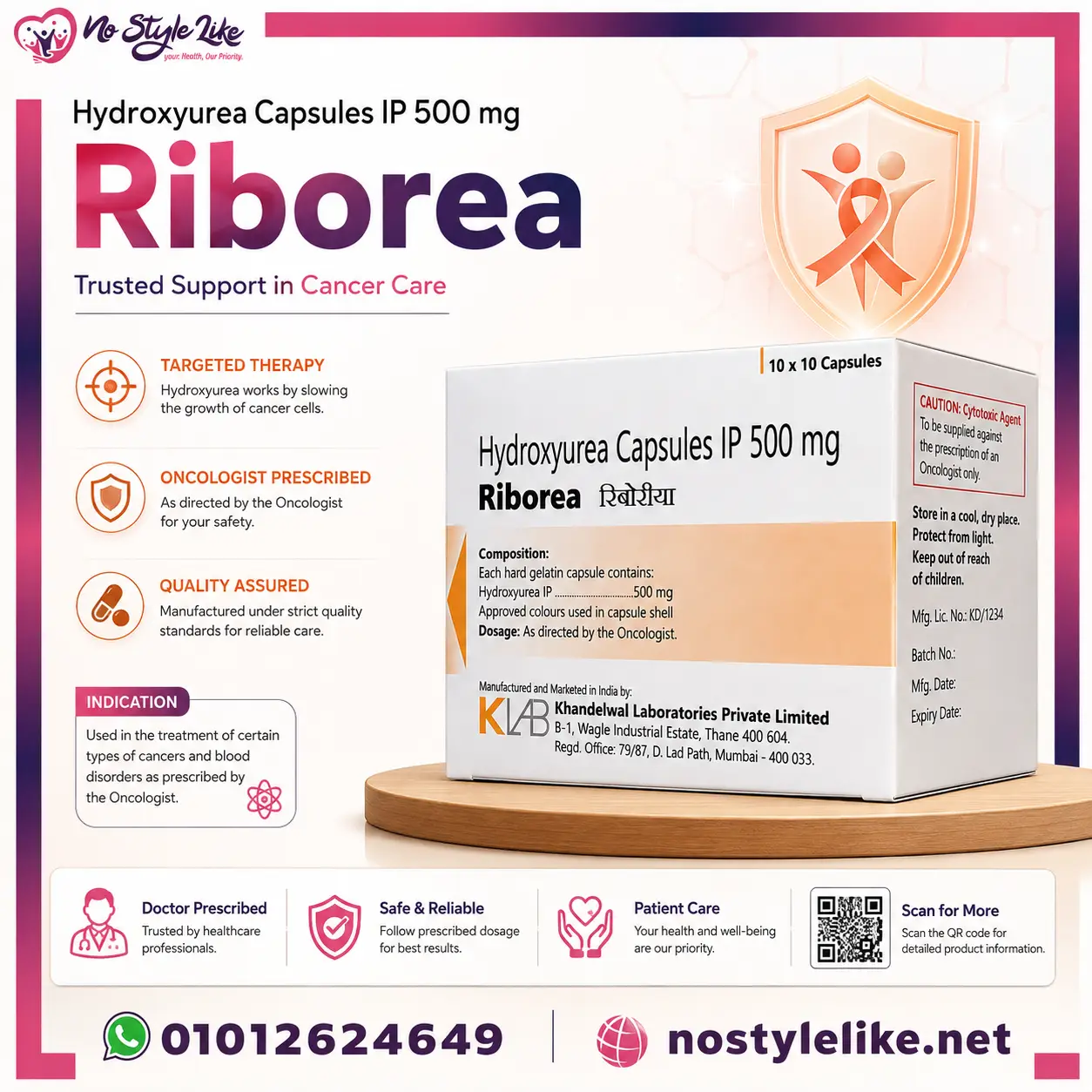
Hydroxyurea 500mg Capsules — Riborea 100 Capsules for Blood Cancers and Sickle Cell Disease
Quick answer
Hydroxyurea 500mg is a cytotoxic antimetabolite containing hydroxyurea (hydroxycarbamide). It inhibits the enzyme ribonucleotide reductase, halting DNA synthesis in rapidly dividing cells. Specialists prescribe it for resistant chronic myeloid leukaemia, for locally advanced squamous cell carcinoma of the head and neck alongside chemoradiation, and in sickle cell disease to reduce painful crises and transfusion need. It is prescription only; the dose is calculated per kilogram of body weight and adjusted against regular blood counts. Riborea 100 capsules is available now from No Style Like at EGP 1200.
Key facts about hydroxyurea 500mg
Riborea is one of several hydroxyurea 500mg presentations available in Egypt. It is used strictly within a treatment plan set by a haematologist or oncologist. This page explains how the medicine works, its licensed indications, how the dose is determined, the laboratory monitoring it requires, and the safety precautions you should understand before the first capsule.
On this page
- What is hydroxyurea 500mg (Riborea)?
- How hydroxyurea works in the body
- Licensed indications
- Who is it prescribed for?
- Contraindications
- Dosage and administration
- Safe handling of the capsules
- Timing and missed dose
- How long until it works
- Required tests and monitoring
- Drug interactions
- Effects on other medicines and lab results
- Side effects
- Long-term warnings and fertility
- What to eat during treatment
- Common mistakes
- Myths versus facts
- Alternatives available in Egypt
- How much does hydroxyurea 500mg cost in Egypt?
- When to seek urgent care
- Storage
- Frequently asked questions
- Summary
What is hydroxyurea 500mg (Riborea)?
Hydroxyurea — known as hydroxycarbamide in the UK and Europe — is a cytotoxic antimetabolite. It is a remarkably small molecule (molecular weight 76.05) that is absorbed quickly after swallowing and acts on rapidly dividing cells, particularly in the bone marrow.
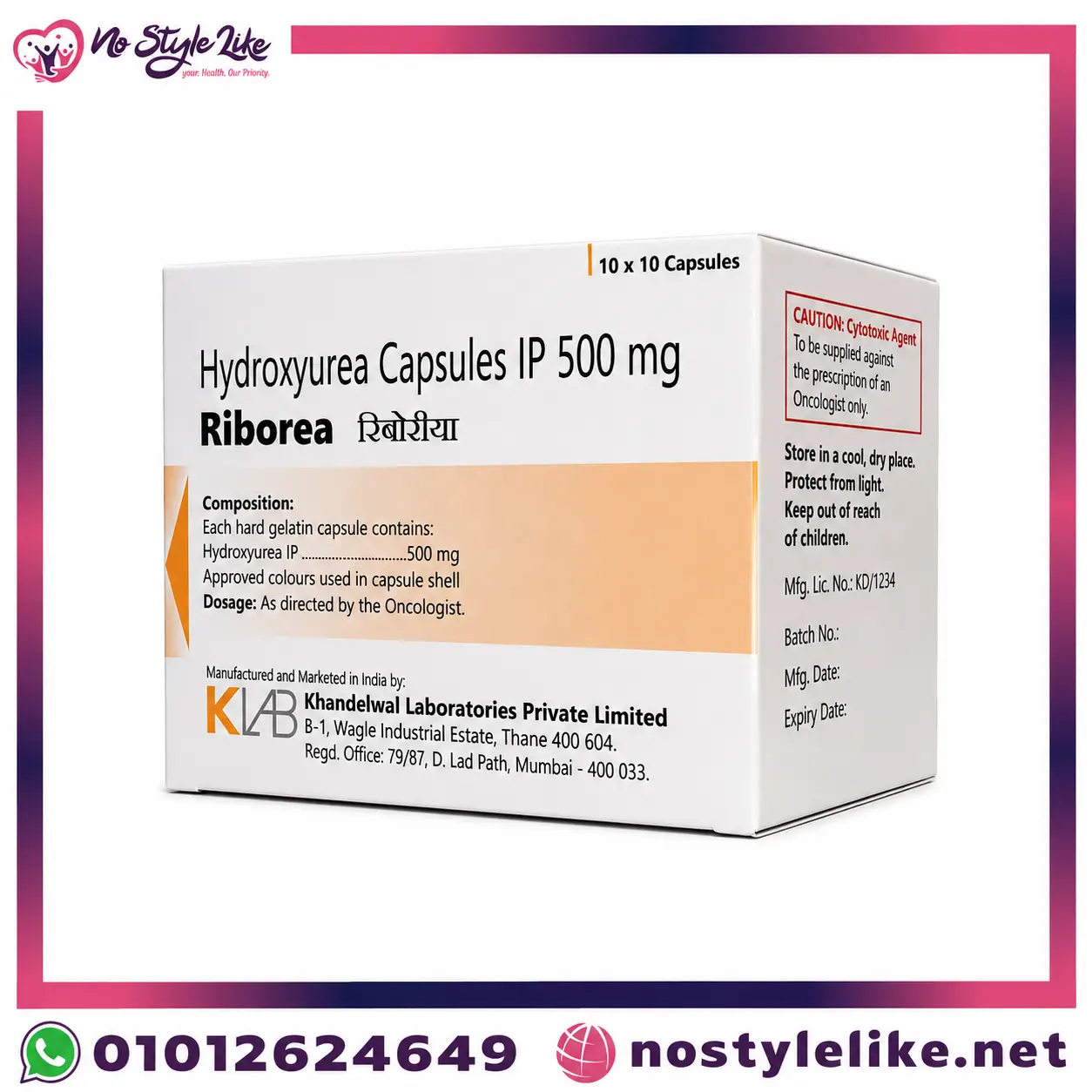
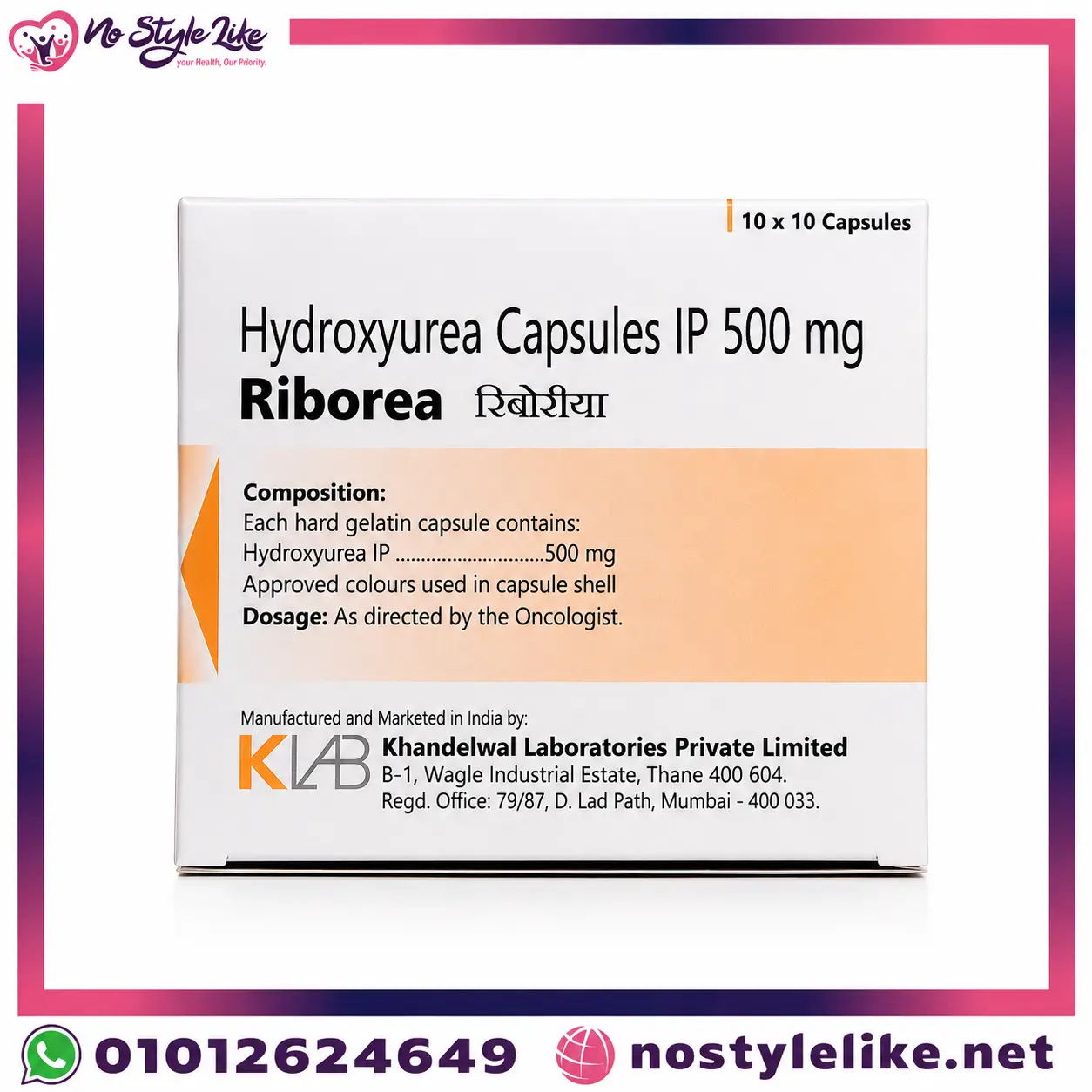
Riborea is the brand produced by Khandelwal Laboratories in India at a strength of 500 mg, supplied as 100 capsules per box. The same active ingredient reaches Egypt under other brand names such as Hydrea and Hydroxyurea-medac. The difference between them lies in country of origin and price, not in the molecule or its strength.
This medicine is genuinely cytotoxic, which means it is handled, stored and disposed of like any chemotherapy agent. That is not a formality — it is what separates it from an ordinary oral tablet.
How hydroxyurea works in the body
The core mechanism is inhibition of ribonucleotide reductase, the enzyme that converts ribonucleotides into the deoxyribonucleotides from which DNA is built. Once that enzyme is blocked, the cell cannot replicate its DNA and arrests in S phase. The fastest-dividing cells — malignant cells and bone marrow cells — are affected most.
In sickle cell disease the story is different. The official label states plainly that the full mechanism remains uncertain, but the recognised pharmacological effects include:
- Raising fetal haemoglobin (HbF) inside red blood cells — HbF does not polymerise and does not distort the cell into a sickle shape.
- Lowering neutrophil counts, reducing the adhesion cascade inside vessels.
- Increasing the water content and deformability of red cells so they pass through capillaries.
- Reducing red cell adhesion to the vascular endothelium.
Together these effects reduce painful vaso-occlusive crises and the need for repeated transfusion.
Licensed indications
Licensed indications vary between regulators. The uses documented in official prescribing information are:
- Resistant chronic myeloid leukaemia (CML) — the principal indication for the 500 mg capsule, either as a bridging phase before tyrosine kinase inhibitors when white cell and platelet counts demand immediate control, or as palliative treatment in blast phase.
- Locally advanced squamous cell carcinoma of the head and neck (excluding the lip), in combination with chemoradiation.
- Sickle cell disease — to reduce the frequency of moderate to severe painful crises and reduce transfusion requirement.
- Polycythaemia vera and essential thrombocythaemia in patients at high risk of thromboembolic complications — a licensed indication in Europe.
An important correction: many websites state that hydroxyurea treats only head and neck cancer and sickle cell anaemia. That is incomplete. The primary licensed use of the 500 mg capsule is chronic myeloid leukaemia, and in Europe polycythaemia vera and essential thrombocythaemia are licensed indications too. Only your treating specialist can decide which applies to you.
Who is it prescribed for?
- Patients with chronic myeloid leukaemia under haemato-oncology supervision.
- Adults with sickle cell disease who experience recurrent painful crises or acute chest syndrome.
- Patients with high-risk myeloproliferative neoplasms such as polycythaemia vera and essential thrombocythaemia.
- Patients with head and neck tumours receiving a chemoradiation protocol.
Children with sickle cell disease are treated with the same active ingredient, but through dedicated paediatric presentations that allow precise weight-based dosing. The 500 mg capsule is not suitable for children because it cannot be split or opened.
Contraindications
- Known hypersensitivity to hydroxyurea or any capsule excipient.
- Marked leukopenia — white cell count below 2.5 x 10⁹/L.
- Thrombocytopenia — platelet count below 100 x 109/L.
- Severe anaemia or marked bone marrow depression.
- Pregnancy — the medicine can cause fetal harm.
- Breastfeeding.
- Severe renal impairment and severe hepatic impairment, depending on the specific product licence.
Dosage and administration
The figures below are reference values from official prescribing information, not instructions for use. Your dose is calculated from your body weight and adjusted against blood counts, renal function and response. Never start, change or stop this medicine on your own.
- Solid tumours, continuous therapy: 20 to 30 mg per kilogram once daily.
- Solid tumours, intermittent therapy: 80 mg per kilogram as a single dose every third day.
- With radiotherapy for head and neck cancer: 80 mg per kilogram every third day, started at least seven days before radiation begins.
- Chronic myeloid leukaemia: typically initiated at 40 mg per kilogram daily depending on the white cell count, reduced to 20 mg per kilogram once the count falls below 20 x 109/L, then titrated to maintain a count of 5 to 10 x 109/L.
- Polycythaemia vera: 15 to 20 mg per kilogram daily; most patients are controlled on 500 to 1000 mg daily.
- Sickle cell disease in adults: started at 15 mg per kilogram once daily and escalated in 5 mg per kilogram steps at label-defined intervals, to a maximum of 35 mg per kilogram daily.
- Renal impairment: when creatinine clearance falls below 60 mL/min the dose is halved. In end-stage renal disease the dose is given after dialysis on dialysis days.
Swallow the capsule whole with a glass of water, with or without food, at the same time each day. Generous fluid intake matters — it reduces the risk of hyperuricaemia and urate nephropathy.
Safe handling of hydroxyurea capsules
This is the section most consumer pages omit, and it is among the most important in the label:
- Do not open, break or chew the capsule, and do not inhale its contents.
- Wear disposable gloves when handling the capsules or the bottle.
- Wash your hands with soap and water before and after handling the medicine.
- People who are pregnant, planning a pregnancy or breastfeeding should not take or even handle this medicine.
- If powder spills from a damaged capsule, wipe it up immediately with a damp disposable towel and discard it in a closed container.
- Do not discard unused capsules in household waste — return them to a pharmacy.
Timing and missed dose
Take the dose at the same hour every day to keep drug levels steady. If a dose is missed, the UK licensed leaflet is explicit: do not take the missed dose at all, and take the next dose when it is due. Never double a dose to catch up, and mention it to your doctor at the next visit.
How long until it works
In sickle cell disease the response is inherently slow. European prescribing information states that a clinical response may take three to six months, and a full six-month trial at the maximum tolerated dose is recommended before concluding that treatment has failed. Fetal haemoglobin is measured every three to four months, with the aim of at least doubling it from baseline.
In myeloproliferative disease the effect on cell counts appears considerably faster, although no specific figure is given in official labelling — response is tracked through weekly blood counts and the dose titrated accordingly.
Required tests and monitoring
- Before starting: full blood count with differential, platelets, renal function, liver function and uric acid.
- During treatment for malignancy: full blood count at least once a week.
- During treatment for sickle cell disease: blood count every two weeks, and fetal haemoglobin every three to four months.
- Regular skin examination for changing moles or new lumps, and inspection of the legs and feet for ulcers.
Interruption thresholds given in the labelling: treatment is interrupted if the white cell count falls below 2.5 x 10⁹/L or platelets fall below 100 x 109/L, and resumed once counts rise significantly towards normal. Sickle cell thresholds differ between products, and your own thresholds are set by your specialist.
Drug interactions
The interactions documented in official labelling are:
- HIV antiretrovirals (didanosine, stavudine, indinavir) — by far the most serious. Fatal and non-fatal pancreatitis has occurred, along with hepatotoxicity and hepatic failure resulting in death, and severe peripheral neuropathy. Current labelling states this combination should be avoided.
- Other myelosuppressive agents and radiotherapy — additive marrow suppression, enhanced cytotoxicity with cytarabine and fluoropyrimidines, and possible radiation recall in previously irradiated skin.
- Live vaccines — contraindicated during treatment and for six months afterwards; they may cause severe or fatal infection in an immunosuppressed patient.
Correcting a widely repeated claim: many pages list interactions with aspirin, ibuprofen, warfarin, diphenhydramine and zolpidem. No official label documents any of these. What labelling does describe is a risk of raised uric acid — managed with generous fluids and monitoring, not a drug-drug interaction — plus the three interactions above. Even so, tell your doctor everything you take, especially painkillers while your platelet count is low.
Effects on other medicines and lab results
Hydroxyurea interferes analytically with the enzymes used to measure urea, uric acid and lactic acid, producing falsely elevated results — an estimated 5 to 9 per cent overstatement for uric acid and 6 to 11 per cent for lactate. It may also falsely raise readings from continuous glucose monitoring (CGM) sensors, which matters a great deal for a patient with diabetes. Always tell the laboratory and your doctor that you are taking hydroxyurea before any test.
Side effects
Common: low white cells, platelets and haemoglobin; loss of appetite; nausea and vomiting; diarrhoea or constipation; mouth and throat sores; rash; changes in skin and nail colour; hair loss; headache and dizziness; and macrocytosis, which is usually self-limiting.
Serious and requiring action: severe myelosuppression; leg ulcers and vasculitic ulceration that can progress to gangrene (risk is higher with previous or concurrent interferon); pancreatitis; hepatic failure; interstitial lung disease and pulmonary fibrosis; peripheral neuropathy; and skin cancers.
Long-term warnings and fertility
- Secondary malignancy: secondary leukaemia and skin cancers have been reported with long-term use in myeloproliferative disorders. Keep to regular skin checks and use sun protection — sunscreen and covering clothing.
- Pregnancy and contraception: the medicine can harm a fetus. Women should use effective contraception during treatment and for at least six months after stopping; men should use effective contraception during treatment and for at least one year after stopping.
- Fertility: reduced or absent sperm counts are commonly reported and are usually reversible — discuss sperm banking before starting if you plan to have children.
- Breastfeeding: discontinue breastfeeding during treatment.
What to eat during treatment
- Plenty of fluids — good hydration is the single most useful dietary measure against raised uric acid and urate nephropathy.
- Thoroughly cooked and washed food, avoiding raw items while immunity is low.
- Do not start folic acid supplements on your own — the medicine can mask folate deficiency, so that decision belongs to your doctor.
- Small frequent meals to limit nausea, and avoid spicy food while mouth ulcers are present.
- Avoid alcohol entirely to reduce the burden on the liver.
Common mistakes
- Opening the capsule to make swallowing easier — a serious error, because the powder is cytotoxic.
- Stopping the medicine as soon as things improve, which lets counts return to their pre-treatment state.
- Skipping the blood count because the patient feels well.
- Copying another patient’s dose — dosing is by weight and individual response.
- Receiving a live vaccine during treatment without consulting the treating doctor.
- Dismissing a small leg ulcer as an ordinary wound.
Myths versus facts
| Myth | Fact |
|---|---|
| It is not really chemotherapy because it is a capsule. | It is a genuinely cytotoxic agent classed with chemotherapy; the oral form changes nothing about its nature or handling precautions. |
| No side effects means it is not working. | Response is measured by laboratory tests, not by how you feel; many patients respond with few or no symptoms. |
| The more expensive brand is stronger. | The active ingredient and strength are identical; price reflects origin and supply chain, though your doctor may prefer a specific product for practical reasons. |
| I can increase the dose when pain worsens. | Escalation follows fixed increments at fixed intervals and only after a blood count; self-escalation risks severe marrow suppression. |
| It causes permanent infertility. | Reduced or absent sperm production is common but usually reversible; sperm banking before treatment is still advised. |
Alternatives available in Egypt
Every alternative below contains the same active ingredient at the same strength. The differences are origin, pack and price. Do not switch between products without telling your doctor:
| Product | Origin | Note |
|---|---|---|
| Riborea 500 mg (this page) | India | 100 capsules — the most affordable option |
| Hydroxyurea 500 mg | India | Same strength, alternative pack |
| Hydrea 500 mg | Turkey | The best known originator brand |
| Hydroxyurea-medac 500 mg | Germany | The European presentation |
How much does hydroxyurea 500mg cost in Egypt?
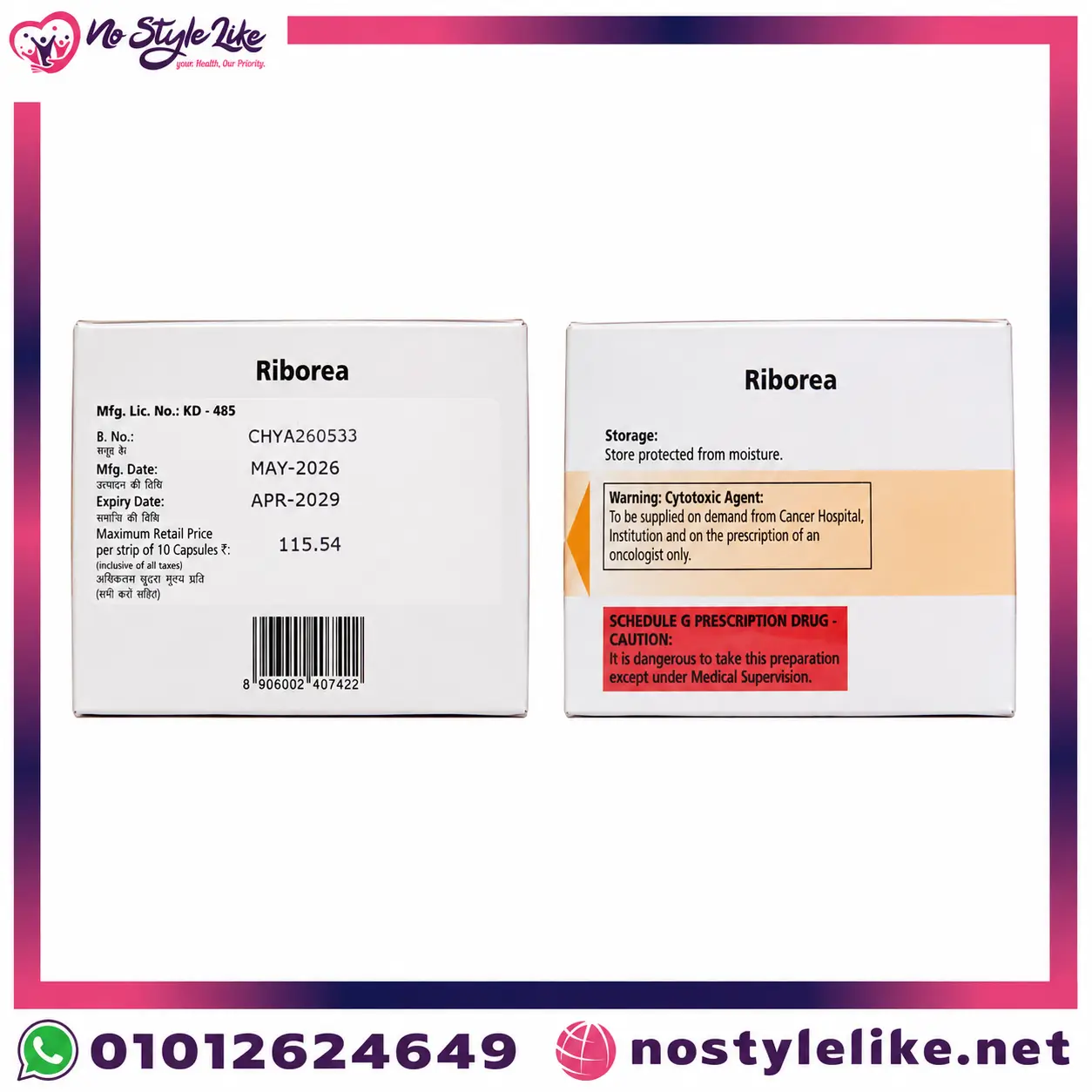
Riborea hydroxyurea 500mg capsules, pack of 100, cost EGP 1200 at No Style Like — among the lowest advertised prices for this active ingredient in the Egyptian market, with an expiry running to 02/2029 and delivery to every governorate. Prices for the Indian, Turkish and German presentations differ according to origin and import cost, and you can compare them in the alternatives table above. Prices are subject to change with each imported shipment.
When to seek urgent care
- Fever, chills, sore throat, cough or breathlessness — signs of infection while immunity is low.
- Unusual bleeding or bruising, or blood in the urine.
- Persistent pain starting in the upper abdomen and spreading to the back — possible pancreatitis.
- Pain in the upper right abdomen, or yellowing of the skin or eyes — possible liver toxicity.
- A wound or ulcer on the leg or foot that will not heal, or redness, swelling and blistering of the skin.
- Numbness, burning or tingling in the hands or feet.
- A mole that changes shape or colour, or a new skin lump.
- A rapid heartbeat or sudden severe fatigue.
Storage
Store in a dry place below 25 degrees Celsius, in the original tightly closed container to protect from moisture, away from direct sunlight, and well out of reach of children. Do not freeze.
No Style Like expert tip
The commonest problem we see with hydroxyurea patients is not the dose — that belongs to the specialist. It is lapsed laboratory monitoring. Keep a simple log, on paper or on your phone, of the date and result of every blood count, and bring it to each appointment. A small drift in platelets or neutrophils across three consecutive counts tells your doctor far more than any single result. The second habit worth building: inspect your legs once a week. Leg ulceration is one of this medicine’s signature effects, and catching it early saves months of treatment.
Frequently asked questions about hydroxyurea 500mg
Is hydroxyurea a form of chemotherapy?
Yes. Hydroxyurea is a cytotoxic agent classed with chemotherapy even though it is taken by mouth as a capsule. That is precisely why the handling precautions are strict — never open the capsule, and wear gloves when handling it.
How long does hydroxyurea take to work?
In sickle cell disease a clinical response may take three to six months, and a full six-month trial is recommended before judging it ineffective. In myeloproliferative disease the effect on cell counts appears sooner and is tracked with weekly blood counts.
Does hydroxyurea cause infertility?
Reduced or absent sperm production is a commonly reported effect and is usually reversible after stopping. If you plan to have children, discuss sperm banking before starting, and use effective contraception for one year after treatment ends.
Can I open the capsule and mix it with water?
No. The label prohibits opening, breaking or chewing the capsule and inhaling its contents. If swallowing is difficult, speak to your doctor — alternative presentations exist at lower strengths or as an oral solution.
Is hydroxyurea suitable for children?
The active ingredient is used in children with sickle cell disease, but through dedicated paediatric products that allow accurate weight-based dosing. A 500 mg capsule is unsuitable because it cannot be divided or opened.
Does hydroxyurea interact with painkillers?
No official label documents an interaction with aspirin or ibuprofen. However, while platelet counts are low any painkiller becomes a clinical decision, so tell your doctor everything you take.
Summary
Hydroxyurea 500mg is an effective, well-established treatment in chronic myeloid leukaemia, myeloproliferative neoplasms and sickle cell disease — and at the same time a cytotoxic medicine that demands a prescription, regular laboratory monitoring and strict handling precautions. Riborea supplies the same active ingredient in a 100-capsule pack with expiry to 02/2029 at one of the lowest prices in the Egyptian market. Browse the rest of our oncology and haematology range at No Style Like, or contact our pharmacy team for a free consultation before ordering.
Reviewed by the No Style Like pharmacy content team — trusted expertise since 1999. References used on this page: MedlinePlus — Hydroxyurea, DailyMed — HYDREA (FDA label), and Memorial Sloan Kettering Cancer Center.
Medical disclaimer: the information on this page is for general education only and does not replace the official product leaflet or the advice of a licensed doctor or pharmacist. Hydroxyurea is a cytotoxic, prescription-only medicine used under oncology or haematology supervision. The doses quoted are reference figures from official labelling, not instructions for use. Do not start, stop or change any medicine on the basis of this page alone.

Reviews
There are no reviews yet.