


Description
Sunshine Vitamin D3 10,000 IU with Vitamin C – 60 Tablets: The Complete 22-Section Guide to High-Dose D3 and Using It Safely
Quick Answer:
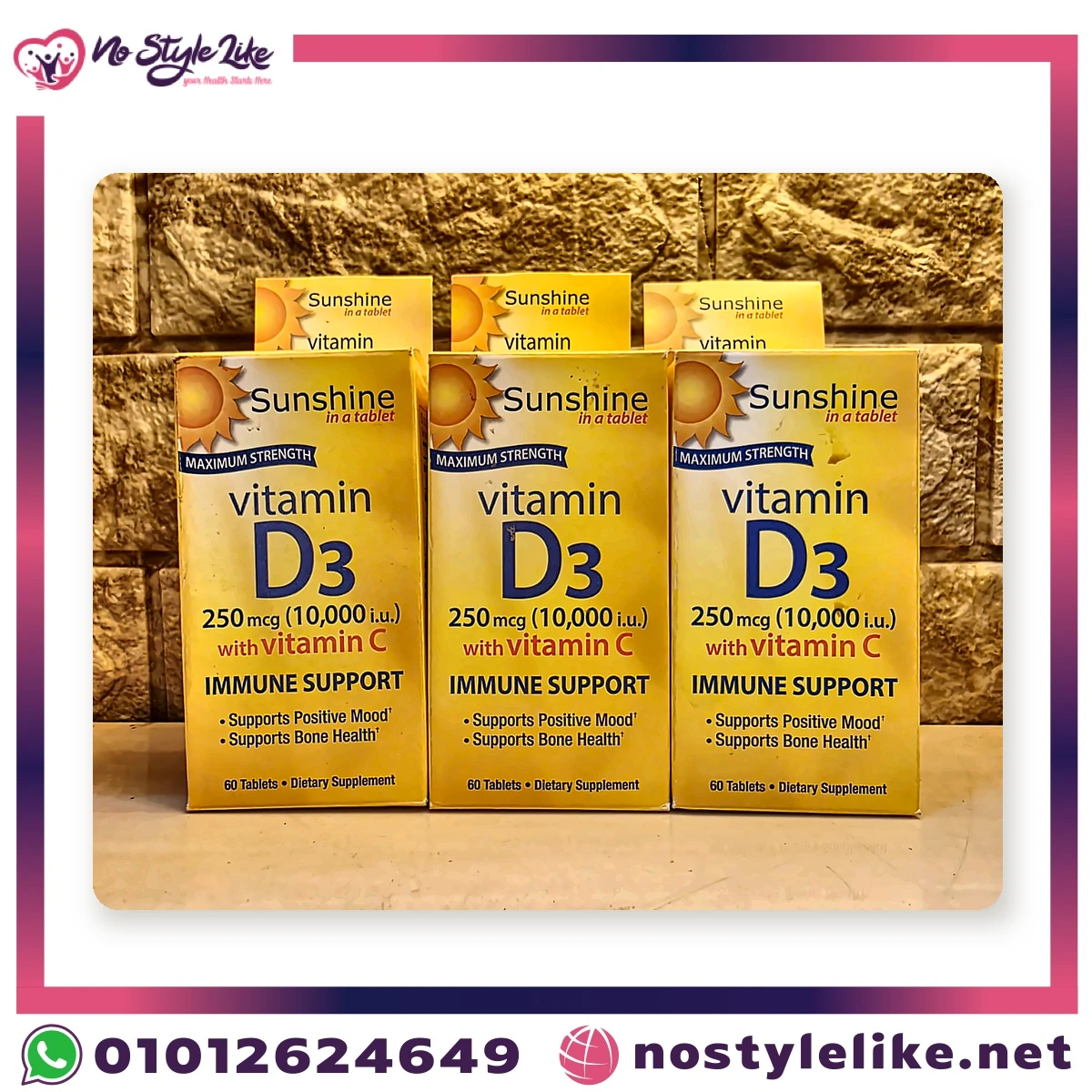
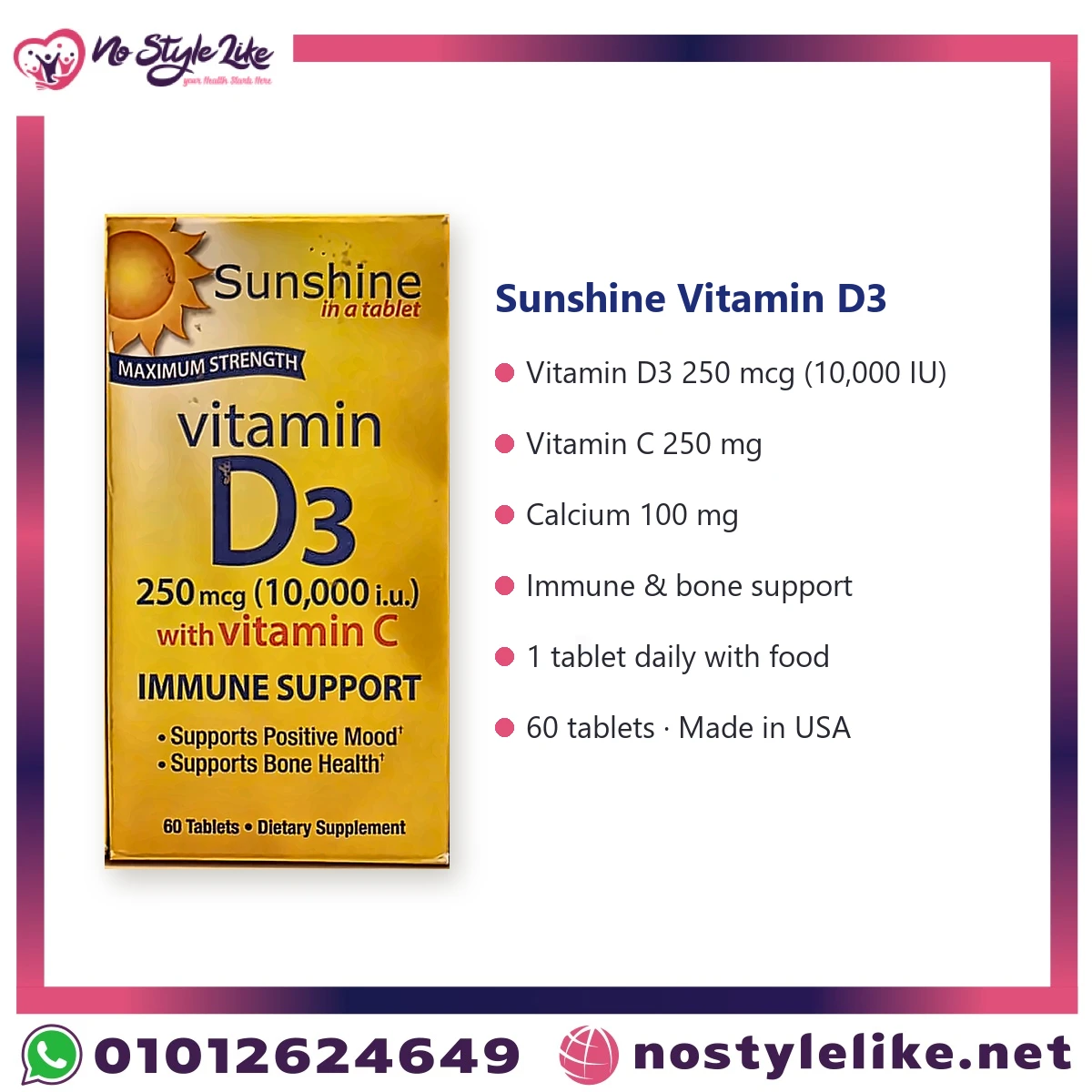
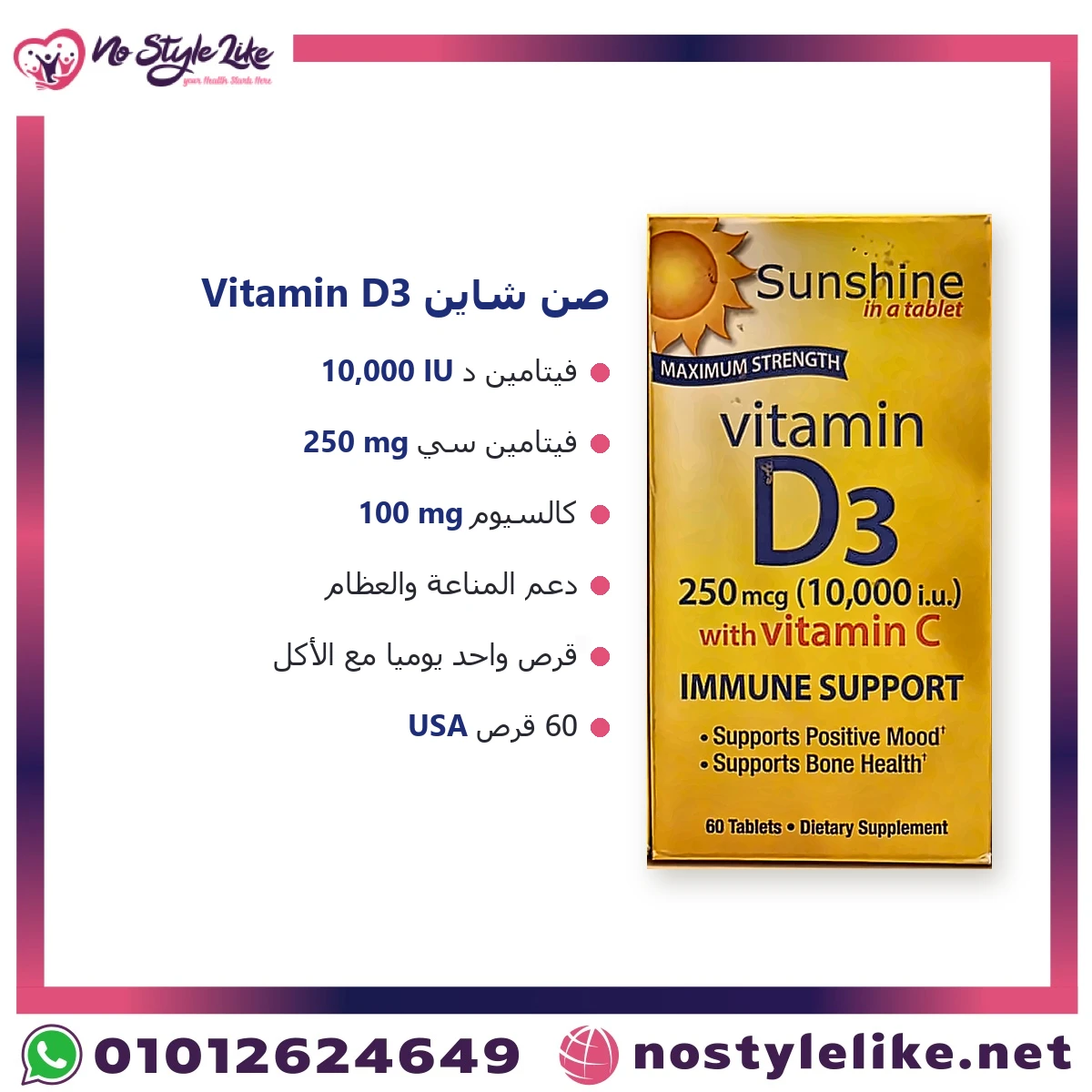
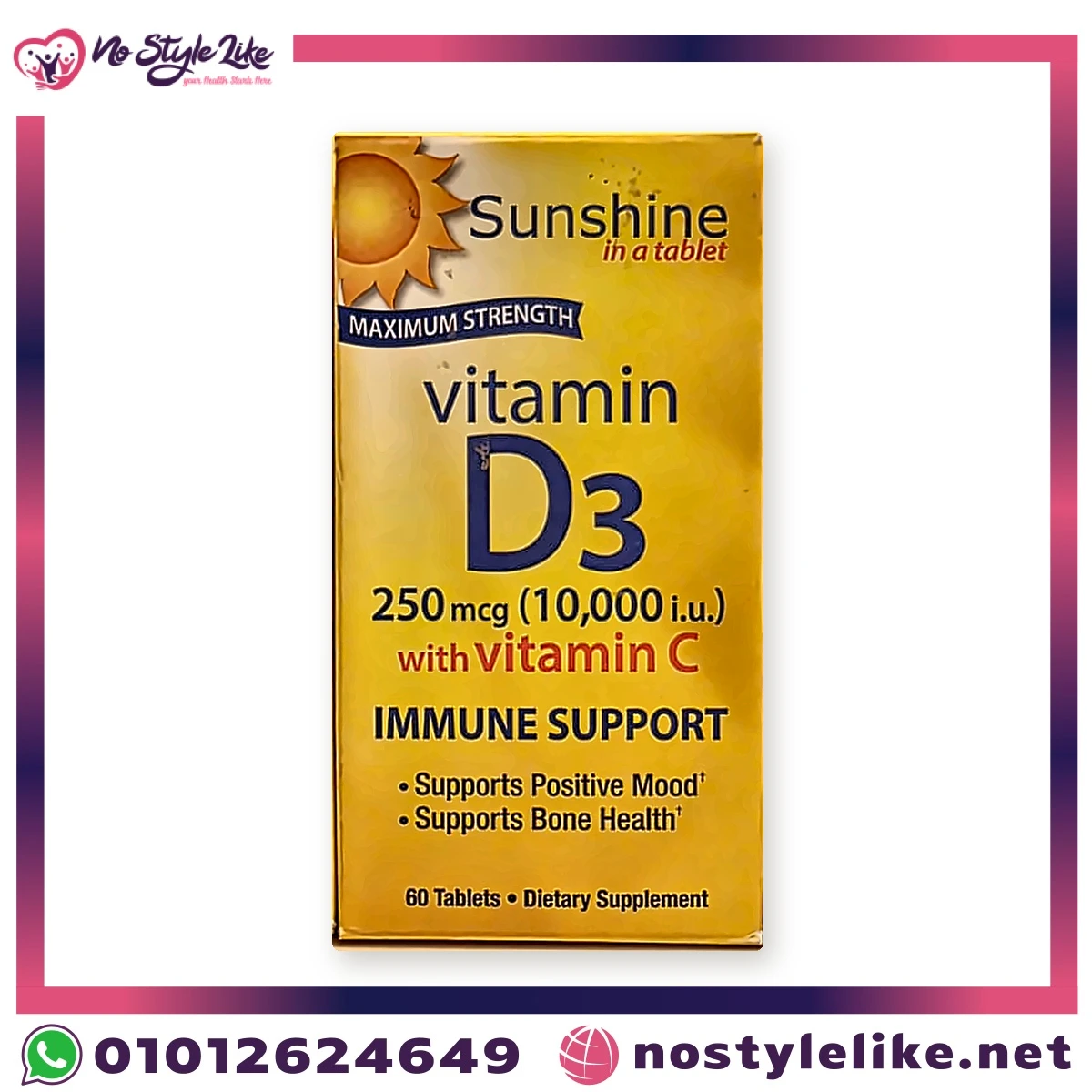
Sunshine Vitamin D3 by Windmill (USA) is a high-strength dietary supplement: each tablet provides 250 mcg (10,000 IU) of vitamin D3, plus 250 mg of vitamin C and 100 mg of calcium. It supports immunity, bone health and mood, and is best suited to people with a vitamin D deficiency confirmed by a blood test. Because 10,000 IU a day is above the adult safe upper limit (4,000 IU), it is best used after testing, under a doctor’s supervision and for a defined period.
Sunshine Vitamin D3 Key Facts
| Name | Sunshine in a Tablet Maximum Strength Vitamin D3 with Vitamin C |
| Brand | Windmill Health Products – USA |
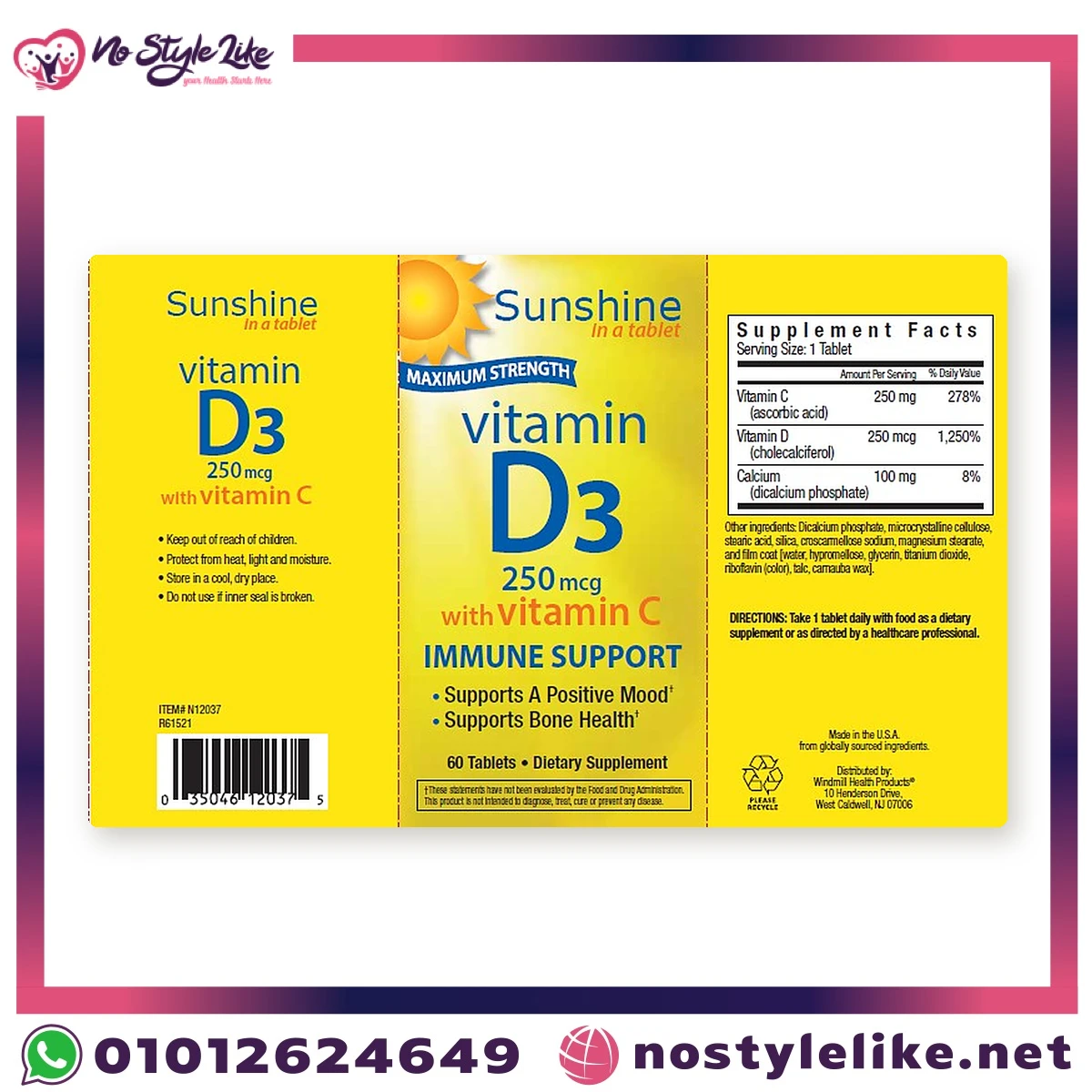
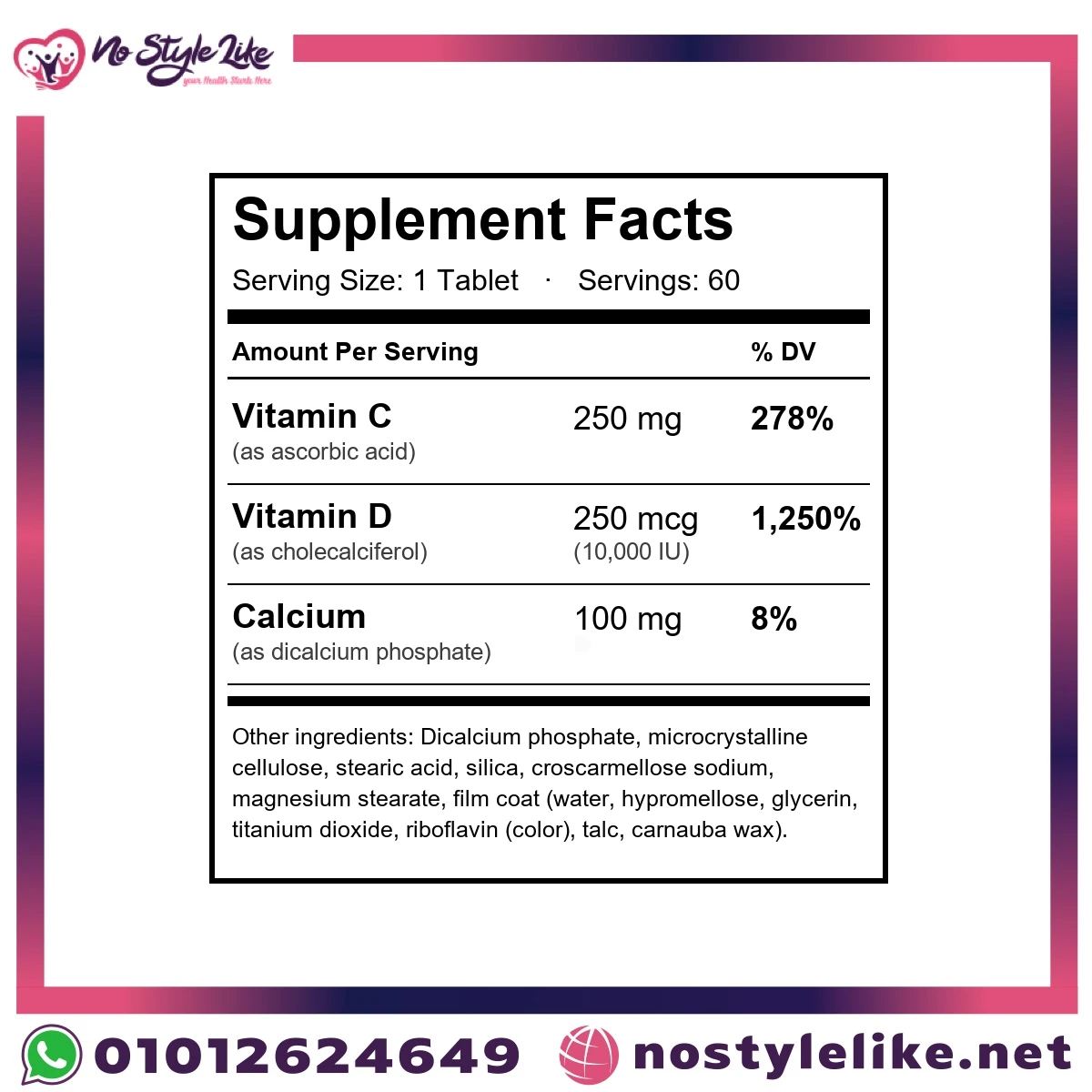
| Vitamin D3 (cholecalciferol) | 250 mcg = 10,000 IU (1,250% DV) |
| Vitamin C (ascorbic acid) | 250 mg (278% DV) |
| Calcium (dicalcium phosphate) | 100 mg (8% DV) |
| Pack size | 60 film-coated tablets |
| Label directions | 1 tablet daily with food, or as directed by a healthcare professional |
| Made in | USA |
Short description: Sunshine Vitamin D3 – “sunshine in a tablet” – is a maximum-strength American formula combining 10,000 IU of vitamin D3 with vitamin C and calcium in one tablet, to support immunity, bones and mood, especially for people who are low in vitamin D because they get little sun.
Table of Contents
- Introduction
- What is Sunshine Vitamin D3?
- How each ingredient works
- Key benefits
- Real-life use cases
- Who is it for?
- Who should avoid it?
- How to use it
- Best time to take it
- When will you see results?
- Common mistakes
- Myths vs facts
- Side effects and signs of excess
- Drug interactions
- Warnings
- Recommended tests
- What to take with it
- Vitamin D doses compared
- When to see a doctor
- NSL expert tip
- FAQ
- Conclusion
Introduction to Sunshine Vitamin D3
Even in sunny Egypt, vitamin D deficiency is remarkably common, because most of the day is spent indoors, clothing covers most of the skin, sunscreen is used and many people carry extra weight. Deficiency shows up as constant tiredness, bone and muscle aches, weaker immunity and low mood.
Sunshine Vitamin D3, with its high 10,000 IU dose, is designed to correct deficiency quickly. But a high dose cuts both ways, so this guide explains when to use it, how to monitor it with blood tests and which signs suggest you are getting too much.
What Is Sunshine Vitamin D3?
It is a dietary supplement from the Sunshine in a Tablet range made by Windmill Health Products in the USA. It is labelled “Maximum Strength” because each tablet contains 250 mcg of vitamin D3 as cholecalciferol – the same form your skin makes in sunlight.
Each tablet also adds 250 mg of vitamin C for immune support and 100 mg of calcium. The pack contains 60 film-coated tablets and is made in the USA from globally sourced ingredients.
How Each Ingredient Works
- Vitamin D3: converted in the liver and kidneys into its active form, it increases absorption of calcium and phosphorus from the gut, helps build bone and supports immune cells and muscles.
- Vitamin C: an antioxidant that supports immune function and collagen formation and helps absorb iron from food.
- Calcium: the main building block of bones and teeth; the 100 mg in each tablet tops up your diet rather than replacing it.
Key Benefits of Sunshine Vitamin D3
- Corrects vitamin D deficiency quickly in people with a confirmed low level.
- Supports bone and tooth health and helps calcium absorption.
- Supports immune function through vitamin D and vitamin C together.
- Supports a positive mood – low vitamin D is linked with fatigue and low mood.
- Supports muscle strength, especially in older adults with deficiency.
- One tablet combines three nutrients, and 60 tablets last two months.
Real-Life Use Cases
An office worker: she has fatigue and widespread aches, and her test shows vitamin D at 12 ng/mL. Her doctor prescribes a high dose for a set period, then a retest after 8–12 weeks.
A man in his fifties: he gets almost no sun and has weak muscles. After testing, his doctor sets the dose and duration, then moves him to a lower maintenance dose once his level improves.
In winter: someone who becomes deficient every winter uses the high dose on medical advice, alongside sensible sun exposure and vitamin D-rich foods.
Who Is Sunshine Vitamin D3 For?
- Adults with vitamin D deficiency confirmed by a blood test.
- People who spend most of their time away from sunlight.
- People with darker skin and older adults, whose skin makes less vitamin D.
- People living with obesity, who often need higher doses under medical guidance.
Who Should Avoid Sunshine Vitamin D3?
- Children and teenagers – this dose is not intended for them.
- Pregnant or breastfeeding women, unless clearly advised by a doctor.
- People with high blood calcium or an already high vitamin D level.
- People with recurrent kidney stones or chronic kidney disease.
- People with sarcoidosis, hyperparathyroidism or certain lymphomas.
- Anyone on interacting medicines without medical advice (see Drug interactions).
How to Use Sunshine Vitamin D3
- Label directions: one tablet daily with food, or as directed by a healthcare professional.
- Because the dose is high, doctors often set a time limit or prescribe it intermittently (for example every other day or once a week) based on your test result.
- Take it with a meal that contains healthy fats for better absorption.
- Do not combine it with other vitamin D supplements without advice.
- Retest after 8–12 weeks to decide whether to continue or switch to a lower maintenance dose.
Best Time to Take Sunshine Vitamin D3
The best time is with your largest meal, often lunch, because vitamin D is fat-soluble and absorbed better with food. Some people prefer the morning, as a few report that taking it late in the evening seems to affect their sleep.
When Will You See Results?
- Blood vitamin D level: rises measurably within 8–12 weeks.
- Fatigue and aches: many people notice improvement within 4–8 weeks if deficiency was the cause.
- Bone health: a long-term effect linked to calcium intake and physical activity.
Common Mistakes
- Taking 10,000 IU daily for many months without testing or follow-up.
- Combining several vitamin D products without adding up the total dose.
- Taking it on an empty stomach, which lowers absorption.
- Giving it to children because it is “just a vitamin”.
- Ignoring signs of excess such as nausea and extreme thirst.
Myths vs Facts
| Myth | Fact |
|---|---|
| Vitamin D is safe at any dose. | High doses over long periods can raise blood calcium and harm the kidneys and heart. |
| Sunlight is enough for everyone. | Many people do not get enough because of lifestyle, darker skin and age. |
| A higher dose means faster results for everyone. | The right dose depends on your test result; not everyone needs a high dose. |
| Vitamin D cures depression. | It supports mood when you are deficient, but it is not a treatment for depression. |
Side Effects and Signs of Too Much Vitamin D
Used correctly and for a set period, most people tolerate it well. Long-term use without monitoring can lead to vitamin D toxicity and high blood calcium, with signs such as:
- Nausea, vomiting and loss of appetite.
- Constipation and abdominal pain.
- Extreme thirst and frequent urination.
- Weakness, fatigue and confusion.
- Kidney stones and, in severe cases, heart rhythm problems.
High doses of vitamin C can occasionally cause mild stomach upset.
Drug Interactions
- Thiazide diuretics: may raise blood calcium together with vitamin D.
- Digoxin: high calcium increases the risk of heart rhythm problems.
- Corticosteroids: reduce calcium absorption and affect vitamin D metabolism.
- Orlistat and bile-acid-binding cholesterol medicines: reduce vitamin D absorption.
- Some anti-seizure medicines: may increase vitamin D needs.
Warnings
- The dose is above the adult daily safe upper limit (4,000 IU), so do not use it long term without medical supervision.
- Keep out of reach of children.
- Protect from heat, light and moisture; store in a cool, dry place.
- Do not use if the inner seal is broken.
- A supplement is not a substitute for a balanced diet.
Recommended Tests
- 25-OH vitamin D: before starting and again after 8–12 weeks.
- Blood calcium: especially with long-term use or kidney disease.
- Kidney function: depending on your health and your doctor’s advice.
What to Take with Sunshine Vitamin D3
- Vitamin K2: helps direct calcium to bone and is sometimes paired with high-dose vitamin D on medical advice.
- Magnesium: needed to activate vitamin D in the body.
- Calcium-rich foods: dairy, sardines and leafy greens.
- Sensible sun and regular activity: to support bones and muscles.
Vitamin D3 Doses Compared
| Daily dose | Typical use |
|---|---|
| 600–800 IU | Recommended daily intake for adults |
| 1,000–2,000 IU | Common maintenance dose |
| 4,000 IU | Adult daily safe upper limit without supervision |
| 10,000 IU | Treating deficiency for a set period under medical supervision |
When to See a Doctor
- Before starting, if you have not had a vitamin D test.
- If you develop persistent nausea, extreme thirst or frequent urination.
- If you have kidney disease or recurrent stones.
- If you are pregnant or breastfeeding.
- If you take heart medicines, diuretics or corticosteroids.
NSL Expert Tip
From the No Style Like pharmacy team: the most common mistake we see is staying on 10,000 IU a day for a whole year without a test. Our advice: test first, use this high dose for the period your doctor sets, then retest and switch to a maintenance dose. Take the tablet with lunch for the best absorption.
Sunshine Vitamin D3 FAQ
Is 10,000 IU a day a safe dose?
It is above the 4,000 IU daily safe upper limit for unsupervised use, so it is used to correct deficiency for a set period with follow-up testing.
How long does one pack last?
60 tablets last two months at one tablet a day, or longer if your doctor prescribes an intermittent schedule.
Is it suitable for children?
No. This dose is not intended for children or teenagers.
Can I take it with calcium tablets?
Usually yes, but add up your total calcium and vitamin D, and ask your doctor if you have kidney disease.
What is the difference between vitamin D3 and D2?
D3 (cholecalciferol) is the form your body makes from sunlight and usually raises blood vitamin D more efficiently than D2.
Does it help with hair loss?
It may help if vitamin D deficiency is one of the causes, but hair loss has many causes that need assessment.
Conclusion
Sunshine Vitamin D3 10,000 IU with vitamin C and calcium is a strong option to correct vitamin D deficiency and support immunity, bones and mood. Use it after testing, for the period your doctor sets, with food, and retest to monitor. Order Sunshine Vitamin D3 today from No Style Like Pharmacy with delivery across Egypt.
Reviewed by the No Style Like pharmacy content team. This information is for education only. This product is a dietary supplement, not a medicine intended to diagnose or treat any disease, and does not replace medical advice. Learn more about vitamin D and its safe limits at NIH Office of Dietary Supplements – Vitamin D.
Reviews
There are no reviews yet.