


Vitamin D3 Benefits: 7 Proven Benefits for Bones, Immunity, Muscles and Mood
Vitamin D3 Benefits: What Does the “Sunshine Vitamin” Do for You?
Vitamin D is called the sunshine vitamin because your skin makes it in sunlight. Yet modern lifestyles leave many people short of it. In this article we review the evidence-based vitamin D3 benefits and explain where the evidence stops, so your expectations stay realistic.
Why D3 and Not D2?
Vitamin D3 (cholecalciferol) is the form your body makes from sunlight, and it usually raises blood vitamin D more efficiently than D2. That is why most modern supplements use D3.
1. Building Bones and Teeth
Among all vitamin D3 benefits, the most important is that it increases the absorption of calcium and phosphorus from the gut. Without it, your body cannot use the calcium in food, and bones weaken. Severe deficiency causes osteomalacia in adults and rickets in children.
2. Supporting the Immune System
Immune cells carry vitamin D receptors, and vitamin D helps regulate their response. Studies link deficiency with a higher risk of some infections. Taking extra when your level is already normal, however, does not create “super immunity”.
3. Muscle Strength and Fall Prevention
Vitamin D supports muscle function, and deficiency is linked with muscle weakness, especially in older adults, which raises the risk of falls and fractures.
4. Mood and Energy
Low vitamin D is associated with fatigue and low mood. Many people notice more energy after correcting a deficiency, but vitamin D is not a treatment for depression.
5. Easing Deficiency-Related Bone Pain
Widespread bone and back pain can be a sign of deficiency, and it often improves within weeks once levels are restored.
6. Hair Health When Deficient
Low vitamin D is linked with some types of hair loss, and correcting it may help when deficiency is one of the causes.
7. Working Together with Vitamin C and Calcium
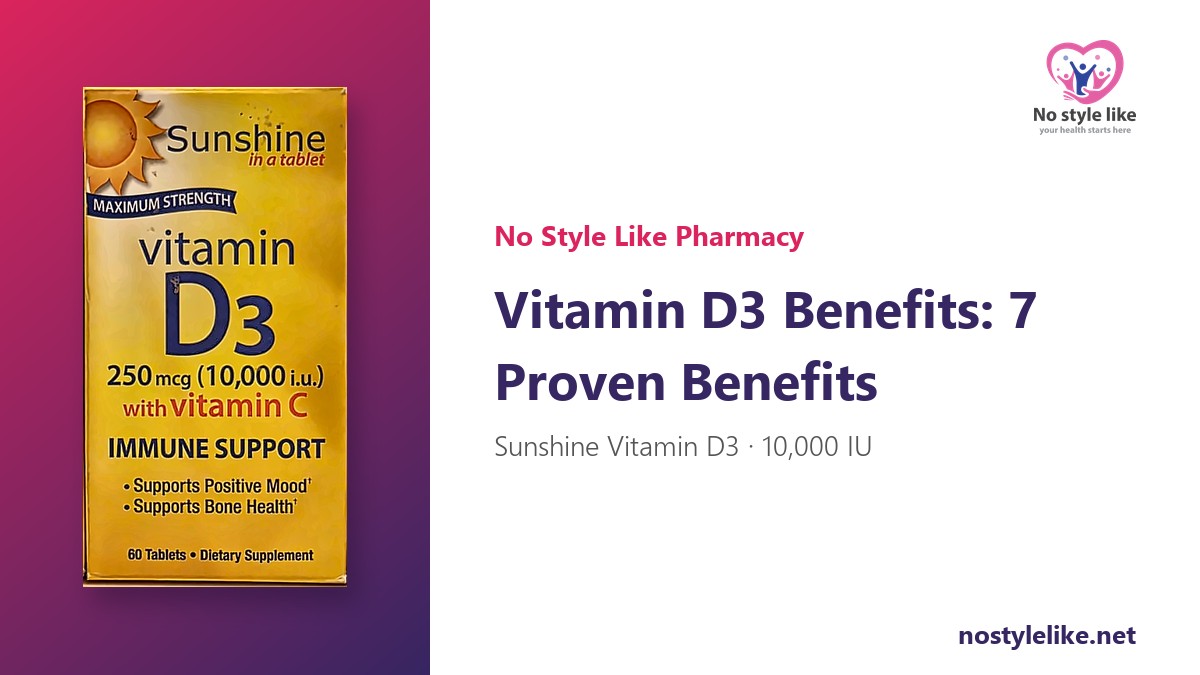
Some formulas combine D3 with vitamin C for immune support and with calcium for bone support. One example is Sunshine Vitamin D3 with Vitamin C, which combines all three in a single tablet.
Who Gains Most from Vitamin D3 Benefits?
- People with a deficiency confirmed by a blood test.
- Older adults.
- People who spend most of their time indoors.
- People with darker skin or obesity.
These groups are more likely to be low in vitamin D, so they tend to notice the clearest vitamin D3 benefits once a deficiency is corrected.
Natural Sources of Vitamin D3
Besides supplements, you can get part of your needs from oily fish such as salmon, sardines and mackerel, egg yolks, fortified dairy and beef liver. Moderate sun on the arms and face for 10–20 minutes several times a week also helps. Still, getting the full vitamin D3 benefits from food alone is hard for many people, which is why doctors use supplements when a deficiency is confirmed.
The Limits of the Evidence
Most vitamin D3 benefits appear when an existing deficiency is corrected. Raising the dose when your level is already normal adds no clear benefit and may cause harm. Choose your dose based on testing – see our guide to vitamin D3 10000 IU and our article on vitamin D3 dosage.
Frequently Asked Questions
When do the benefits appear?
Blood levels rise within 8–12 weeks, and many people feel less tired within 4–8 weeks.
Is sunlight enough?
It can be for some people, but modern lifestyles make supplements necessary for many.
Does it help the skin?
It supports general skin health, but evidence for direct cosmetic benefits is limited.
Should I take it all year?
That depends on your test results and lifestyle; some people need it year-round.
Conclusion
The key vitamin D3 benefits centre on bones, muscles, immunity and energy, especially for people who are deficient. Test, choose the right dose, and find Sunshine Vitamin D3 at No Style Like pharmacy.
This article was reviewed by the No Style Like pharmacy content team. It is for general awareness only. Vitamin D3 is a dietary supplement, not a medicine intended to diagnose or treat any disease, and this article does not replace advice from your doctor or pharmacist.
Do not exceed the dose your doctor sets in the hope of extra benefits. The adult daily safe upper limit is 4,000 IU; higher doses are used for a set period under medical supervision. Keep supplements out of the reach of children. For more information see the NIH Office of Dietary Supplements vitamin D fact sheet.