


Description
Vitamin D3 50000 IU by Leda Pharma: 15 Weekly Capsules to Correct Deficiency
Important before you buy: this product is a high therapeutic dose taken once every seven days only — it is not a daily supplement. Taking it daily by mistake causes vitamin D toxicity and a dangerous rise in blood calcium. Do not start it without a 25-hydroxyvitamin D blood test and a decision from your doctor or pharmacist.
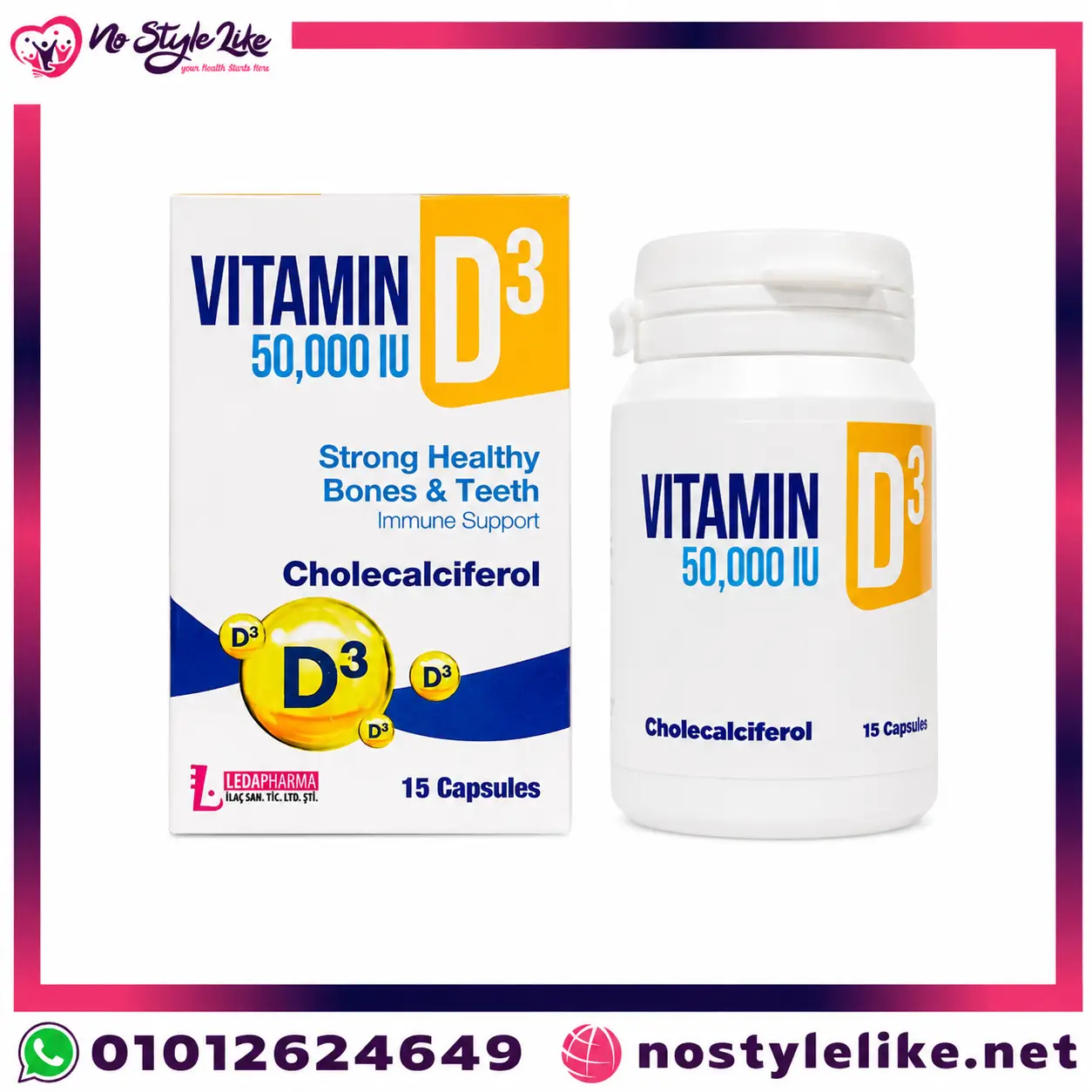
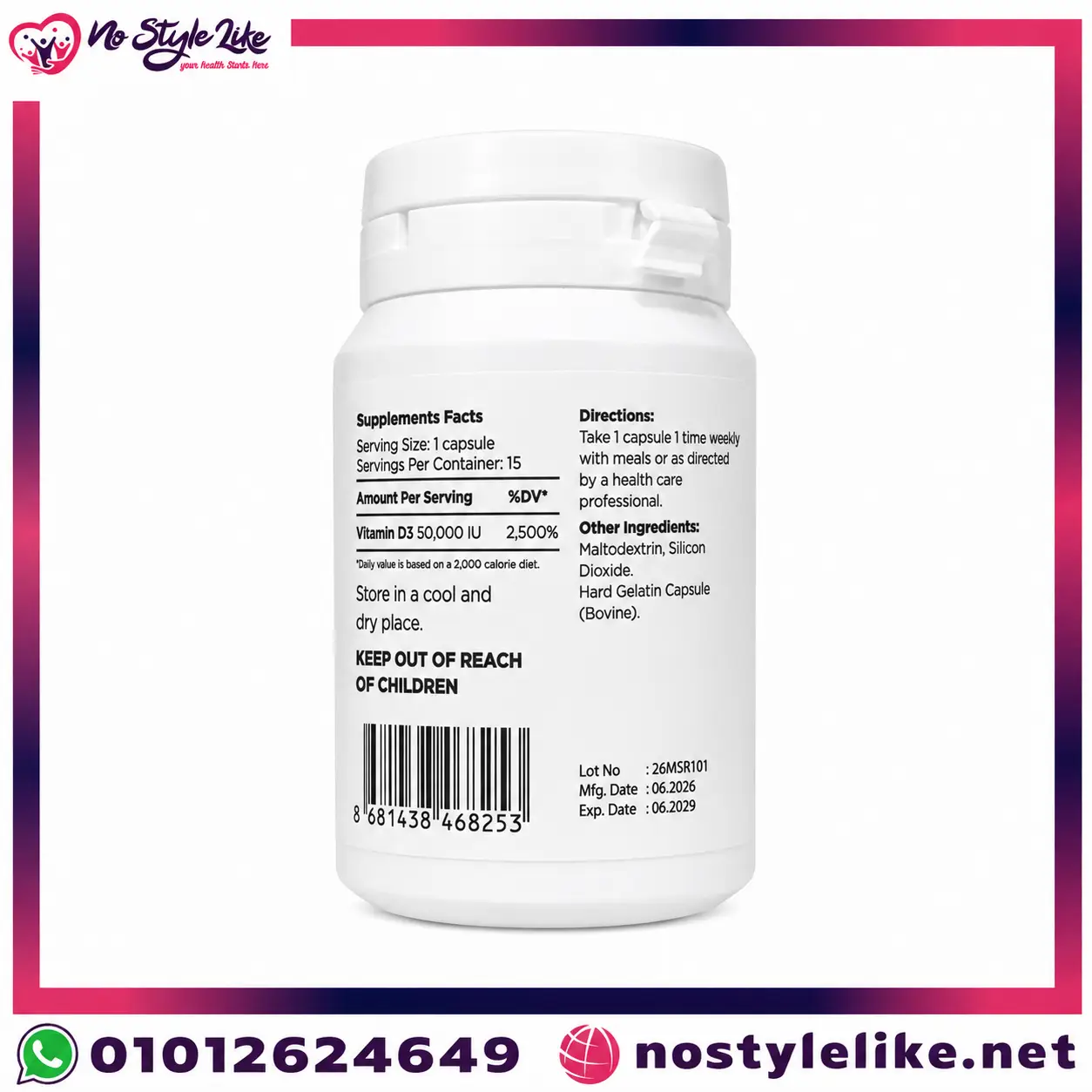
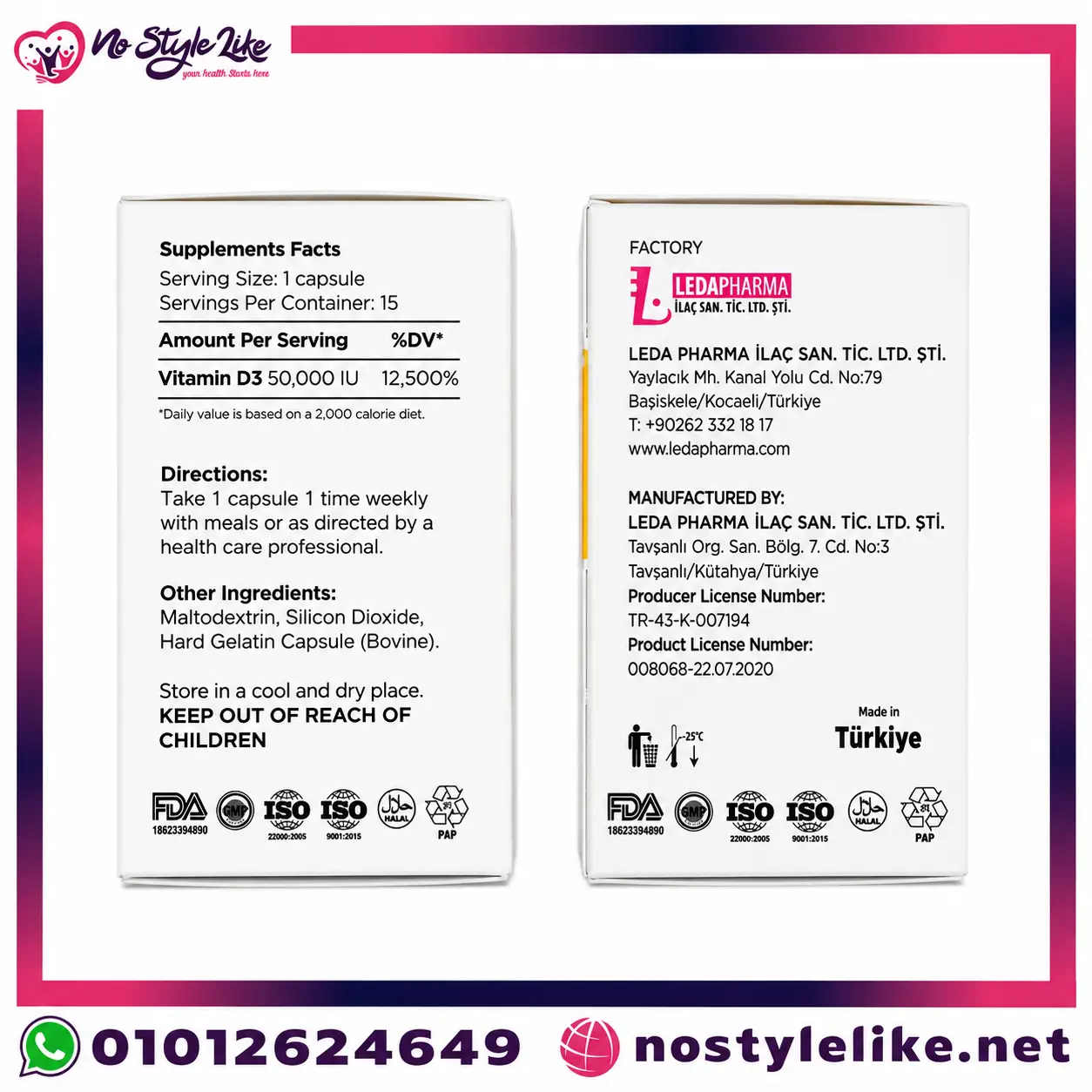
Quick Answer: Vitamin D3 50000 IU from the Turkish manufacturer Leda Pharma is a dietary supplement delivering 50,000 International Units (1,250 mcg) of vitamin D3 as cholecalciferol in a single capsule. The label directions read: take one capsule once weekly with meals, or as directed by a health care professional. The 15-capsule pack covers a 15-week course. It is used to correct vitamin D deficiency confirmed by blood testing, and to support calcium absorption, bone and dental health, muscle function and immunity. The capsule shell is bovine gelatin and carries halal certification, manufactured in Türkiye under producer licence TR-43-K-007194.
Key Facts About Vitamin D3 50000 IU
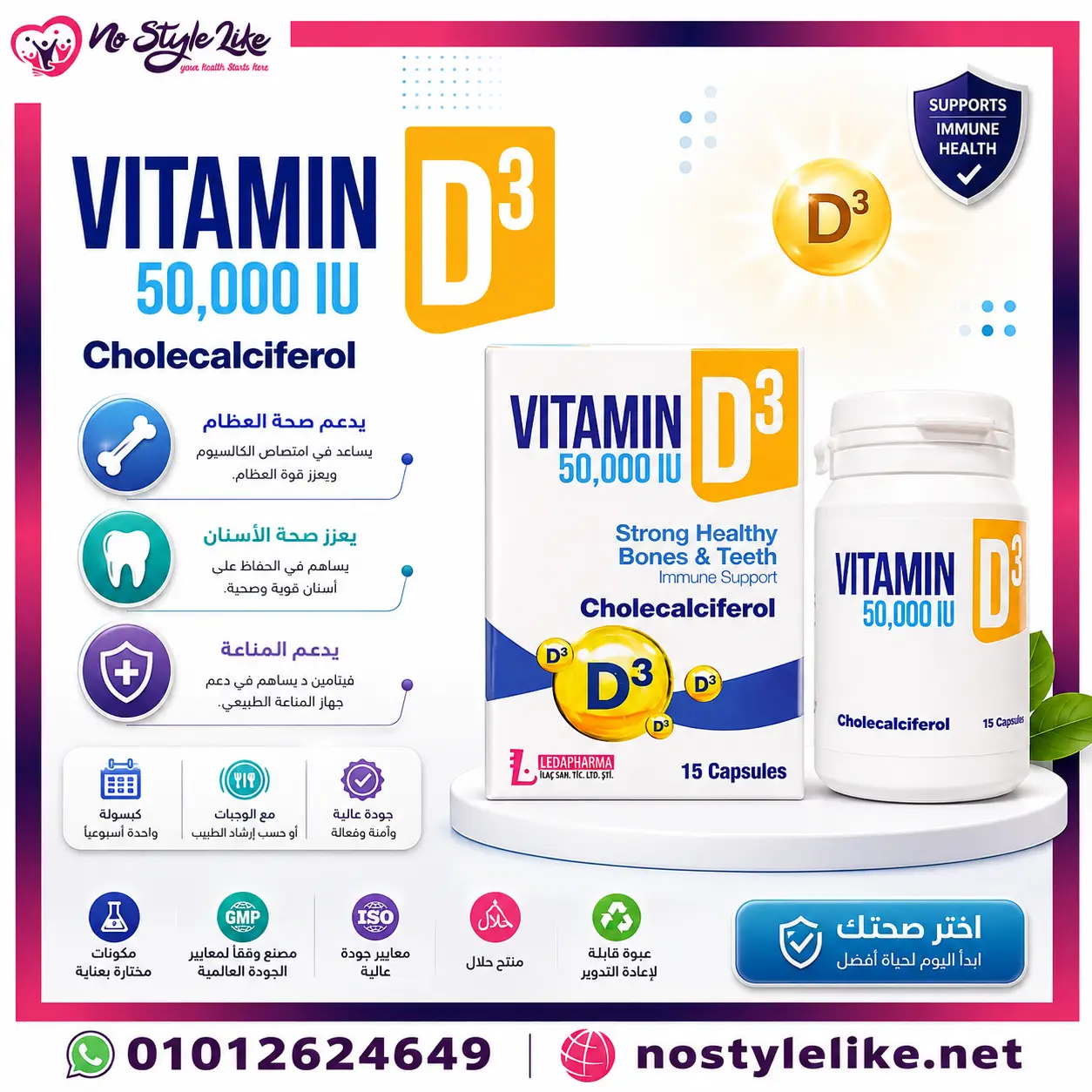
Short description: Vitamin D3 50000 IU delivers a concentrated weekly dose of cholecalciferol designed to correct blood-test-confirmed vitamin D deficiency under medical supervision, supporting calcium absorption, bone and dental strength, muscle function and immune efficiency — one capsule every seven days.
Table of Contents
- Introduction: When a Concentrated Weekly Dose Is Needed
- What Is Vitamin D3 50000 IU?
- How Does It Work in the Body?
- Key Benefits of Vitamin D3 50000 IU
- Real-World Use Cases
- Who Is It Suitable For?
- Who Should Avoid It?
- Correct Dosage and How to Take It
- Best Time to Take It
- Weekly Dose vs Daily Dose
- Expected Improvement Timeline
- Serious Common Mistakes
- Myths and Facts
- Drug Interactions
- Contraindications and Warnings
- Required Tests and Lab Work
- What to Eat Alongside It
- Does It Affect Other Medicines?
- When to See a Doctor
- NSL Expert Tip
- Frequently Asked Questions
- Conclusion
Introduction: When a Concentrated Weekly Dose Is Needed
Vitamin D deficiency is among the most widespread nutritional shortfalls, and it has two entirely different faces. The first is preventive: someone whose level is acceptable and who wants to hold it there, for whom a small daily dose of 1,000 to 2,000 IU is enough. The second is therapeutic: someone whose blood test shows a genuine deficiency, whose body needs a far larger amount over a defined period to refill stores at a reasonable pace.
This is where Vitamin D3 50000 IU comes in. The science behind it is simple: instead of taking several capsules daily for many weeks, the patient takes one consolidated dose every seven days. Vitamin D is stored in fat tissue and the liver and released gradually, and that property is exactly what allows weekly dosing without losing effect, with a large gain in adherence because one weekly appointment is far easier to remember than seven.
But the same advantage is the source of the risk: a single capsule holds the equivalent of fifty times the usual daily dose. That is why the one non-negotiable rule of use is one capsule per week, on a medical decision built on a blood test — not on a feeling or a friend’s advice.
What Is Vitamin D3 50000 IU?
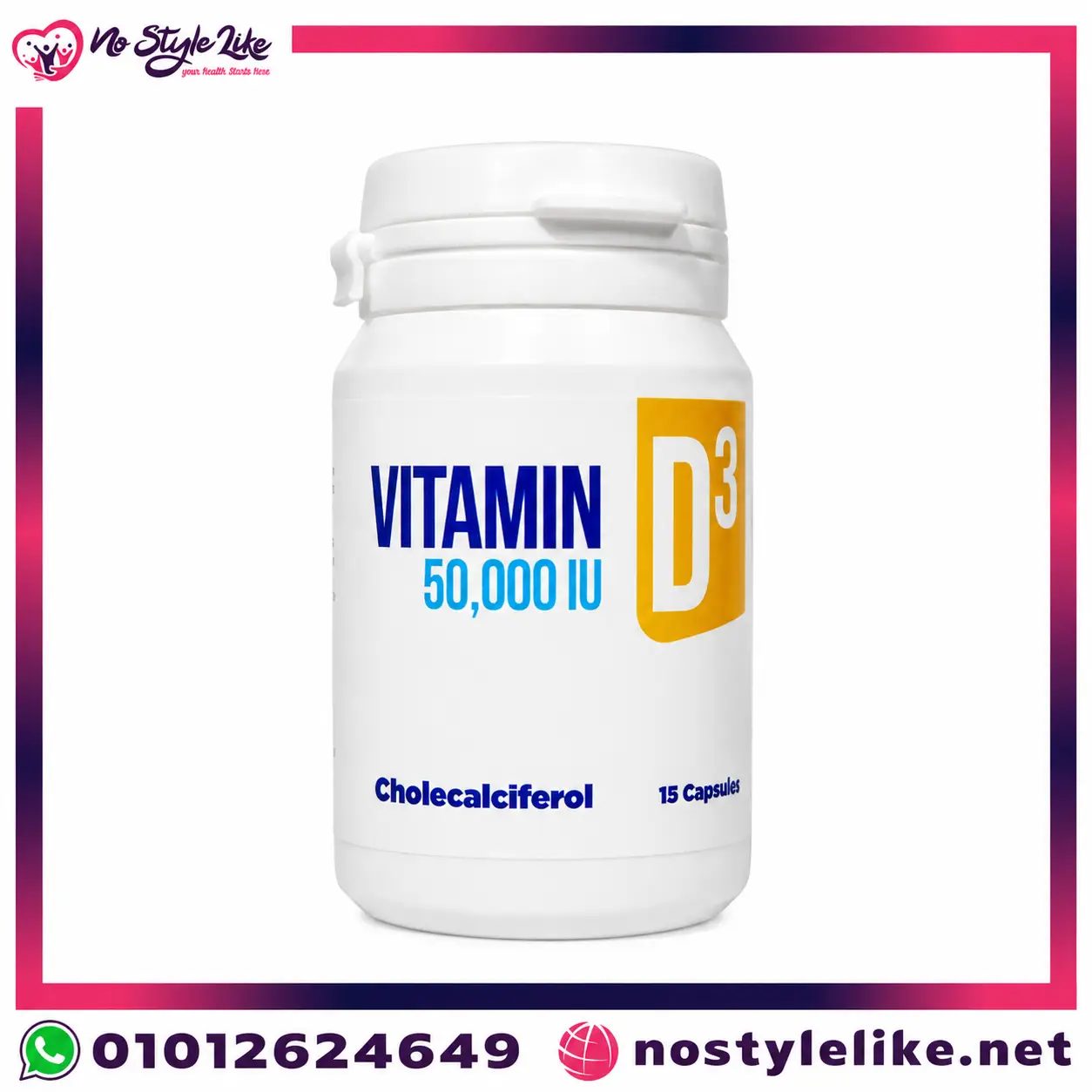
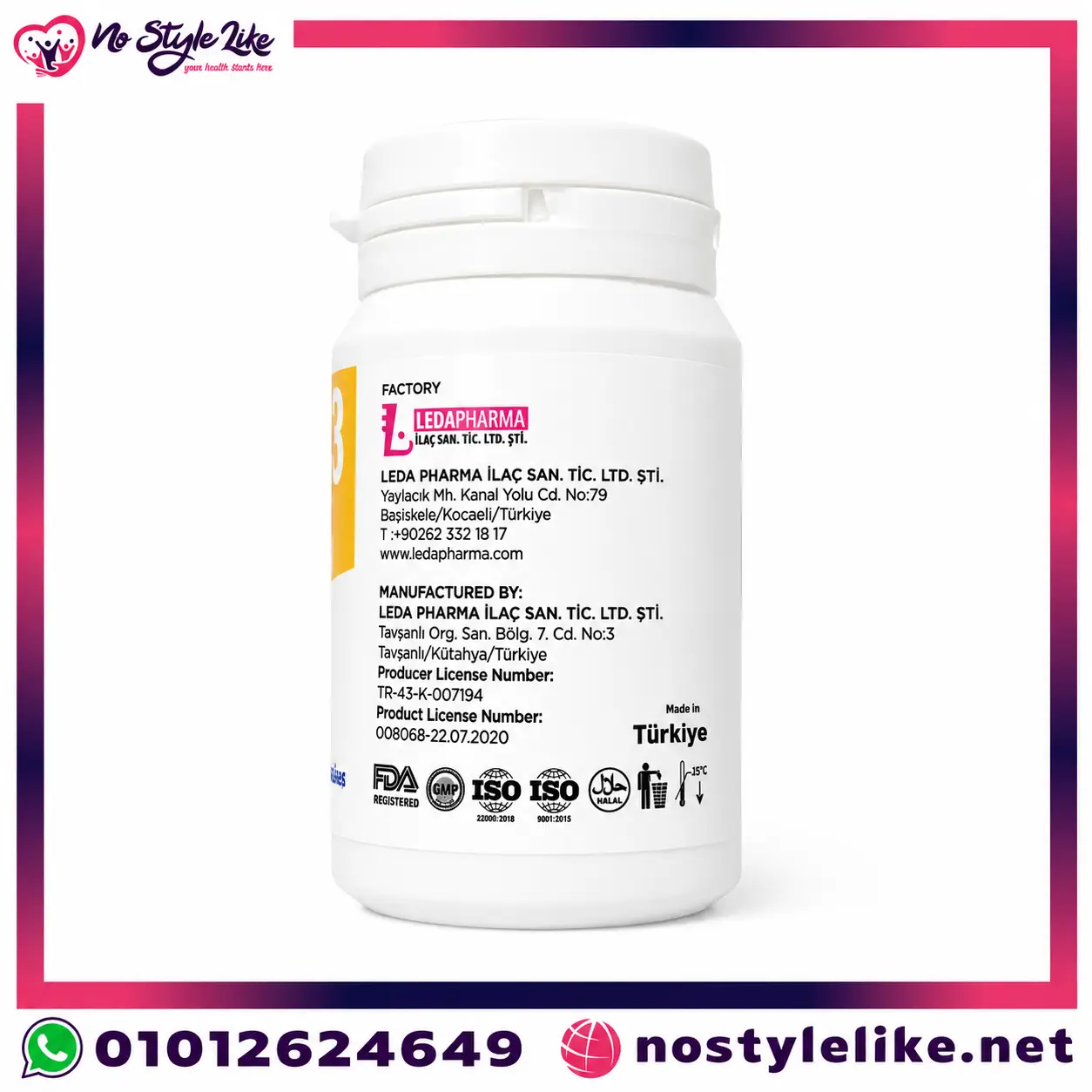
Vitamin D3 50000 IU is a Turkish dietary supplement produced by Leda Pharma İlaç San. Tic. Ltd. Şti., headquartered in Kocaeli with its manufacturing facility in the Tavşanlı industrial zone in Kütahya. The pack holds 15 hard gelatin capsules, and each capsule delivers 50,000 International Units of vitamin D3, equal to 1,250 micrograms.
The form used is cholecalciferol (D3), the same form human skin produces under sunlight. It outperforms ergocalciferol (D2) at raising blood vitamin D levels and sustaining them for longer — an advantage that matters specifically in a weekly dosing schedule.
The product carries producer licence number TR-43-K-007194 and product licence number 008068-22.07.2020, and its packaging shows GMP, ISO 9001 and ISO 22000 quality marks alongside halal certification. That last point matters, because the capsule shell is bovine-sourced gelatin and stated explicitly on the label — unlike many products that leave the source vague.
- Other ingredients: maltodextrin, silicon dioxide and a bovine gelatin capsule shell.
- Contains no vegetable oils or soy, since it is a powder-filled capsule rather than an oil-filled softgel.
- Note for vegetarians: the bovine gelatin makes it unsuitable for a strict vegetarian diet.
How Does Vitamin D3 50000 IU Work in the Body?
1) The activation journey through liver and kidney
The cholecalciferol you swallow is not the active form. It first passes through the liver to become 25-hydroxyvitamin D — the storage form measured in blood tests, with a half-life in blood of roughly two to three weeks — and the kidneys then convert it into the active form, calcitriol. The long life of the storage form is precisely what makes weekly dosing logical and effective.
2) Refilling depleted stores
In chronic deficiency the body’s stores are nearly empty. Small daily doses refill them very slowly, sometimes over many months. A concentrated weekly dose raises the level considerably faster, which is the strategy used clinically to correct deficiency before switching to a small maintenance dose.
3) The role in calcium and bone
Vitamin D’s best-known job is increasing calcium absorption from the intestine. Without it the body absorbs only a small fraction of dietary calcium, no matter how much dairy is consumed. With chronic deficiency the body pulls calcium from bone to keep blood levels steady, producing osteomalacia in adults and rickets in children.
4) Muscle and immunity
Vitamin D receptors sit inside both muscle cells and immune cells. Deficiency is therefore linked with weakness in the muscles close to the trunk, difficulty rising from a seated position and a higher risk of falls, while the vitamin also participates in regulating the immune response against microbes.
5) Why magnesium matters
The enzymes that convert vitamin D in the liver and kidney require magnesium to function. Someone who is magnesium deficient may therefore respond poorly even to a high dose, and this is a common reason treatment appears to fail despite good adherence.
Key Benefits of Vitamin D3 50000 IU
- Faster correction of deficiency: Vitamin D3 50000 IU raises body stores at a considerably faster pace than small daily doses.
- Much better adherence: one weekly appointment is far easier than remembering a daily dose for two months.
- Improved calcium absorption: Vitamin D3 50000 IU markedly raises how efficiently the intestine absorbs calcium.
- Bone strength support: Vitamin D3 50000 IU helps guard against osteomalacia and supports bone density.
- Dental health: contributes to tooth mineralisation and to the alveolar bone that holds teeth in place.
- Better muscle function: Vitamin D3 50000 IU reduces the muscle weakness and diffuse aches tied to deficiency.
- Immune support: Vitamin D3 50000 IU takes part in regulating immune cell activity against microbes.
- Energy and mood: deficiency is associated with fatigue and low mood, and correcting it improves general wellbeing.
- Powder capsule free from oils and soy: suitable for people with a soy allergy.
- Halal certified with a declared gelatin source: a level of transparency that is rare in this category.
Real-World Use Cases
Case one — a woman whose test read 9 ng/mL: a level in the severe deficiency range, with bone pain and chronic fatigue. Her doctor prescribed Vitamin D3 50000 IU once weekly for a defined period, repeated the test after three months and moved her onto a daily maintenance dose.
Case two — a man after sleeve gastrectomy: his fat absorption is reduced, and with it the fat-soluble vitamins. A concentrated weekly dose was the practical answer, with periodic monitoring of calcium and kidney function.
Case three — an office worker who never sees the sun and cannot stick to daily doses: he had tried daily tablets and repeatedly forgot them. A fixed weekly slot — every Friday, for example — solved the adherence problem entirely.
Case four — a cautionary one: someone bought the pack himself, assumed it was a daily dose, and took five capsules in five days. That is a serious error leading to raised blood calcium and requiring immediate discontinuation and medical review. Read the directions: one capsule every week.
These examples are illustrative rather than a promise of results or a substitute for a prescription; dose and duration are set by a doctor based on the test result.
Who Is Vitamin D3 50000 IU Suitable For?
- Adult candidates for Vitamin D3 50000 IU are those whose test shows a confirmed deficiency in 25-hydroxyvitamin D, on a doctor’s decision.
- People with fat malabsorption disorders: Crohn’s disease, coeliac disease, cystic fibrosis.
- People who have had bariatric surgery such as sleeve gastrectomy or gastric bypass.
- People on medicines that accelerate vitamin D breakdown, such as anticonvulsants or long-term corticosteroids.
- People with severe obesity, since the vitamin is sequestered in fat tissue and less available.
- Anyone with a demonstrated inability to stick to daily dosing who needs a weekly schedule.
- Older adults living indoors with a confirmed deficiency.
By contrast, if your level is normal and you are looking only for prevention, a small daily dose such as Vitamin D3 1000 IU by Puritan’s Pride is the right fit rather than this strength.
Who Should Avoid Vitamin D3 50000 IU?
- Anyone with high blood calcium (hypercalcaemia): a clear contraindication, since vitamin D increases calcium absorption.
- People with hyperparathyroidism: they already tend toward raised calcium.
- People with sarcoidosis, tuberculosis or granulomatous immune conditions: they convert vitamin D to its active form in an unregulated way.
- Anyone with a history of calcium kidney stones: the risk of recurrence rises.
- People with kidney impairment: they need activated forms prescribed by a nephrologist with close monitoring.
- People with advanced arterial calcification or soft tissue calcium deposition.
- Children: this strength is absolutely not intended for them and paediatric doses are completely different.
- Pregnant and breastfeeding women: only on an explicit medical decision.
- Vegetarians: the capsule shell is bovine gelatin.
Correct Dosage and How to Take It
The directions printed on the Vitamin D3 50000 IU pack read: take one capsule one time weekly with meals, or as directed by a health care professional.
To put the number in context: the daily requirement for adults is 600 IU (800 IU from age 71), and the tolerable upper intake level for long-term self-directed use is 4,000 IU per day according to the US National Institutes of Health. A weekly 50,000 IU dose averages roughly 7,143 IU per day, which is above that ceiling — and this is precisely why it is a therapeutic dose for a defined period under supervision, not a lifelong regimen.
- Do not start before a 25-hydroxyvitamin D blood test and a review of the result with a doctor or pharmacist.
- Pick a fixed day of the week and stick to it; write it on the pack or set a phone reminder.
- Take the capsule with a meal containing fat to improve absorption.
- Swallow it with a full glass of water; do not open or chew it.
- Never make up a missed dose by taking two. If you miss your day, take the capsule as soon as you remember and resume the weekly schedule.
- Stay only for the duration your doctor set, and repeat the test afterwards before continuing.
- Store in a cool, dry place not exceeding 25 degrees Celsius, well out of reach of children.
Best Time to Take Vitamin D3 50000 IU
- Take Vitamin D3 50000 IU with your largest fat-containing meal: lunch is usually the best fit in an Egyptian eating pattern.
- Alongside eggs, olive oil, avocado or full-fat dairy: the presence of fat clearly raises absorption.
- On a fixed weekly day: choose a day that is easy to remember — the start of the week or your day off.
- Avoid a completely empty stomach: it wastes a meaningful share of a concentrated and valuable dose.
Morning or evening matters far less than having food present and staying consistent on the same day.
Weekly Dose vs Daily Dose
| Aspect | Vitamin D3 50000 IU (weekly) | Daily 1,000–2,000 IU |
|---|---|---|
| Goal | Correcting a test-confirmed deficiency | Maintenance and prevention |
| Who decides | A doctor or pharmacist after a blood test | Safe self-use for adults |
| Duration | A defined period, then reassessment | Ongoing long term |
| Adherence | Easier — one weekly slot | Requires daily consistency |
| Lab monitoring | Mandatory before and after | Advisable, not mandatory |
| Risk if misused | High if taken daily | Low |
The practical message: these two products are not alternatives but consecutive stages. You start with the therapeutic dose until the test improves, then move to a daily maintenance dose to hold the gain.
Expected Improvement Timeline
- Weeks one and two on Vitamin D3 50000 IU: expect no noticeable feeling; the body is refilling stores.
- Weeks four to six: the start of measurable improvement in fatigue and bone and muscle aches for anyone who was severely deficient.
- After 8 to 12 weeks: the right point to repeat the 25-hydroxyvitamin D test and assess the response.
- After the course ends: move to a daily maintenance dose on your doctor’s decision, otherwise the level falls again within months.
- Bone density: a cumulative effect measured by DEXA scan after months, not something you feel.
Serious Common Mistakes With Vitamin D3 50000 IU
- Taking Vitamin D3 50000 IU daily instead of weekly: by far the most dangerous error, leading to vitamin D toxicity and raised blood calcium.
- Making up a missed dose by taking two together: unnecessary and potentially harmful.
- Starting Vitamin D3 50000 IU without a blood test: you may be treating a problem that does not exist and pushing your level above the safe range.
- Continuing for months without reassessment: a therapeutic course has a beginning and an end.
- Combining it with other supplements containing vitamin D: a multivitamin or fortified calcium supplement raises the total unnoticed.
- Taking it on an empty stomach: wastes part of a concentrated dose.
- Ignoring magnesium: activating vitamin D requires it, and a shortfall explains a poor response despite good adherence.
- Leaving it within reach of children: a single capsule is an enormous dose for a child.
Myths and Facts
| Myth | Fact |
|---|---|
| A bigger dose always means a faster result | Above a certain point benefit stops and harm begins; the goal is reaching the normal range, not exceeding it. |
| Vitamin D is safe at any dose because it is a vitamin | It is fat soluble and accumulates; toxicity is documented and comes almost entirely from supplements, not sunlight. |
| If I miss a dose I should take two | Wrong; take one as soon as you remember and resume the schedule. |
| I can judge my dose from my symptoms | Deficiency symptoms are very general and overlap with anaemia and hypothyroidism; the blood test decides. |
| Once treated I need nothing further | Without a maintenance dose the level falls again within months. |
Drug Interactions
- Thiazide diuretics with Vitamin D3 50000 IU: they reduce urinary calcium excretion, and combined with a high vitamin D dose the risk of hypercalcaemia rises — lab monitoring is needed.
- Digoxin: raised calcium increases the risk of cardiac arrhythmia in people taking it — an important interaction requiring supervision.
- Orlistat for weight loss: reduces absorption of fat-soluble vitamins — separate by at least two hours.
- Cholestyramine and lipid-lowering resins: reduce absorption by the same mechanism.
- Corticosteroids such as prednisolone: reduce calcium absorption and impair vitamin D metabolism with long-term use.
- Anticonvulsants such as phenytoin, phenobarbital and carbamazepine: accelerate vitamin D breakdown and raise requirements.
- Statins: high vitamin D doses may reduce the effectiveness of atorvastatin, simvastatin and lovastatin.
- High-dose calcium supplements: combining them with a concentrated weekly dose requires calcium monitoring.
Contraindications and Warnings
- One capsule weekly only — never to be taken daily under any circumstances.
- For adults only. Keep completely out of reach of children.
- Do not use without a 25-hydroxyvitamin D test and a medical decision.
- Contraindicated with hypercalcaemia, hyperparathyroidism or sarcoidosis except under direct medical supervision.
- Consult a doctor before use during pregnancy or breastfeeding, or with any kidney or heart condition.
- Toxicity symptoms: nausea, vomiting, muscle weakness, loss of appetite, intense thirst and frequent urination, mental confusion, dehydration, and in severe cases kidney stones, renal failure, soft tissue calcification and cardiac arrhythmia. Stop use and see a doctor immediately if any appear.
- The capsule shell is bovine gelatin — unsuitable for vegetarians.
- Store in a cool, dry place not exceeding 25 degrees Celsius.
- This product is a dietary supplement, not a medicine, and is not intended to diagnose, treat, cure or prevent any disease.
Required Tests and Lab Work
- 25-hydroxyvitamin D [25(OH)D] before starting: mandatory. Deficiency is below 20 ng/mL (50 nmol/L), sufficiency is 20 and above, the concerning range is above 50 ng/mL, and toxicity above 150 ng/mL.
- Repeat testing after 8 to 12 weeks: to assess response and decide when to move to maintenance.
- Total and ionised calcium: before and during the course, especially alongside diuretics or calcium supplements.
- Kidney function (creatinine and eGFR): because the kidneys activate the vitamin and excrete calcium.
- Liver function: because the liver is the first conversion step.
- Parathyroid hormone (PTH): usually raised in chronic deficiency and helps interpret the picture.
- Serum magnesium: required to activate vitamin D, and a shortfall explains a poor response.
- DEXA scan: for anyone with osteoporosis or risk factors for it.
What to Eat Alongside Vitamin D3 50000 IU
Vitamin D3 50000 IU corrects the deficiency; food holds the gain. Reinforce your results with these sources:
- Oily fish: salmon, mackerel, sardines and tuna.
- Egg yolk and liver as modest natural sources.
- Dairy fortified with vitamin D, and fortified breakfast cereals.
- Calcium sources: cheese, yoghurt, sesame, tahini and leafy greens.
- Magnesium sources needed for activation: legumes, nuts and whole grains.
- A meal with healthy fats such as olive oil or avocado alongside the weekly capsule.
To make sure you get the full benefit, check that your magnesium intake is adequate — you can look at Puritan’s Pride Magnesium 250 mg. And once the therapeutic course ends, move to a daily maintenance dose such as Vitamin D3 1000 IU on your doctor’s decision. Do not overlook weight-bearing activity such as walking, a primary stimulus for bone building.
Does Vitamin D3 50000 IU Affect Other Medicines?
Yes, and more than small daily doses do, because the strength is high. The first rule is simple: leave at least two hours between the capsule and any medicine that reduces fat absorption, such as orlistat or cholestyramine.
The most important interaction runs through calcium. Any medicine that raises blood calcium or reduces its excretion — thiazide diuretics above all — calls for calcium monitoring during the course. The highest-risk group is people on digoxin, because raised calcium increases their risk of cardiac arrhythmia. Show your full medicine list to your pharmacist before starting Vitamin D3 50000 IU, and do not treat its status as a dietary supplement as a reason to skip that step.
When Should You See a Doctor?
- Before starting — this is not an optional step at this strength.
- Nausea, vomiting or persistent loss of appetite during the course.
- Frequent urination and intense thirst — among the earliest signs of raised calcium.
- Muscle weakness, mental confusion or a change in mood.
- Flank pain or dark urine — possible kidney stones.
- Palpitations or an irregular heartbeat, especially for anyone on digoxin.
- If you accidentally took more than one capsule in a week.
- Allergy symptoms such as rash, swelling or shortness of breath — treat this as an emergency.
No Style Like Expert Tip
Handling this strength comes down to three unbreakable rules. First: a 25-hydroxyvitamin D test before the very first capsule. Second: a fixed weekly day with a phone reminder — and write that day on the pack itself in pen. Third: repeat the test when the course ends and move to a daily maintenance dose, because stopping entirely returns you to square one within months. If you take a diuretic or digoxin, or have a history of kidney stones, do not begin before showing your paperwork to a pharmacist or doctor. The pharmacist at No Style Like is available to review your test results and medicines before you start.
Frequently Asked Questions About Vitamin D3 50000 IU
How many Vitamin D3 50000 IU capsules should I take?
One capsule once every week with food, or as directed by your doctor. It is never taken daily.
Do I need a prescription or a blood test for Vitamin D3 50000 IU?
The product is classified as a dietary supplement, but the strength is therapeutic, and we strongly advise against starting before a 25-hydroxyvitamin D test and a consultation with a doctor or pharmacist.
How long does a course of Vitamin D3 50000 IU last?
Your doctor decides based on the degree of deficiency, and testing is usually repeated after 8 to 12 weeks to assess response. The 15-capsule pack covers 15 weeks.
What should I do if I miss my weekly dose?
Take the capsule as soon as you remember, then resume your usual weekly schedule. Do not take two capsules to compensate.
Is it halal, and what is the gelatin source?
The pack carries halal certification, and the shell is stated explicitly on the label as bovine gelatin.
Does Vitamin D3 50000 IU contain soy or gluten?
The other ingredients are only maltodextrin, silicon dioxide and the gelatin shell — no soybean oil, unlike oil-filled softgel capsules.
Does it cause weight gain?
No, vitamin D does not add weight. Obesity itself, however, lowers its availability because the vitamin is held in fat tissue.
How is it different from the 1,000 IU strength?
This one is a weekly therapeutic dose for correcting a confirmed deficiency; the other is a daily maintenance dose for holding the level. They are consecutive stages, not alternatives.
Should I take Vitamin D3 50000 IU with calcium?
You can, and they complement each other, but at this strength blood calcium should be monitored on your doctor’s decision.
Can children take it?
Absolutely not. This strength is for adults, and paediatric doses are far lower and must be set by a doctor.
Conclusion
Vitamin D3 50000 IU from Turkey’s Leda Pharma delivers a concentrated weekly dose of cholecalciferol built for the correction phase of a test-confirmed vitamin D deficiency, in a 15-capsule pack covering a full course, with good manufacturing transparency: a declared origin, licence numbers, GMP and ISO marks, halal certification and an explicitly stated gelatin source. It is not a product for casual self-directed use — its golden rule is one capsule every week, its correct entry point is a blood test with medical follow-up, and its logical exit is a move to a daily maintenance dose once the course ends.
Order Vitamin D3 50000 IU today from No Style Like Pharmacy with 100% genuine stock, fast delivery to every Egyptian governorate, and a free pharmacist consultation before you buy to review your tests and medicines.
Reviewed by the content team of No Style Like Pharmacy.
Medical disclaimer: This information is for general educational purposes and does not replace the product label or advice from a licensed doctor or pharmacist. This strength is a high therapeutic dose that should not be used without testing and medical supervision. Do not start, stop or change any supplement based on this page alone, particularly during pregnancy or breastfeeding, or if you have a chronic condition or take other medicines. For further trusted information see the National Institutes of Health vitamin D fact sheet.


Reviews
There are no reviews yet.