


Vitamin K2 MK-7: What Is It and How Does It Differ From MK-4? 6 Key Points
Vitamin K2 MK-7: The Name on So Many Labels
Read the label of almost any supplement that combines vitamin D with K2 and you will usually see “MK-7”. What does it mean? Why do brands prefer it, and how is it different from MK-4? This article explains vitamin K2 MK-7 in 6 short points.
1. What Is MK-7?
Vitamin K is not a single compound but a family that includes K1 (phylloquinone) and K2 (menaquinones). Menaquinones are named by the length of their side chain, from MK-4 up to MK-13. MK-7, or menaquinone-7, has 7 units in that chain.
2. Why Do Supplements Prefer It?
The key advantage is that vitamin K2 MK-7 stays in the blood for a long time – around 3 days – compared with just a few hours for MK-4. A small dose once a day is therefore enough to keep a steady blood level, which is why it is the most common form in supplements.
3. MK-7 vs MK-4 vs K1
| Form | Main source | Time in blood |
|---|---|---|
| K1 | Leafy green vegetables | Hours |
| MK-4 | Animal foods; the body also makes it from K1 | Hours; needs high doses |
| MK-7 | Fermented foods such as natto and aged cheese | About 3 days |
4. What Does It Do in the Body?
Vitamin K2 activates osteocalcin, which binds calcium into bone, and matrix Gla protein (MGP), which helps prevent calcium from building up in blood vessels. In a 3-year study of postmenopausal women, 180 mcg of MK-7 a day helped slow the loss of bone density. The evidence is still developing, though, and it does not replace osteoporosis treatment prescribed by your doctor.
5. Common Doses
- The adequate intake of vitamin K overall is 90 mcg a day for women and 120 mcg for men.
- Vitamin K2 MK-7 supplements typically provide 90 to 200 mcg a day.
- There is no official upper limit for vitamin K, because toxicity has not been seen with usual food or supplement amounts.
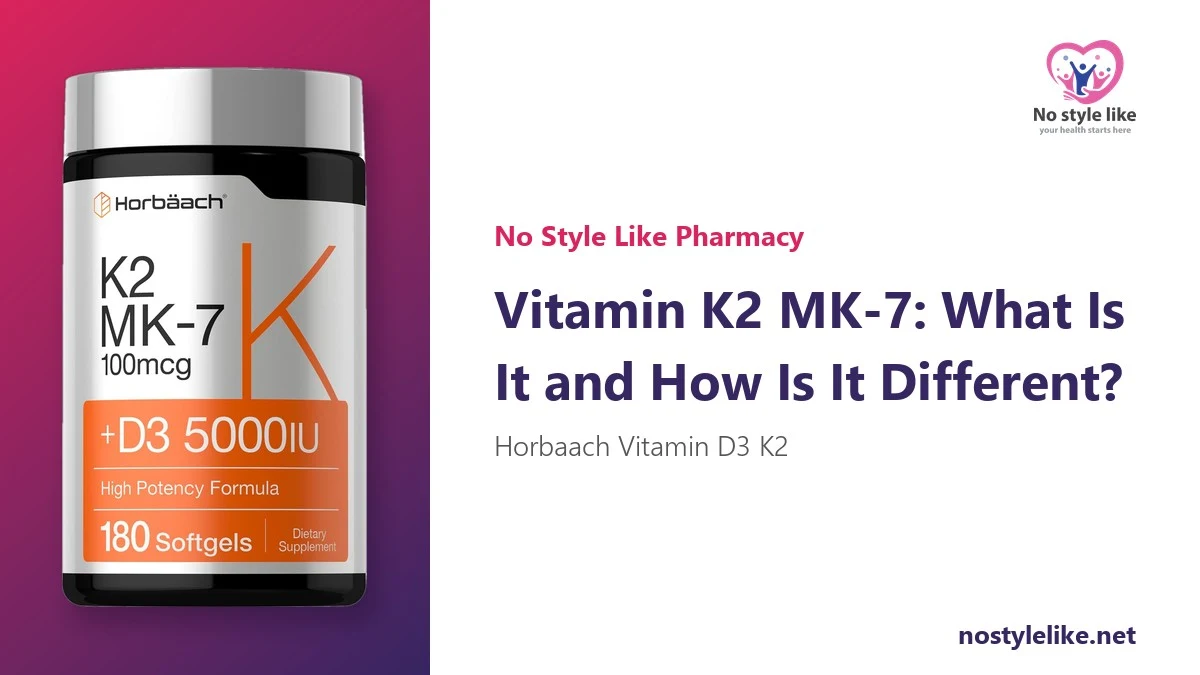
One example is Horbaach Vitamin D3 K2, which provides 100 mcg of MK-7 with 5,000 IU of vitamin D3. Read about that dose in vitamin D3 5000 IU.
6. Important Warning for Blood Thinner Patients
Because MK-7 stays in the blood so long, even small doses can affect how warfarin works. Anyone on warfarin should only take it under medical supervision – we cover this in detail in vitamin K2 and warfarin.
Food Sources of Vitamin K2 MK-7
- Natto: Japanese fermented soybeans, by far the richest source.
- Aged cheeses: such as Gouda and Edam.
- Other fermented foods in smaller amounts.
Because natto is rarely eaten in Egypt, many people turn to supplements instead. To understand how it pairs with vitamin D, read vitamin D3 and K2.
Vitamin K2 MK-7 FAQ
Is vitamin K2 MK-7 vegan?
MK-7 itself is usually made from natto or by fermentation, but the softgel shell may be gelatin, so check the label.
When should I take it?
With a meal that contains fat. You can take it at the same time as vitamin D.
Does it cause blood clots?
It is not known to increase clotting in healthy people, but it does interact with warfarin.
Which is better: MK-7 or MK-4?
MK-7 is easier to use at a small once-daily dose, while MK-4 needs higher doses several times a day.
Can I get enough vitamin K2 MK-7 from food?
Only if you eat natto or plenty of aged cheese; most people in Egypt get very little from their usual diet.
Conclusion
Vitamin K2 MK-7 is the longest-lasting form of vitamin K in the blood, which is why supplements favour it at doses of 90 to 200 mcg. It helps direct calcium into bone, but it calls for real caution with warfarin. You can find Horbaach Vitamin D3 K2 at No Style Like pharmacy.
This article was reviewed by the No Style Like pharmacy content team. It is for general awareness only. Vitamin D and vitamin K are dietary supplements, not medicines intended to diagnose or treat any disease, and this article does not replace medical advice.
If you take warfarin, only use vitamin K2 under your doctor’s supervision. Ask your doctor before use if you have kidney disease or high calcium, or are pregnant or breastfeeding. For more information see the NIH vitamin K fact sheet.