


Dermal Filler Side Effects: 6 Warning Signs Not to Ignore
Dermal Filler Side Effects: What Is Normal and What Is Not?
Fillers are common, but they are not risk-free. Most dermal filler side effects are mild and temporary and settle within days, yet there are rare but serious complications that need immediate treatment by the injector. That is why a filler must be injected by a qualified, trained doctor in a clinic after assessment, using a genuine product stored as labelled. This article covers the common effects, aftercare, 6 warning signs and who should avoid treatment.
Common, Temporary Dermal Filler Side Effects
The labelling of hyaluronic acid fillers lists the following effects at the injection site as common. They usually settle within days to about 1 to 2 weeks:
- Redness and swelling.
- Pain or tenderness.
- Bruising, which is more likely with blood thinners, aspirin, NSAIDs, omega-3 and vitamin E.
- Small lumps that can be felt.
- Itching at the injection site.
If these effects last longer or get worse instead of better, contact the doctor who treated you. These are the most frequent dermal filler side effects, but they should not persist.
Aftercare
Unless your doctor says otherwise, for about the first 24 to 48 hours it is generally advised to avoid:
- Makeup on the treated area.
- Heavy exercise, saunas and strong heat.
- Alcohol.
- Pressing or massaging the area.
Always follow the written instructions your doctor gives you, which are based on the product and area treated. Good aftercare helps limit minor dermal filler side effects such as swelling and bruising.
Rare but Serious Dermal Filler Side Effects
Vascular occlusion: the most serious complication happens when filler accidentally enters or compresses a blood vessel and reduces blood flow to the skin. Signs include skin blanching, mottled blue or purple skin, and severe pain out of proportion. Without rapid treatment it can lead to skin necrosis, and very rarely to vision loss or stroke. It needs immediate treatment by the injector, who may use hyaluronidase to dissolve a hyaluronic acid filler.
Vision changes are an emergency: any blurred or lost vision, eye pain, severe headache or sudden weakness after an injection means going to the emergency department at once and informing the doctor, without waiting.
Infection: increasing redness, warmth, pain, pus or fever need prompt medical assessment.
Delayed nodules and granulomas: lumps that appear weeks or months after treatment should be assessed by the doctor, who decides on management.
Allergic reactions: reactions to product ingredients or to lidocaine can occur and are among the rarer dermal filler side effects.
6 Warning Signs After Treatment
| Sign | What to do |
|---|---|
| White, pale or mottled skin | Call the injector immediately |
| Severe or worsening pain | Call the injector immediately |
| Blurred or lost vision | Emergency department now |
| Weakness or slurred speech | Emergency department now |
| Fever, pus, hot skin | Same-day medical review |
| Facial swelling or difficulty breathing | Emergency department now |
Who Should Avoid Fillers?
- People with a history of severe allergies or anaphylaxis.
- Anyone allergic to hyaluronic acid or the product ingredients, or to lidocaine and amide local anaesthetics for lidocaine-containing products.
- Active skin infection, inflammation or acne at the site.
- Bleeding disorders, with caution for anyone on blood thinners.
- Pregnancy and breastfeeding, because use has not been studied.
- Under 18, or below the age stated on the label.
- Autoimmune disease, a history of keloids, or a recent laser or peel at the site, which need special assessment.
Sharing your full history and medicines before the session is one of the best ways to reduce dermal filler side effects.
Product-Specific Notes
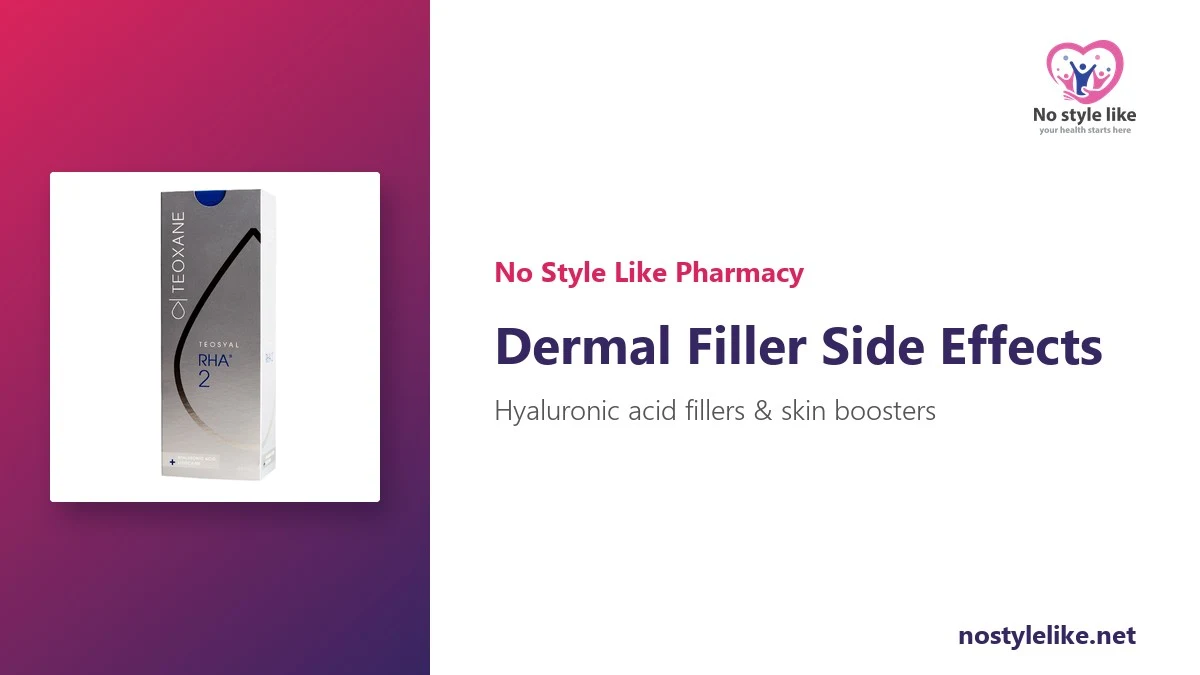
Juvederm Voluma with Lidocaine, Juvederm Ultra 4 and Teosyal RHA 2 contain lidocaine 0.3%, so tell your doctor about any allergy to local anaesthetics. Aliaxin SV contains no lidocaine. Croma PolyPhil is a polynucleotide product, not hyaluronic acid, so hyaluronidase does not act on it. Knowing your product helps the doctor manage dermal filler side effects. To understand how these products differ, see types of dermal fillers.
Why a Qualified Injector and a Genuine Product Reduce Dermal Filler Side Effects
A trained doctor knows facial anatomy and danger zones, recognises complications early and can act on them at once. A genuine product has a known source, is stored as labelled and never frozen, and each syringe is single use and never reused. The Egyptian Voluma pack, for example, shows the importer and registration number printed in Arabic. Avoid treatment in non-medical settings or by untrained people, and always ask the name of the product used.
Frequently Asked Questions About Dermal Filler Side Effects
Is swelling after filler normal?
Usually yes. It typically settles within days to about 2 weeks and can be more noticeable in the lips.
Can filler be dissolved if something goes wrong?
A doctor can dissolve hyaluronic acid filler with hyaluronidase, which is why the injector should be available for follow-up after treatment.
When should I worry about lumps?
Small lumps in the first days are common. Painful lumps, late lumps or lumps with redness need medical assessment.
Can dermal filler side effects appear late?
Yes. Delayed nodules can appear weeks or months later, so know the name of your product. For more on duration, read how long do fillers last.
Conclusion
Most dermal filler side effects are temporary, such as redness, swelling and bruising, but vascular occlusion, vision changes and infection are rare complications that need immediate care. Choose a qualified doctor and a genuine product, and share your full medical history and medicines. To learn about other categories such as calcium hydroxylapatite, see Radiesse filler.
This article was reviewed by the No Style Like pharmacy content team. It is for general awareness only and does not replace advice from your doctor. Dermal fillers and skin boosters are medical devices for professional use only: they are injected by a qualified, trained doctor in a clinical setting and must never be self-injected.
If any warning sign appears after treatment, contact the injector immediately or go to the emergency department. For more information see the FDA dermal filler dos and donts.