


Cold Medicine for High Blood Pressure: 6 Safe Rules for Choosing the Right Remedy
Why People With High Blood Pressure Need Extra Care With Colds
Most cold remedies are sold over the counter, so many people assume they are safe for everyone. Yet some ingredients can raise blood pressure or weaken blood pressure medicines. This guide explains how to choose cold medicine for high blood pressure in 6 practical rules.
1. Cold Medicine for High Blood Pressure: Watch Out for Oral Decongestants
Oral nasal decongestants such as pseudoephedrine and phenylephrine work by narrowing blood vessels in the nose. That effect can reach blood vessels throughout the body, raising blood pressure and heart rate.
The risk is greater when blood pressure is uncontrolled or very high. Always read the ingredient list on any cold liquid or tablet and look for these names before you buy.
2. Not All Painkillers Are Equal
Nonsteroidal anti-inflammatory drugs (NSAIDs) such as ibuprofen and naproxen can raise blood pressure, cause salt and fluid retention and weaken some blood pressure medicines and diuretics. Acetaminophen (paracetamol) is usually the better choice for fever and headache in people with hypertension, as long as you stay within the dose. Read more in Advil vs Panadol.
3. Be Careful With Effervescent Tablets
Some effervescent cold tablets and painkillers contain a noticeable amount of sodium. If your doctor has told you to cut down on salt, choose regular tablets or a liquid instead.
4. Safer Cold Medicine for High Blood Pressure
- Acetaminophen: for fever, headache and body aches.
- Dextromethorphan: for a dry cough.
- Guaifenesin: to loosen mucus.
- Antihistamines: for runny nose and sneezing, keeping drowsiness in mind.
- Saline spray: to clear the nose without affecting blood pressure.
This is a general rule only. Some medicines have other interactions, and your pharmacist should review your full medicine list.
5. Choose by Symptom, Not by Advertising
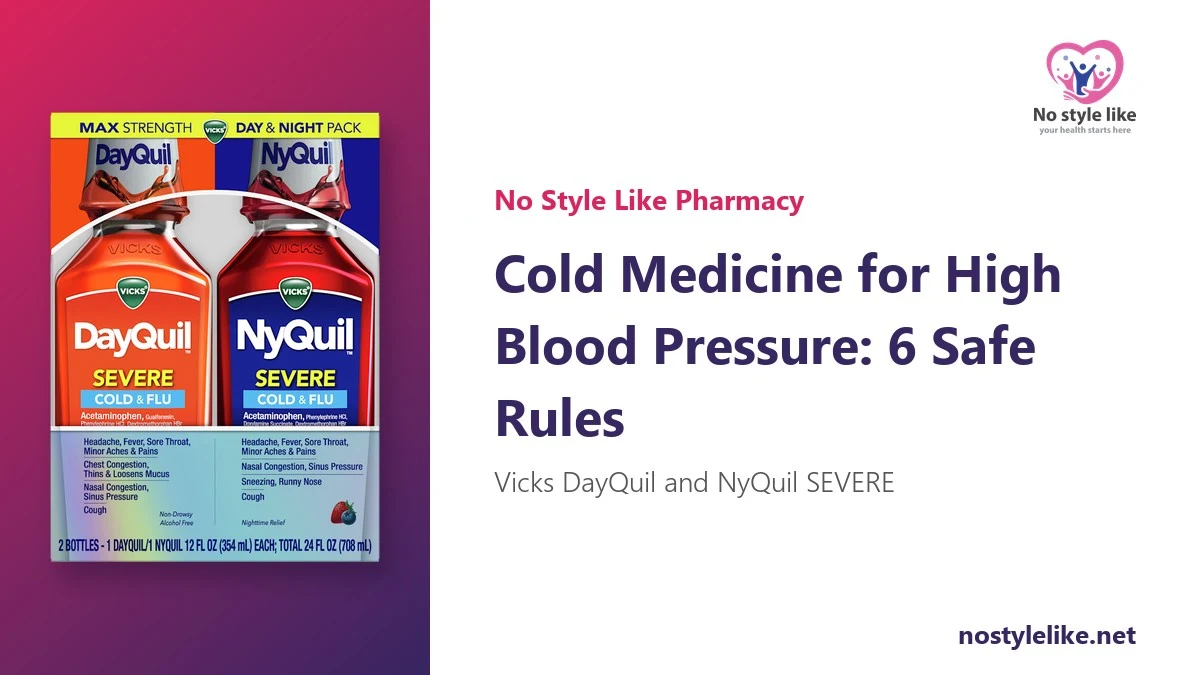
When choosing cold medicine for high blood pressure, remember that multi-symptom products are convenient, but they may give you an ingredient you do not need. If your only problem is fever, a painkiller alone is enough; if it is only cough, choose a cough suppressant. For example, the DayQuil and NyQuil SEVERE liquids contain phenylephrine, so a person with high blood pressure should ask a doctor before using them, even when blood pressure is controlled.
6. Check Your Blood Pressure While You Are Sick
Even with the right cold medicine for high blood pressure, fever, pain and poor sleep can raise blood pressure on their own. Check it once or twice a day during a cold and write the readings down. If a reading goes above 180/120, or you get a severe headache, chest pain or shortness of breath, get medical help right away. For the basics of blood pressure control, read the high blood pressure guide.
Home Measures That Help You Recover
No cold medicine for high blood pressure replaces simple home care. These steps ease symptoms without any effect on your readings:
- Rest and plenty of sleep.
- Warm fluids, while watching the salt in ready-made soups.
- Honey to soothe the throat and cough in adults.
- Warm salt-water gargles, without swallowing.
- Steam inhalation to loosen secretions.
To compare the two best-known Vicks liquids, read DayQuil vs NyQuil, and for a cough that gets worse in bed, read nighttime cough.
When to Talk to Your Doctor About Cold Medicine for High Blood Pressure
- Before taking any oral decongestant.
- If you take more than one medicine for blood pressure or the heart.
- If fever lasts more than 3 days.
- If your blood pressure rises unusually while you are sick.
- If you also have kidney disease, heart failure or diabetes.
Frequently Asked Questions
Are nasal sprays safe with high blood pressure?
Saline spray is safe. Decongestant nasal sprays should only be used for a very short time, no more than 3 days, and after asking your doctor.
Does acetaminophen raise blood pressure?
At usual doses and for a short time, it is a reasonable choice for most people with high blood pressure, as long as you do not exceed the maximum dose.
Should I stop my blood pressure pills during a cold?
No. Keep taking your medicine as usual unless your doctor tells you otherwise.
Are there cold products made for people with hypertension?
Yes. Some brands sell decongestant-free cold medicine for high blood pressure. Check the label for the absence of pseudoephedrine and phenylephrine, and ask your pharmacist what is available in Egypt.
Conclusion
Choosing cold medicine for high blood pressure starts with reading labels. Avoid oral decongestants and NSAIDs where possible, prefer acetaminophen, saline spray and a cough remedy matched to your symptoms, and keep checking your blood pressure while you are sick. Ask the No Style Like pharmacist before you buy.
This article was reviewed by the No Style Like pharmacy content team. It is for general awareness only and does not replace advice from your doctor or pharmacist.
Do not start any cold medicine before reviewing your medicine list with a doctor or pharmacist if you have high blood pressure or heart disease. For more information see the MedlinePlus acetaminophen page.