


Nighttime Cough: Why It Gets Worse at Night and 7 Proven Ways to Calm It
Why Does Coughing Get Worse When You Lie Down?
You may cough lightly all day, then suddenly cough nonstop the moment your head hits the pillow, keeping you and your family awake. This nighttime cough is very common with colds, but it has other causes too. Here we explain those causes and 7 practical ways to calm it.
Common Causes of a Nighttime Cough
- Postnasal drip: when you lie down, mucus drains from the nose to the throat and irritates it. This is the most common cause with colds and allergies.
- Acid reflux: stomach acid rises more easily when you lie flat, especially after a heavy dinner.
- Asthma: symptoms often get worse at night and early morning, sometimes with wheezing.
- Dry air: air conditioning and heating dry out the throat.
- Some blood pressure medicines: ACE inhibitors such as captopril or lisinopril can cause a persistent dry cough.
1. Raise Your Head While You Sleep
The simplest fix for a nighttime cough is changing how you sleep. Use an extra pillow or raise the head of the bed slightly. This reduces mucus draining into your throat and eases reflux.
2. A Spoonful of Honey Before Bed
Studies suggest that a teaspoon of honey at bedtime can ease a nighttime cough, especially in children over one year old. Never give honey to babies under 12 months.
3. Moisten the Air and Your Throat
Dry air is one of the most common triggers of a nighttime cough. A humidifier, or simply a bowl of water in the room, helps in dry weather. Drink a cup of warm water or herbal tea before bed.
4. Clear Your Nose Before Bed
A saline rinse or spray removes built-up mucus, so less of it drips into your throat during the night.
5. Match the Cough Medicine to the Cough
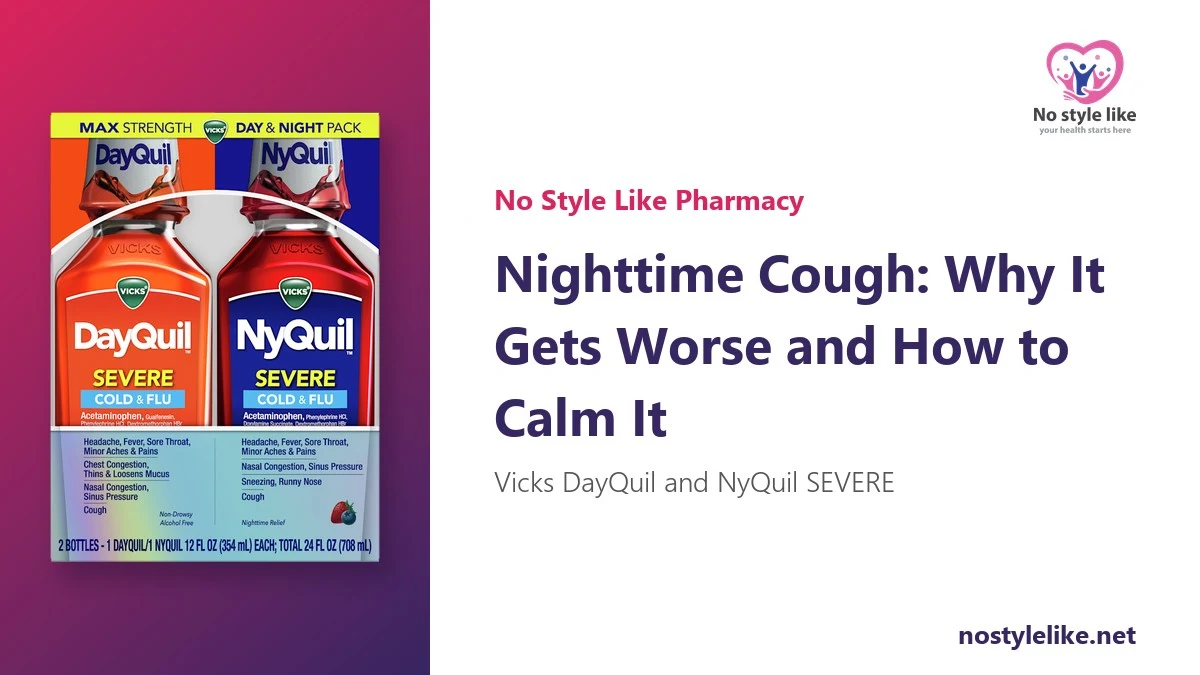
A dry cough responds to a suppressant such as dextromethorphan, while a chesty cough with thick mucus benefits from an expectorant such as guaifenesin during the day. When a runny nose and sneezing keep you awake, a nighttime formula with an antihistamine can help, such as the NyQuil bottles in the DayQuil and NyQuil SEVERE 3 Pack, used at the labeled dose.
To decide which liquid fits when, read DayQuil vs NyQuil. If you have high blood pressure, read cold medicine for high blood pressure first.
6. Avoid Late Meals
If reflux is behind your nighttime cough, often with heartburn or a sour taste in the mouth, keep dinner light and finish it 2 to 3 hours before bed. Cut down on coffee, chocolate and spicy food in the evening.
7. Remove Bedroom Irritants
Smoking, incense, strong air fresheners and dust in the bedroom all make coughing worse. Wash bedding regularly if you have allergies.
Nighttime Cough in Children
Parents often worry when a child coughs at night, but it is usually a simple cold. Over-the-counter cough and cold medicines should not be given to young children unless a doctor advises it. Many are not suitable under 4 or under 12 years, depending on the product. Fluids, honey for children over one year, a raised head and saline nose drops are usually enough.
When a Nighttime Cough Needs a Doctor
- It lasts more than 3 weeks.
- You hear wheezing or feel short of breath.
- You cough up blood, or thick green mucus with a high fever.
- You wake up breathless and only feel better sitting up.
- You have unexplained weight loss or night sweats.
For more on chronic cough and asthma, read the respiratory health guide, and to tell a cold from the flu, read cold vs flu treatment.
Frequently Asked Questions
Why does coughing increase when lying down?
Because nasal mucus drains into the throat, stomach acid rises more easily and the air is often drier at night.
Is warm water enough for a nighttime cough?
It soothes the throat, but it will not treat the cause if that cause is asthma or reflux.
Can I take a nighttime cold liquid every night?
Do not use it for long periods without a diagnosis. A persistent cough needs a medical check.
Does a cold always cause a cough at night?
Not always, but postnasal drip makes it very common. It usually settles as the cold clears within 1 to 2 weeks.
Conclusion
A nighttime cough has several causes, and postnasal drip during a cold is the most common. Raise your head, moisten the air, try honey and choose a medicine that matches your type of cough. If it lasts more than 3 weeks, see a doctor, and ask the No Style Like pharmacist which option suits you.
This article was reviewed by the No Style Like pharmacy content team. It is for general awareness only and does not replace advice from your doctor or pharmacist.
Do not give cough medicines to children without medical advice, and never exceed the dose on the label. For more information see the MedlinePlus cough page.