


Fungal Keratitis: 7 Facts About Symptoms, Causes and Treatment You Should Know
Fungal Keratitis: A Rare but Serious Eye Infection
The cornea is the clear window at the front of the eye, and any infection there can leave a lasting mark on vision. One of the most serious is fungal keratitis, which develops slowly but can progress to a deep ulcer if treatment is delayed. This educational article explains its symptoms, causes, diagnosis and treatment.
What Is Fungal Keratitis?
Fungal keratitis is an infection of the cornea caused by fungi. The most common culprits are filamentous fungi such as Fusarium and Aspergillus, and sometimes yeasts such as Candida. It is more common in hot, humid and agricultural regions and often follows an eye injury from plant material.
Symptoms of Fungal Keratitis
- Eye pain that gradually increases.
- Persistent redness.
- Blurred or reduced vision.
- Light sensitivity and excessive tearing.
- A feeling that something is in the eye.
- A white or grey patch on the cornea, sometimes with feathery edges.
Symptoms usually develop more slowly than in bacterial infection, which is why some people with fungal keratitis delay seeing a doctor.
Causes and Risk Factors
- An eye injury from a twig, straw or soil during farm or garden work.
- Poor contact lens habits, such as sleeping in lenses or rinsing them with tap water.
- Long-term use of steroid eye drops without follow-up.
- Chronic eye surface disease or a weakened immune system.
- Previous corneal surgery.
How Is Fungal Keratitis Diagnosed?
The eye doctor examines the cornea with a slit lamp and often takes a small scraping from the ulcer for staining and culture to identify the fungus. Some centres also use confocal microscopy to see fungal filaments inside the cornea. This step matters because fungal keratitis is treated completely differently from bacterial infection.
How Is Fungal Keratitis Treated?
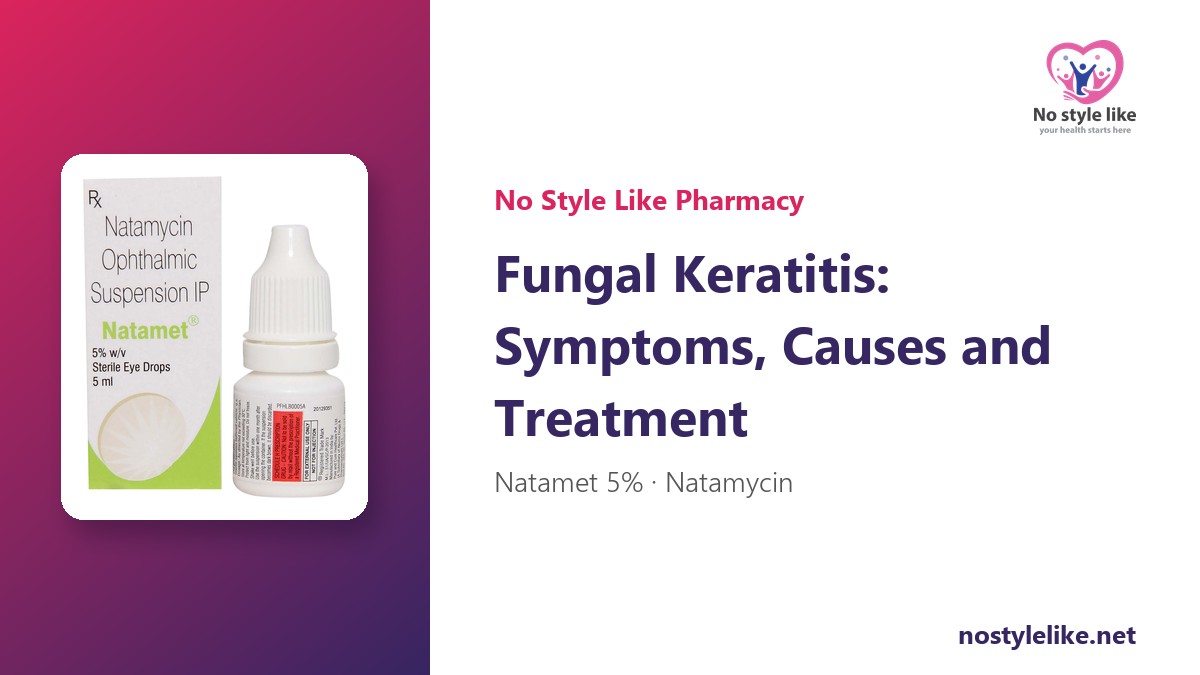
Treatment is based on antifungal eye drops. Natamycin eye drops 5% are among the most important, especially for Fusarium infections – one example is Natamet 5% eye drops. Depending on the fungus and response, the doctor may add other medicines such as voriconazole.
Drops are given very frequently at first, treatment lasts for weeks, and follow-up is close. In severe or non-responding cases of fungal keratitis, the doctor may consider surgery such as a corneal transplant.
When Is It an Emergency?
- Sudden, severe eye pain.
- Rapid loss of vision.
- A white patch appearing on the cornea.
- No improvement after 7–10 days of treatment.
Why Healing Can Be Slow
Fungi grow slowly inside the corneal tissue, and antifungals take longer to work than antibiotics. Some fungal species are also less sensitive to a given drug. That is why the doctor regularly measures the size and depth of the ulcer and may adjust treatment if progress is not enough.
How to Protect Yourself
- Wear protective glasses when farming, gardening or pruning.
- Never sleep in contact lenses or rinse them with water.
- Use steroid eye drops only with a prescription and follow-up.
- See a doctor promptly after any eye injury.
These simple habits greatly reduce the risk of fungal keratitis, especially for people who work outdoors or wear contact lenses every day.
Fungal Keratitis FAQ
Is fungal keratitis contagious?
It does not usually spread from person to person, but never share eye drops or towels.
Can it be cured completely?
Many people recover with early diagnosis and regular treatment, although a scar may remain depending on the depth of the ulcer.
Can antibiotic drops treat it?
Antibiotics do not treat fungi. The doctor decides on treatment after diagnosis.
Does treatment have side effects?
Read our article on natamycin side effects.
Conclusion
Fungal keratitis is a serious infection that needs fast diagnosis and regular antifungal treatment under an eye doctor’s care. Do not ignore pain or redness after a plant injury or while using contact lenses. If your doctor prescribes treatment, you can find Natamet 5% eye drops at No Style Like pharmacy.
This article was reviewed by the No Style Like pharmacy content team. It is purely educational and does not include doses for self-treatment. Natamycin is a prescription medicine used only under the supervision of a specialist eye doctor, not for self-use, and this article does not replace a medical examination.
Never put steroid drops in an inflamed eye without your doctor’s instruction. Never use any eye drop for an undiagnosed red or painful eye, and keep all medicines out of the reach of children. For more information see MedlinePlus on corneal ulcers and infections.