


Natamycin Eye Drops: An Educational Guide in 7 Points to the Leading Antifungal for Eye Infections
Natamycin Eye Drops: What Are They and Why Do Eye Doctors Prescribe Them?
When an eye doctor diagnoses a fungal infection of the cornea, natamycin eye drops are often among the first treatments considered. Natamycin is a long-established antifungal, yet it remains one of the most important tools in ophthalmology against fungal infection. This educational guide explains what natamycin is, how it works, when it is used and why it should never be used without a prescription.
What Is Natamycin?
Natamycin, also known as pimaricin, is an antifungal substance produced naturally by Streptomyces bacteria. It belongs to the polyene family, the same group as nystatin and amphotericin B.
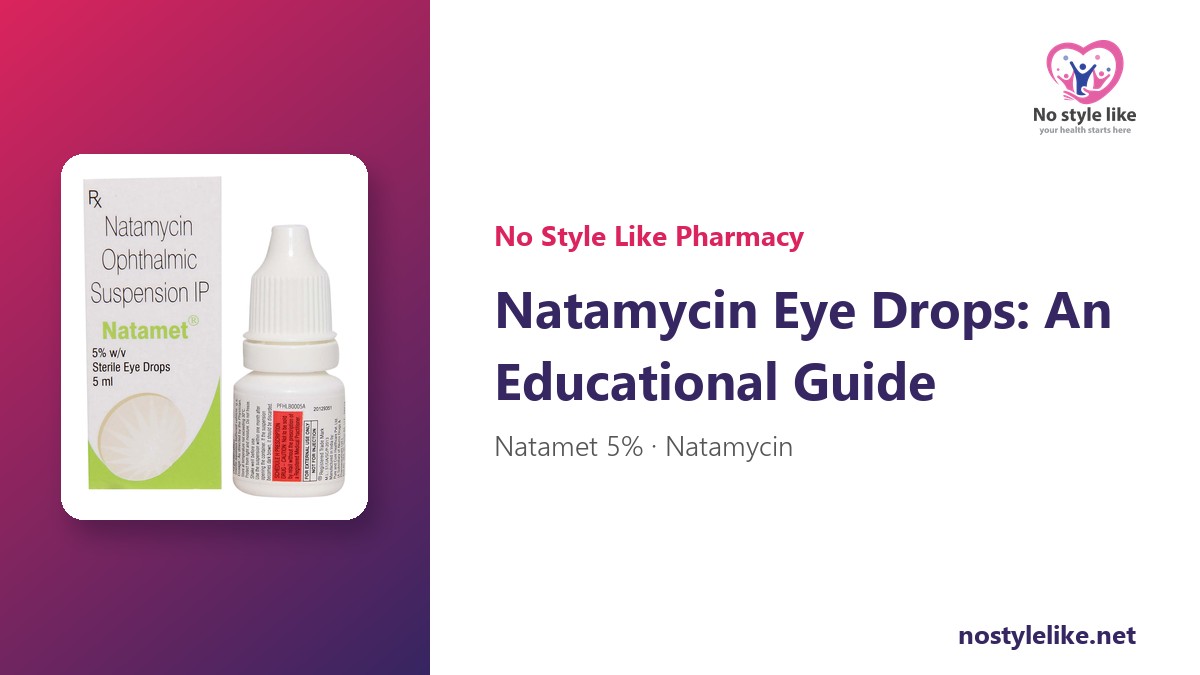
In eye care, natamycin eye drops come as a sterile 5% ophthalmic suspension. One example on the market is Natamet 5% eye drops. “Suspension” means the drug particles are spread through the liquid rather than dissolved, which is why the bottle must be shaken before every use.
How Do Natamycin Eye Drops Work?
Natamycin binds to ergosterol in the fungal cell membrane. This changes the membrane’s permeability, and the cell loses essential components. Its main action is fungicidal – it kills the fungus rather than only slowing its growth.
Because human cells contain cholesterol instead of ergosterol, the effect is focused on fungi. When applied to the eye, very little natamycin is absorbed into the bloodstream.
When Do Eye Doctors Use Natamycin Eye Drops?
- Fungal keratitis, especially infections caused by filamentous fungi such as Fusarium and Aspergillus.
- Fungal conjunctivitis.
- Fungal blepharitis (eyelid infection).
You can read more about the most important of these conditions in our article on fungal keratitis, its symptoms and causes.
Why Are Natamycin Eye Drops Prescription Only?
Fungal eye infections look very similar to bacterial and viral infections, and even to allergies. Using an antifungal for a bacterial infection will not help and can delay the right treatment until the cornea is damaged. That is why the doctor relies on a slit-lamp examination and, often, a corneal scraping for culture before starting treatment.
The treatment schedule also varies greatly between cases, and patients need close follow-up to assess response. The decision therefore always belongs to the doctor.
Practical Points Your Doctor Will Usually Explain
- Shake the bottle well before every use.
- Do not let the dropper tip touch the eye or fingers.
- Wait 5 minutes between different eye drops.
- Do not wear contact lenses during treatment.
- Discard the bottle one month after opening.
- Do not stop early even if the pain improves.
Following these points helps natamycin eye drops work as intended and lowers the risk of contamination or relapse.
Do Natamycin Eye Drops Have Side Effects?
Most are local and mild, such as stinging, redness and brief blurred vision, but some symptoms need a doctor’s review. We cover them in detail in our article on natamycin side effects.
Natamycin Eye Drops FAQ
Is natamycin an antibiotic?
It is an antifungal. It does not treat bacterial infections, even though it comes from bacteria.
Is natamycin used outside the eye?
Yes. It is used as a food preservative in some products, such as cheese, under the code E235. Eye drops, however, are a sterile pharmaceutical product that is completely different.
When does improvement appear?
Fungal infections respond slowly, and the doctor assesses progress over days and weeks.
Where can I get them?
With your eye doctor’s prescription, from a trusted pharmacy such as No Style Like.
Conclusion
Natamycin eye drops are an effective, essential antifungal treatment for fungal eye infections, but they are a specialist medicine that needs an accurate diagnosis and regular follow-up. If your doctor prescribes this treatment, you can find Natamet 5% natamycin eye drops at No Style Like pharmacy with delivery across Egypt.
This article was reviewed by the No Style Like pharmacy content team. It is purely educational and does not include doses for self-treatment. Natamycin is a prescription medicine used only under the supervision of a specialist eye doctor, not for self-use, and this article does not replace a medical examination.
Stop and see your doctor immediately if pain increases or vision worsens. Never use any eye drop for an undiagnosed red or painful eye, and keep all medicines out of the reach of children. For more information see the official natamycin 5% labelling on DailyMed.