


Natamycin Side Effects: 6 Common Symptoms and 5 Warning Signs That Need a Doctor
Natamycin Side Effects: What Is Normal and What Is Worrying?
If your eye doctor has prescribed natamycin drops, it is natural to wonder about their side effects. Knowing the possible natamycin side effects helps you tell the difference between a passing sting that is nothing to worry about and warning signs that need a doctor straight away. This article is educational and does not replace asking your doctor about your own case.
Why Are Most Natamycin Side Effects Local?
In the eye, natamycin is used as a topical suspension, and the body absorbs only a tiny amount. As a result, natamycin side effects mostly stay in the eye itself, and whole-body symptoms are rare.
Common, Temporary Side Effects
- Mild stinging or burning when the drop goes in.
- Slight eye redness.
- Extra tearing.
- A feeling that something is in the eye.
- Brief blurred vision after use, because of the suspension.
- White residue on the lashes or eyelid margin.
These usually fade within minutes and do not mean you should stop treatment.
Less Common Natamycin Side Effects
Post-marketing reports in the official labelling include eye swelling, eye pain, corneal opacity, tingling and allergic reactions. Very rare cases of chest pain and shortness of breath have also been reported. Seeing these on a list does not mean they will happen to you, but it is important to know them.
Warning Signs That Need a Doctor Immediately
- More pain, redness or discharge despite following treatment.
- Persistent or worsening loss of vision.
- Swelling of the eyelids or face, or a skin rash.
- No improvement after 7–10 days of regular use.
- Chest pain or difficulty breathing – this is an emergency.
Allergy to the Ingredients
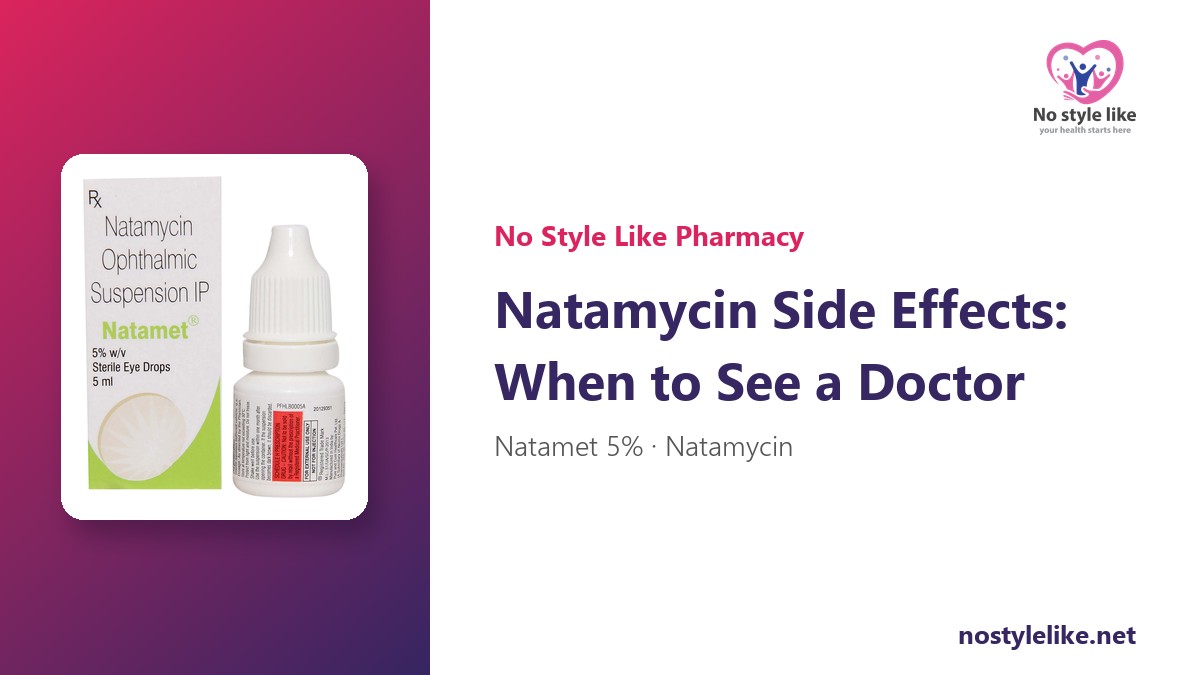
The drops must not be used by anyone allergic to natamycin or any other ingredient. Some products, such as Natamet 5% eye drops, contain the preservative benzalkonium chloride, which can irritate some people.
Contact Lenses During Treatment
Do not wear contact lenses at any point during treatment. Lenses may be the source of infection, and the preservative can be absorbed by soft lenses.
Pregnancy, Breastfeeding and Children
Data on use during pregnancy and breastfeeding are limited, so the doctor will prescribe it only when clearly needed. Safety in children has not been fully established either.
Side Effects or Symptoms of the Infection?
Patients sometimes confuse the symptoms of the fungal infection itself with drug side effects. Redness and pain are already present because of the infection. What matters is the overall trend: brief stinging right after a drop usually comes from the medicine, while pain that grows day by day may mean the infection is not responding and needs review.
How to Reduce Natamycin Side Effects
- Shake the bottle well before use.
- Do not let the dropper tip touch any surface.
- Close the eye for one minute after the drop and press the inner corner.
- Discard the bottle one month after opening, or if it turns dark brown.
- Do not drive until your vision is clear.
Good technique keeps natamycin side effects to a minimum and protects the bottle from contamination.
Frequently Asked Questions
Is stinging when I put the drop in normal?
Usually yes, and it fades within seconds or minutes.
Should I stop the drops if I feel irritation?
If it is mild and passing, no. If it increases or persists, contact your doctor before making any decision.
Does it interact with my other medicines?
No systemic interactions are known, but wait 5 minutes between different eye drops.
Where can I read about the medicine in general?
See our guide to natamycin eye drops and our article on fungal keratitis.
Conclusion
Most natamycin side effects are local, mild and short-lived, but increasing pain, worsening vision or signs of allergy need a doctor immediately. Follow your eye doctor’s instructions, and if treatment is prescribed you can find Natamet 5% natamycin eye drops at No Style Like pharmacy.
This article was reviewed by the No Style Like pharmacy content team. It is purely educational and does not include doses for self-treatment. Natamycin is a prescription medicine used only under the supervision of a specialist eye doctor, not for self-use, and this article does not replace a medical examination.
Tell your doctor about any unusual symptom. Never use any eye drop for an undiagnosed red or painful eye, and keep all medicines out of the reach of children. For more information see the official natamycin 5% labelling on DailyMed.