


Niacinamide Dosage: How Much Per Day? 6 Safety Rules
Why Niacinamide Dosage Needs Care
Niacinamide is a non-flushing form of vitamin B3, and supplements often contain 500 or 1,000 mg per unit, many times the daily need. Getting the niacinamide dosage right means matching the amount to a clear purpose and knowing when medical supervision is needed. Here are 6 safety rules.
1. Daily Needs Are Small
The recommended dietary allowance (RDA) for niacin is 14 mg a day for adult women and 16 mg for adult men, a little more in pregnancy and breastfeeding. Most people get this from meat, fish, poultry, legumes and fortified grains. A standard multivitamin covers it, so a high niacinamide dosage is not needed to prevent deficiency.
2. What the 35 mg Upper Limit Means
The tolerable upper intake level for supplemental niacin in adults is 35 mg a day. It was set mainly to avoid the flushing caused by nicotinic acid. Niacinamide does not flush, and studies have used much higher amounts, but going above 35 mg is still a decision to make with a health professional rather than alone.
3. Niacinamide Dosage by Purpose
| Amount per day | Purpose | Supervision |
|---|---|---|
| 14 to 16 mg | Meeting daily needs | Diet or multivitamin; none needed |
| 500 mg | General supplement use | Ask a pharmacist, especially with health conditions |
| 1,000 mg (500 mg twice daily) | Reducing new skin cancers in high-risk people | Dermatologist |
| Above 1,500 to 3,000 mg | Not for self-use | Specialist only; liver monitoring |
The 1,000 mg level matches the ONTRAC trial; see oral niacinamide for skin.
4. Follow the Label of Your Product
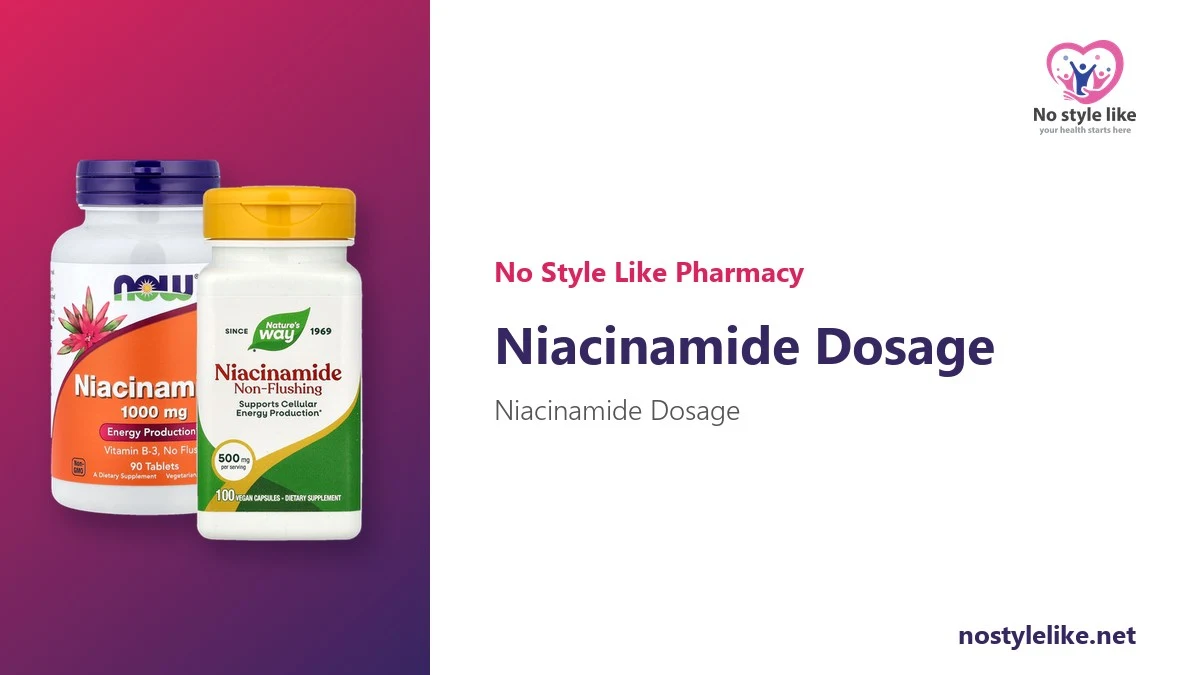
NOW Niacinamide 1,000 mg: 1 tablet daily with a meal, for adults only. Nature’s Way Niacinamide 500 mg: 1 capsule daily, preferably with food, for adults. Taking it with food reduces stomach upset. Do not combine both products or add other high-dose B3 unless your doctor has set a total niacinamide dosage.
5. Side Effects of a High Niacinamide Dosage
- Nausea, stomach discomfort or diarrhea.
- Headache or dizziness in some people.
- Raised liver enzymes and liver toxicity at very high doses, generally above 1.5 to 3 grams a day.
- Possible small changes in blood sugar in people with diabetes.
Stop and see a doctor if you notice yellow eyes, dark urine, severe tiredness or pain under the right ribs.
6. Who Must Ask a Doctor First?
- People with liver disease or who drink alcohol regularly.
- People with gout, diabetes or active or past stomach ulcers.
- Pregnant or breastfeeding women; the Nature’s Way label says not to use it in these cases.
- Anyone taking regular medicines, including anti-epileptics and cholesterol drugs.
If you are unsure whether you have niacin or niacinamide, read niacin vs niacinamide, because the safe amounts differ.
Tips for Taking It Safely
- Count all B3 sources, including multivitamins and energy drinks.
- Take the tablet or capsule with a meal at the same time each day.
- Ask for liver tests if a doctor recommends long-term high doses.
- Store in a cool, dry place out of the reach of children.
Supplements work best alongside healthy habits; see our healthy aging guide.
How Long Can You Stay on It?
There is no fixed course length for a general niacinamide dosage of 500 mg a day, but it makes sense to review the need every few months with your pharmacist. For the skin cancer prevention plan, benefit lasted only while the tablets were taken, so a dermatologist decides how long to continue. Anyone on a long-term high niacinamide dosage should have periodic liver tests, and should report any new stomach or liver symptoms promptly. If your niacinamide dosage was set for a specific goal, do not change it on your own.
Frequently Asked Questions About Niacinamide Dosage
Can I take it on an empty stomach?
Both labels advise taking it with a meal or food, which is gentler on the stomach.
What if I miss a dose?
Take the next one at the usual time and do not double up.
Is it safe for children?
These high-dose products are for adults only.
Can I split a 1,000 mg tablet?
Ask your pharmacist; a 500 mg capsule is an easier option if a lower amount is wanted.
Conclusion
The right niacinamide dosage depends on the goal: 14 to 16 mg covers daily needs, 500 to 1,000 mg is used for specific purposes with advice, and very high amounts can strain the liver. Follow the label, take it with food and ask a doctor if you have liver disease, gout, diabetes, ulcers or are pregnant. Find NOW Niacinamide and Nature’s Way Niacinamide at No Style Like Pharmacy.
This article was reviewed by the No Style Like pharmacy content team. It is for general awareness only and does not replace advice from your doctor or pharmacist.
Do not exceed the label dose without medical advice, and seek help if you develop signs of liver problems. For more information see the NIH Office of Dietary Supplements niacin fact sheet.