


Oral Niacinamide for Skin: What the Evidence Shows in 5 Key Points
What Is Oral Niacinamide for Skin?
Niacinamide, also called nicotinamide, is a form of vitamin B3. Most people know it from serums, but oral niacinamide for skin is a different subject: tablets or capsules that act on the skin from the inside. This article explains what research really shows, who may benefit and where the evidence is still weak, in 5 key points.
1. Oral Niacinamide for Skin Cancer Prevention: The ONTRAC Trial
The strongest evidence comes from the ONTRAC trial, published in 2015 in Australia. It included adults at high risk who had already had at least two non-melanoma skin cancers (basal cell or squamous cell carcinoma) in the previous five years. Taking nicotinamide 500 mg twice daily for 12 months reduced new non-melanoma skin cancers by about 23% compared with placebo, and also reduced rough pre-cancerous patches called actinic keratoses.
Important limits: the benefit was seen in a high-risk group, it faded after the tablets were stopped, and the study did not show prevention of melanoma. So oral niacinamide for skin cancer prevention is something to discuss with a dermatologist, alongside regular skin checks and sun protection, not instead of them.
2. How Might It Work?
Nicotinamide is a building block of NAD, a molecule cells use for energy and for repairing DNA. UV radiation drains cellular energy and lowers the skin’s local immunity. Laboratory studies suggest that nicotinamide helps restore energy for DNA repair and reduces UV-induced immune suppression. These are plausible mechanisms, but they do not mean a supplement protects you from sunburn.
3. Acne and Rosacea: Mostly Topical Evidence
Niacinamide has anti-inflammatory properties, and many studies support topical gels at 2 to 5% for mild acne and for redness. Evidence for oral niacinamide for skin conditions such as acne or rosacea is limited: a few small studies used combination supplements, so it is hard to know how much came from niacinamide itself. It should not replace treatment prescribed by a dermatologist, and anyone with moderate or severe acne needs a proper medical assessment.
4. Oral Niacinamide vs Topical Niacinamide Serums
| Point | Oral tablets or capsules | Topical serum or cream |
|---|---|---|
| Main evidence | Fewer new skin cancers in high-risk people | Acne, redness, pores, uneven tone |
| Usual amount | 500 mg once or twice daily, with medical advice | 2 to 10% on the skin |
| Main risks | Stomach upset; liver strain at very high doses | Mild irritation in sensitive skin |
The two are not interchangeable: a serum does not give the effect seen in ONTRAC, and a tablet is not a cosmetic replacement for a good serum. You can build a sensible base routine with our vitamin C benefits for skin guide.
5. Who Should Avoid It or Ask First?
- People with liver disease or raised liver enzymes.
- People with diabetes, gout or a history of stomach ulcers.
- Pregnant or breastfeeding women.
- Anyone taking regular medicines, especially for epilepsy or cholesterol.
Many people also confuse niacinamide with niacin, which causes flushing. Read niacin vs niacinamide before buying, and see niacinamide dosage for safe amounts.
Choosing a Product for Oral Niacinamide for Skin
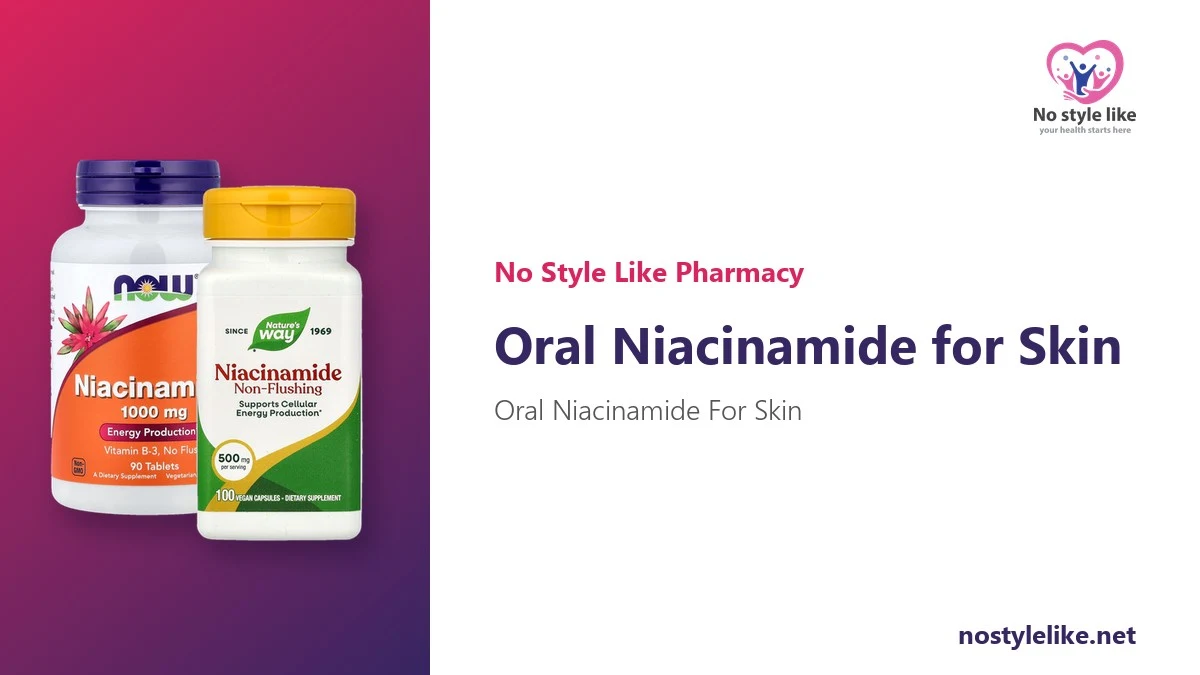
If your dermatologist recommends oral niacinamide for skin, the amount matters. NOW Niacinamide 1,000 mg provides 1,000 mg per tablet, taken as 1 tablet daily with a meal according to the label. Nature’s Way Niacinamide 500 mg provides 500 mg per capsule, taken as 1 capsule daily with food. Both are non-flushing and are for adults. Do not raise the dose beyond the label unless your doctor sets a plan, such as the twice-daily schedule used in ONTRAC.
Think of oral niacinamide for skin as one part of a wider plan: daily sunscreen, protective clothing, avoiding midday sun and a yearly skin check if you have had skin cancer before. Oral niacinamide for skin works best as an add-on to these habits, never as a reason to spend longer in the sun.
Frequently Asked Questions About Oral Niacinamide for Skin
Does it lighten dark spots?
There is no good evidence that tablets lighten pigmentation. Topical niacinamide has better data for uneven tone.
Can I use a serum and tablets together?
Generally yes, since topical absorption is small, but ask your pharmacist if you take other supplements.
Does it replace sunscreen?
No. Sun protection and skin checks remain the foundation of skin cancer prevention.
How long until results?
In ONTRAC, the effect was measured over 12 months of continuous use, so it is not a quick fix.
Conclusion
Oral niacinamide for skin has its best evidence in reducing new non-melanoma skin cancers in high-risk people under a dermatologist, while acne and rosacea data come mostly from topical products. Use it with medical advice, keep sun protection, and see healthy aging guide for broader habits. Find NOW Niacinamide and Nature’s Way Niacinamide at No Style Like Pharmacy.
This article was reviewed by the No Style Like pharmacy content team. It is for general awareness only and does not replace advice from your doctor or pharmacist.
See a dermatologist for any new, growing or bleeding skin lesion. For more information see the ONTRAC trial in the New England Journal of Medicine.