


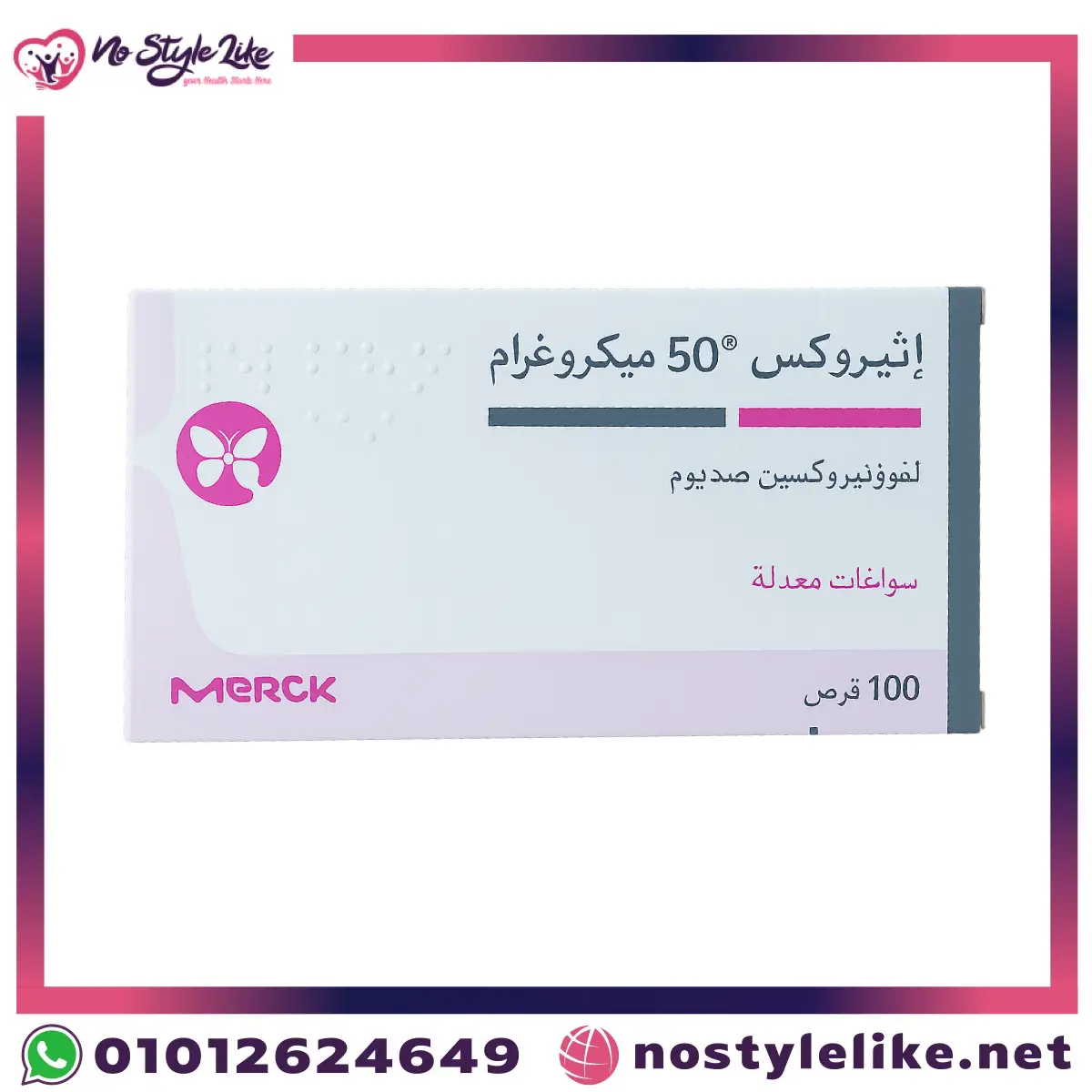
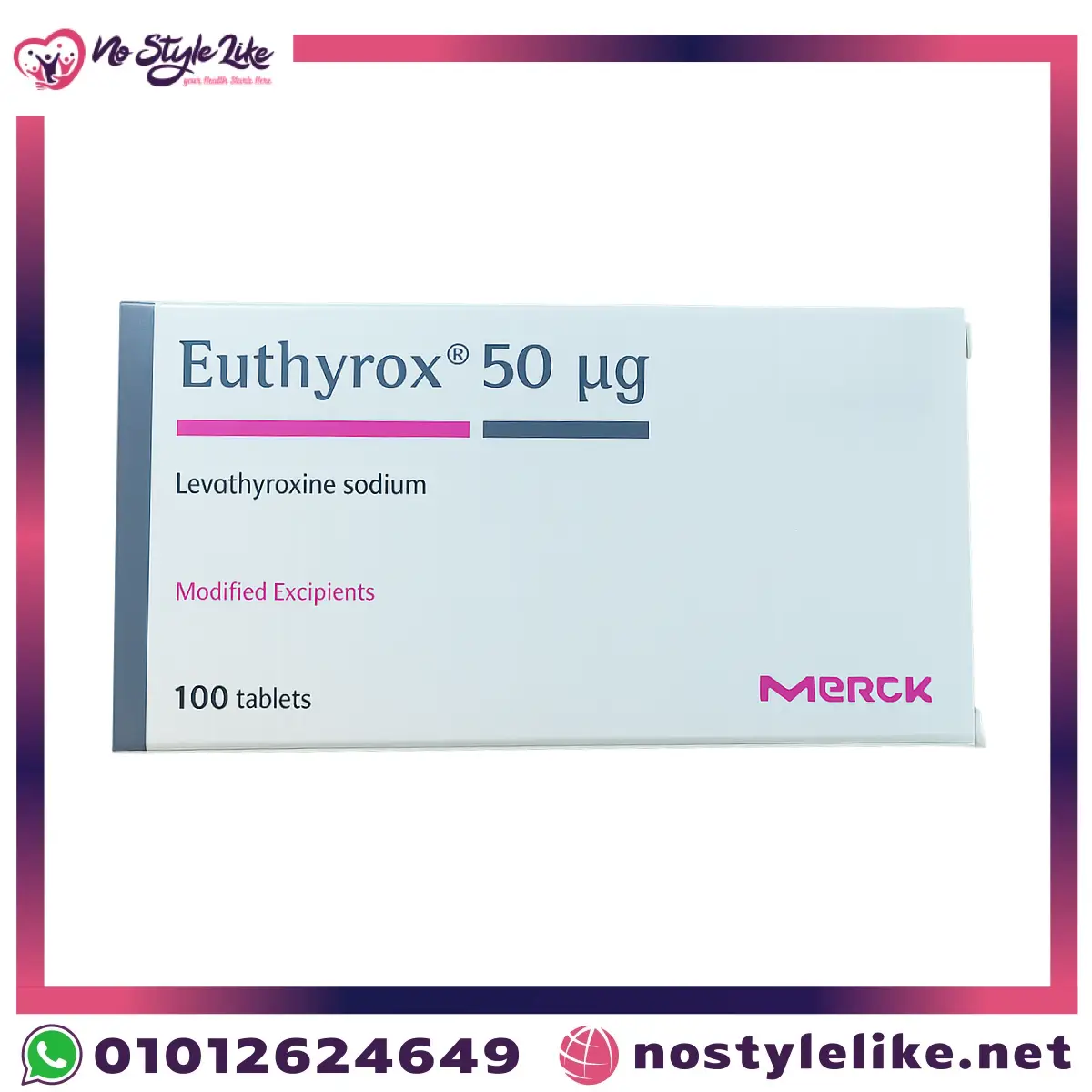
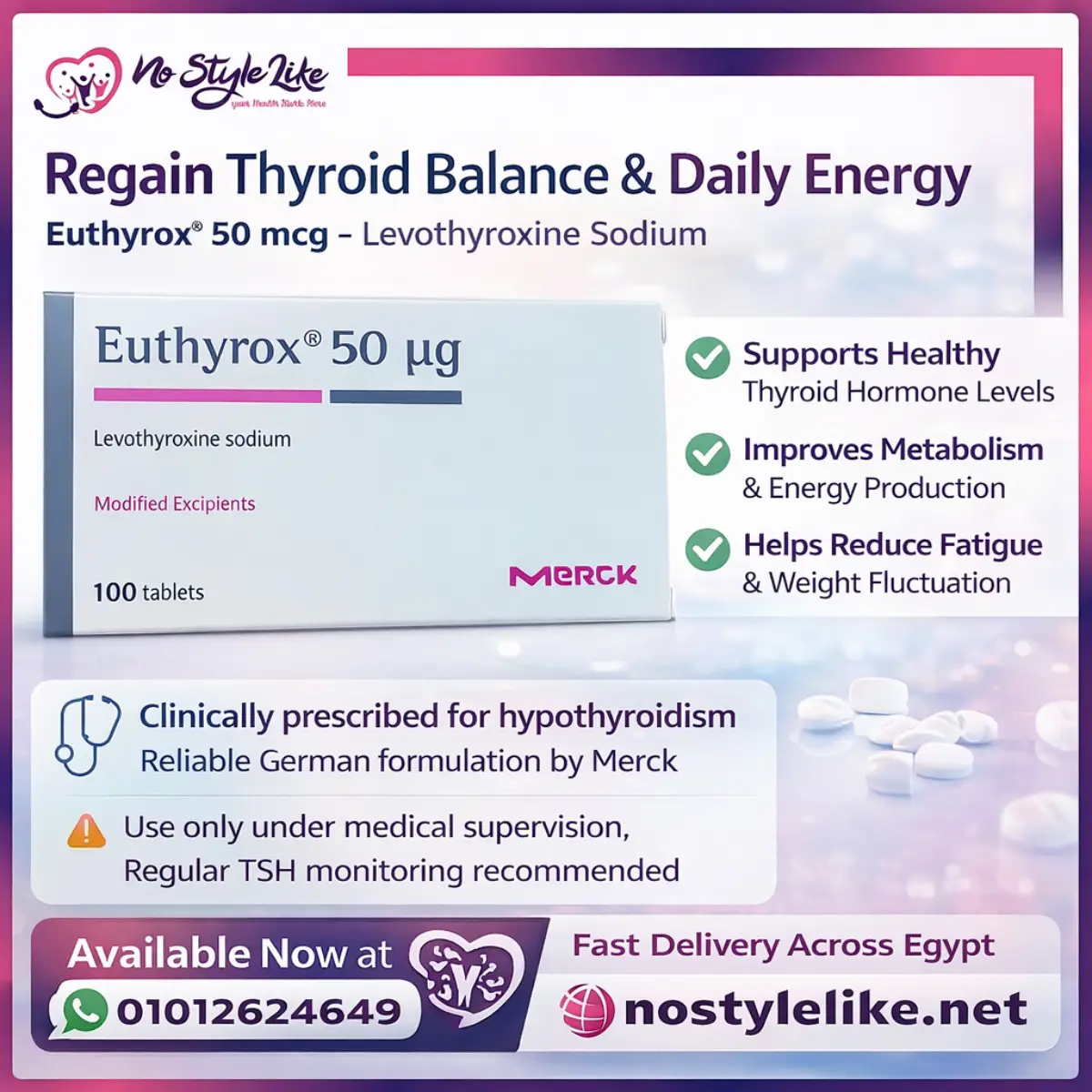
Description
⚠️ Prescription Medicine Notice
Euthyrox 50 mcg (levothyroxine sodium) is a prescription-only medication. It must only be used under the supervision of a physician, with regular blood tests (TSH, free T4) to confirm the correct dose. Never start, stop, or change the dose without medical advice.
Key Facts
| Active Ingredient | Levothyroxine sodium 50 mcg |
| Class | Thyroid hormone (T4) replacement |
| Main Use | Hypothyroidism, post-thyroidectomy, TSH suppression |
| Form | Oral tablet |
| Status | Prescription required |
| Reviewed By | Dr. Abdallah Fouad — Clinical Nutrition Specialist (25+ yrs) |
Table of Contents
- 1. Introduction
- 2. What Is Euthyrox 50 mcg?
- 3. How Does It Work?
- 4. Approved Uses
- 5. Dosage Guidance
- 6. Who Is It Prescribed For?
- 7. Who Should Avoid It
- 8. How to Take It Correctly
- 9. Best Time to Take It
- 10. Side Effects
- 11. Expected Results Timeline
- 12. Common Mistakes
- 13. Myths vs Facts
- 14. Drug & Food Interactions
- 15. Required Lab Tests
- 16. Diet & Nutrition Support
- 17. When to Contact Your Doctor
- 18. Expert Tip
- 19. Frequently Asked Questions
- 20. Conclusion
1. Introduction
Hypothyroidism, an underactive thyroid gland, affects energy, metabolism, and overall wellbeing. Euthyrox 50 mcg is one of the most widely prescribed treatments worldwide, containing levothyroxine — a synthetic version of the hormone the thyroid normally produces.
This guide, reviewed by clinical nutrition specialist Dr. Abdallah Fouad, explains what Euthyrox 50 mcg is used for, how it works, dosing principles, and the safety precautions every patient should know. It is not a substitute for your doctor’s instructions.
2. What Is Euthyrox 50 mcg?
Euthyrox is a brand of levothyroxine sodium, a synthetic thyroid hormone (T4) that is chemically identical to the hormone naturally produced by the thyroid gland. The 50 mcg tablet is a common starting or maintenance dose, especially in patients with mild hypothyroidism or those sensitive to thyroid hormone changes (such as older adults).
3. How Does Euthyrox 50 mcg Work?
Levothyroxine replaces or supplements the thyroxine (T4) that the thyroid gland is unable to produce in sufficient quantity. The body converts T4 into the more active hormone T3, which regulates metabolism, heart rate, body temperature, and energy production in nearly every cell.
4. Approved Uses Euthyrox 50 mcg
- Hypothyroidism: replacing insufficient natural thyroid hormone.
- After thyroidectomy or radioactive iodine treatment: replacing hormone the body can no longer produce.
- TSH suppression: in certain thyroid nodule or thyroid cancer follow-up cases, as directed by a specialist.
- Congenital hypothyroidism: under pediatric endocrinologist supervision.
5. Dosage Guidance
Dosage is strictly individualized by your doctor based on age, weight, severity of hypothyroidism, heart health, and lab results. 50 mcg is a common starting dose for adults with mild hypothyroidism or a cautious starting point in older patients or those with heart conditions. Doses are typically adjusted every 4-6 weeks based on TSH blood tests until the correct maintenance dose is found.
⚠️ Never Self-Adjust
Do not increase, decrease, skip, or stop doses without your doctor’s guidance, even if you feel better or worse. Thyroid hormone dosing errors can cause serious cardiac and metabolic effects.
6. Who Is Euthyrox 50 mcg Prescribed For?
Euthyrox 50 mcg is typically prescribed for adults diagnosed with hypothyroidism confirmed by blood tests (elevated TSH, low free T4), patients recovering from thyroid surgery, and those requiring careful, gradual dose titration such as elderly patients or people with cardiovascular disease.
7. Who Should Avoid Euthyrox 50 mcg
- Anyone with untreated adrenal insufficiency (must be treated first).
- People with untreated thyrotoxicosis (overactive thyroid).
- Those with a known hypersensitivity to levothyroxine or tablet excipients.
- Anyone with recent uncontrolled heart attack or acute myocarditis, unless a specialist approves.
This list is not exhaustive. Always share your full medical history with your prescribing doctor.
8. How to Take It Correctly
Take the tablet on an empty stomach, usually 30-60 minutes before breakfast, with a full glass of water. Swallow it whole; do not crush unless directed. Maintain consistent timing daily, and avoid taking it with coffee, calcium, or iron supplements, which reduce absorption (space these by at least 4 hours).
9. Best Time to Take Euthyrox 50 mcg
Most doctors recommend taking Euthyrox first thing in the morning on an empty stomach for the most consistent absorption. Some patients are instructed to take it at bedtime instead, at least 3 hours after their last meal — follow your doctor’s specific instructions, and keep the timing consistent day to day.
10. Side Effects Euthyrox 50 mcg
When correctly dosed, levothyroxine has minimal side effects. Signs of an incorrect dose can include:
- Too high a dose: palpitations, tremor, anxiety, insomnia, weight loss, heat intolerance, excessive sweating.
- Too low a dose: continued fatigue, weight gain, cold intolerance, constipation, low mood.
Report any chest pain, irregular heartbeat, or severe symptoms to your doctor promptly.
11. Expected Results Timeline
| Timeframe | What to Expect |
|---|---|
| Week 1-2 | Hormone levels begin stabilizing; symptoms may not change yet. |
| Week 4-6 | First TSH re-check; dose may be adjusted. |
| 2-3 months | Most patients feel noticeable improvement in energy and symptoms. |
| Ongoing | Lifelong therapy in most cases, with periodic monitoring. |
12. Common Mistakes
- Taking it with food or coffee: significantly reduces absorption.
- Switching brands without telling your doctor: different formulations can vary slightly in bioavailability.
- Stopping once you feel better: hypothyroidism usually requires lifelong treatment.
- Skipping follow-up blood tests: dosing needs can change over time.
13. Myths vs Facts
| Myth | Fact |
|---|---|
| “Levothyroxine causes weight loss for everyone.” | It only corrects weight changes caused by thyroid hormone deficiency, not general weight loss. |
| “You can stop once your levels are normal.” | Most hypothyroid patients need lifelong therapy to keep levels normal. |
| “Any dose works the same.” | Dosing is highly individual; too much or too little both cause problems. |
14. Drug & Food Interactions
| Substance | Why It Matters |
|---|---|
| Calcium & iron supplements | Reduce absorption; separate by at least 4 hours. |
| Antacids (e.g. PPIs) | Can reduce absorption; timing adjustment may be needed. |
| Warfarin (blood thinners) | Levothyroxine can enhance anticoagulant effect; monitor closely. |
| Diabetes medications | May require dose adjustment as thyroid levels normalize. |
| Soy products, high-fiber meals | Can reduce absorption if taken too close to the dose. |
15. Required Lab Tests
Regular monitoring is essential: TSH (thyroid-stimulating hormone) and free T4 are checked before starting, 4-6 weeks after any dose change, and typically every 6-12 months once stable. Your doctor may also check heart rate and, in some cases, bone density with long-term use.
16. Diet & Nutrition Support
While diet doesn’t replace medication, adequate iodine, selenium, and zinc support overall thyroid health. Avoid taking your dose alongside high-fiber meals, soy, or calcium-rich foods. Some patients also benefit from ensuring adequate Vitamin D3 status, as deficiency is common in autoimmune thyroid conditions.
Related nutritional supports some patients discuss with their doctor include Vitamin D3. If your doctor changes your levothyroxine brand or dose, options like Eltroxin 100 mcg or Euthyrox 100 mcg may be prescribed instead — never switch brands or strengths yourself.
17. When to Contact Your Doctor
Contact your doctor promptly if you experience chest pain, palpitations, significant weight change, unusual fatigue, signs of allergic reaction, or if you become pregnant (thyroid dose needs often increase in pregnancy). Never stop the medication abruptly without medical advice.
💡 Expert Tip from Dr. Abdallah Fouad
“The single biggest factor I see affecting how well levothyroxine works isn’t the dose — it’s timing and consistency. Taking it at the same time every day, on an empty stomach, away from calcium, iron, or coffee, makes a real difference in blood levels. And never judge your dose by how you feel alone — always wait for the follow-up TSH test your doctor orders.” (25+ years)
19. Frequently Asked Questions
Is Euthyrox 50 mcg available without a prescription?
No. Levothyroxine is a prescription-only medication and requires diagnosis and dosing by a physician.
When is the best time to take Euthyrox 50 mcg?
Most commonly first thing in the morning on an empty stomach, at least 30-60 minutes before food, coffee, or other medications.
How long do I need to take Euthyrox 50 mcg?
Most patients with hypothyroidism require lifelong treatment, with the dose adjusted based on periodic blood tests.
Can I take calcium or iron supplements with it?
Not at the same time — separate them by at least 4 hours, as they reduce levothyroxine absorption.
What happens if I miss a dose?
Take it as soon as you remember unless it’s almost time for the next dose. Never double up without asking your doctor.
Are there side effects at the correct dose?
At the correct dose, side effects are minimal. Symptoms usually indicate the dose needs adjustment.
Can pregnant women take Euthyrox 50 mcg ?
Yes, under close medical supervision — thyroid hormone needs often increase during pregnancy, and dose adjustments are common.
Can I switch brands of levothyroxine?
Only with your doctor’s guidance — different brands can have slightly different bioavailability, requiring monitoring after a switch.
20. Conclusion
Euthyrox 50 mcg is a well-established, effective treatment for hypothyroidism when used correctly under medical supervision. Consistent daily timing, correct administration on an empty stomach, and regular thyroid function testing are the keys to safe, effective long-term treatment.
This medication should only be started, adjusted, or stopped by your prescribing doctor. Never self-medicate with thyroid hormone.
This article was written and medically reviewed by Dr. Abdallah Fouad, Clinical Nutrition Specialist with over 25 years of experience. Learn more about Dr. Abdallah Fouad.
Sources:
MedlinePlus — Levothyroxine,
Euthyrox Official Product Information.
How to check your pack is genuine
We import directly and hand over the box sealed, exactly as it reached us. Before you accept delivery, check these five things in front of the courier:
- Manufacturer and country of origin printed on the carton itself, not on a sticker placed over it.
- Expiry date and batch/lot number printed on the carton and repeated on the inner blister, and the two must match.
- The outer carton is intact, not opened or re-sealed, with complete blister strips and no missing tablets.
- The patient leaflet is inside, in the language of the country of origin, matching the strength printed on the box.
- Strength and tablet count on the carton are exactly what you ordered. Check both before paying.
The No Style Like guarantee
If anything above does not match on delivery, refuse the parcel on the spot and you pay nothing. Heat-sensitive medicines ship in packaging that protects the storage temperature, and we make sure the expiry date covers your full course. Message us on WhatsApp before ordering and we will send you a photo of the exact pack in stock with its expiry date.



Reviews
There are no reviews yet.